

Having a few chickens means you can, for the most part, always have fresh eggs. Because there is less daylight during the winter, egg laying slows or ceases. Artificial lighting throughout the season may successfully deceive your chickens into continuing to lay eggs. For production, hens need at least 14 hours of light. Your hens should be able to continue laying if you provide one 40-watt light for every 100 square feet of the coop.
1.Determine when more light is necessary. Plan to add more light for six to seven months since hens need a minimum of 14 hours of sunshine.
2.Use a tape measure to measure the coop's interior measurements to calculate how many lights you'll need to install to provide sufficient lighting. By dividing the length by the breadth of the coop's floor area, you may determine its square footage. A 100 square foot chicken coop is 10 feet by 10 feet. This implies that the coop may utilize a single 40-watt bulb.
3.If you're handy, install the lights; otherwise, get an electrician. Use a warm light bulb instead of a blue or colder one since the warmer light encourages hens to produce eggs. Warm light bulbs emit an orange or red spectrum.
4.If you'd like, provide a timer. Some backyard chicken keepers turn on the lights continuously, while others control them manually. A timer eliminates the chance of forgetting and gives the chickens a period of darkness. If you use a timer, make careful to set it such that light is available in the dark, early morning hours so the hens may get more rest in the evening.

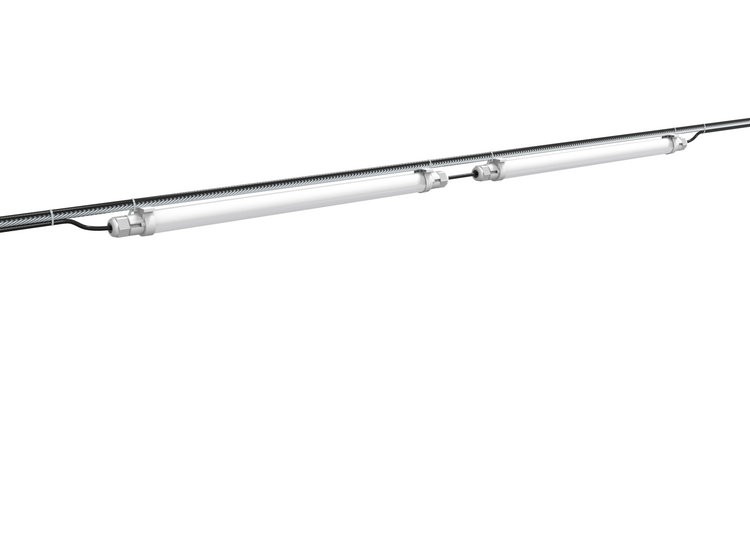
Benwei chicken coop lighting for egg production
|
Power |
Dimension(MM) |
LED Quantity(PCS) |
|
9W |
600*26mm |
Epistar 2835/48PCS |
|
13W |
900*26mm |
Epistar 2835/72PCS |
|
18W |
1200*26mm |
Epistar 2835/96PCS |
|
24W |
1500*26mm |
Epistar 2835/120PCS |
|
36W |
2400*26mm |
Epistar 2835/384PCS |





