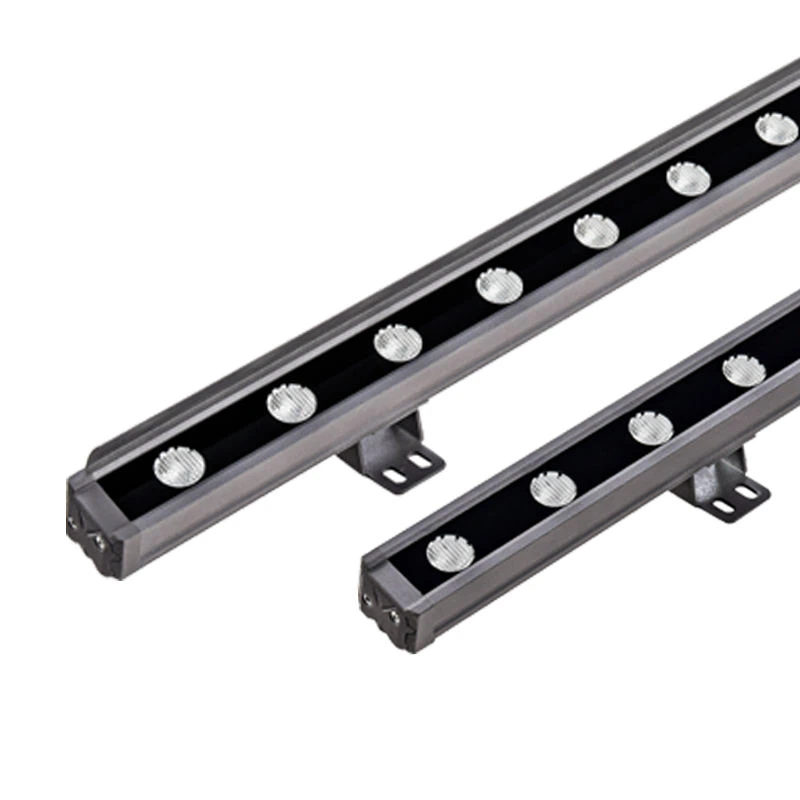
How to Use Wall Wash Lighting: Install and Place Wall Wash Lights
Wall wash lighting may be used for a variety of purposes, and it is an ideal method to improve the atmosphere of any room or outdoor living space. Wall wash lighting can be used both indoors and outdoors. Understanding how led wall wash lights should be installed and where they should be positioned is the most important step in learning how to use these lights in the most effective manner. This article will provide you with some pointers on installation as well as positioning to ensure that your wall wash lighting turns out looking fantastic.
These lighting strategies and pointers are vital for you to design the ideal indoor or outdoor living space possible. Whether you're installing wall wash lights indoors or wall wash lights outdoors, you should follow these guidelines. We will go over everything from how to install wall wash lighting to where to place wall wash lights, and we will even explain what wall wash lights are.
How to Make Use of Lighting That Washes the Walls
4 Principal Guidelines for Making Use of LED Wall Wash Lights
Make the Room Feel More Open and Airy
You can dim the light by employing directional lighting in the appropriate areas. You want a lens that has been sandblasted and a wide beam angle. This will result in a softer and more understated lighting effect.
Make slivers of light appear.
By producing slender rays of light, this will both highlight the tiles and cut down on glare.
Wall Grazing and Contouring using Linear Strips
In order to get a more contemporary wall washing appearance, a linear LED strip light from Contour can be installed within a shadow gap detail.
Positioning that is Ideal
Move away from the wall and point the light in its direction to achieve a uniformly diffused wash of light on the surface of the wall. Move in closer to the wall in question and direct the light source in its direction in order to emphasise the texture on the wall.
Where Should the Lights for the Wall Wash Be Installed?
Lighting for the Architecture of Buildings
To illuminate a home's walls, pillars, and other architectural elements with architectural wash lighting is the same as shining light on those elements. You may not have been aware of certain architectural details until low-angle, in-grade lighting fixtures brought them to life by highlighting textures and adding depth. In order to get the desired effect, it is essential to give careful consideration to how lights are selected in terms of the beam spread and brightness of their light.
There is a diverse selection of lamp types available. They can be anywhere between 15 and 120 degrees, and they come in a variety of wattages. Be sure to select a lamp whose light is not too intense, as this will cause people's attention to be drawn away from the surrounding environment.
Lighting for Washing Shrubs and Trees:
Utilising a variety of small elements is the most effective method for producing an interesting composition. To bring attention to hedges or a tree with leaves, you can use a lamp with a diffused beam of light. You should also have lighting in your garden that draws attention to the smaller features, and this will help make your garden appear nice.
We don't just concentrate the light on one centre piece as most people do; instead, we make sure to softly light the spaces all around it. Creating a feature that is visually pleasing in this manner is a useful technique. If you do this, it will appear much better, and it will even be more lovely.
Lighting from Below to Wash.
The effect of moonlight can be achieved by employing this method, which involves the use of lights hung from trees. There are a variety of applications for this, including washing ground cover, walkways, and water features. This is one of the most underutilised approaches to lighting a scene. I shall argue that washing with down lighting can generate a subtle soft light that draws the eye without being overly obnoxious. This is my position.
How to Put in Place Lighting for Wall Washes
Wall wash lighting can be put as a permanent fixture, or it can be removed and stored when it is not in use. Either way, it can be used in a variety of settings. Because of this, they are a fantastic choice for backyards that feature seats in the open air.
There is no difference in the installation process for wall washes, whether of whether they are permanent fixtures, temporary installations for events, or even if you acquire a string of lights to use as a temporary centrepiece.
How to Use Recessed Lighting to Create a Wall Wash
When planning the layout of your recessed lighting, you need to ensure that it maintains a certain distance from the wall. Because of this, the light will spread evenly across the wall when it hits it. You may vary how high up on the wall it falls by moving it closer or further away from the wall.
First things first, determine how far away from the wall your recessed light is. The next step is to determine how far apart each recessed light is from the other lights and ensure that the distances are comparable. This distance ought to be 0.33 of your ceiling height, which is the same as saying it should be one third of your ceiling height.
What exactly is meant by "Wall Wash Lighting"?
Wall wash lighting is helpful in creating an even distribution of light on a wall because it washes the wall with light. This sort of illumination generates dramatic effects without the need for high-watt bulbs or fixtures, which is why it is commonly utilised in movie theatres, television studios, and all across restaurants. Mounting lights at varying heights from the ground up to the ceiling in such a way that they all produce a warm glow is one way to get the desired effect.
Mounting lights lower to the ground and pointing them at obtuse angles upwards towards the wall surface is another way to get the same effect. This method is frequently utilised in retail stores as well as for the development of atmosphere lighting schemes in theatre productions. Because we want the light to be distributed evenly across the room, it is essential that all of the lights be directed upward in this situation.
The brightness levels can vary based on the environment; however, in order to create an even glow that isn't overwhelming with bright spots and shadows cast by fixtures, it is often required to utilise a dimmer switch or low-wattage bulbs. This is because bright spots and shadows can be created by fixtures. This particular kind of illumination is also effective for emphasising works of art, sculptures, and other types of objects.
When they are looking for something less dominant than lights hung from the ceiling, some folks choose to just employ wall washes as accent lighting. They are a versatile lighting fixture because in addition to their primary function, they may be utilised to draw attention to specific wall elements or pieces of artwork.
There is a wide variety of styles and configurations of wall wash lights to choose from. It is advisable to choose the appropriate shape for your space based on where you would like it put, as this will help you make the most informed decision. If you want to create an eclectic look in your room, you may also mix and match different kinds of light fixtures.
Wall washes are not only a beautiful addition to a room, but they can also be utilised as a quick and affordable alternative to conventional overhead lighting. You can give your home an updated look and feel by putting wall wash lights in the foyer and hallway. This will produce a glow that is excellent for your property.
Wall Grazing as Opposed to Wall Washing
Wall grazing and wall washing are two entirely different things. Wall grazing lighting is a type of lighting that is used to illuminate walls and reveals the surface texture of brick, stone, or stucco. The techniques of wall washing and wall grazing are quite comparable to one another; however, with the wall grazing technique, the lighting fixtures are positioned much closer to the wall. You do not need to focus on an object when using this method; rather, you focus on a narrow angle to bring out the textures of bricks, stones, and stuccos.
Grazing Light Fixtures for the Wall
Wall grazing fixtures are quite useful in a variety of different applications. They emit a significant amount of light and may be positioned anywhere in the room where you desire some additional illumination but do not need to illuminate the entire space. They don't emit nearly as much glare, which makes them ideal for usage in stairwells and hallways as well. It is essential to have an understanding of the differences between wall grazing fixtures and wall washing fixtures in order to select the one that will best serve your requirements.
Loss of Light Caused by the Use of Wall-Grazing Lighting
If you have a wall grazing light fixture in a room that also has a wall washing light fixture, you may observe that the region around the wall grazing fixture has a lower level of lighting compared to the floor either below or above it. Because the light from the wall grazing fixture reflects off of the floor and ceiling, there is less light that actually reaches the wall and is then reflected back into the room. The reason for this is because the wall grazing fixture is placed at an angle.
If you have a small room in which every square inch is valuable space, you might want to utilise a large number of wall washing fixtures rather than smaller ones that scrape the wall and are not going to produce as much light as the larger ones would.
Wall Grazing Fixture Positioning and Placement
Wall grazing lights are used to highlight a feature, such as artwork, or a strong architectural aspect, such as an oak post, as seen in the example above. The proximity of the in-ground uplighter to the surface allows light to skim the surface, illuminating the sawn wood and drawing attention to its intricate intricacies.
Wall grazing lighting shouldn't be placed squarely in the middle of the wall since it will cast too much light on the wall and distract from what you're wanting to draw attention to – unless, of course, drawing attention to the wall itself is exactly what you want to accomplish. You might create a spotlight effect at the sides of the wall by placing them on either side of the wall instead of placing them directly on the wall because wall grazing is a powerful impact.
Where to Position the Wall Washing Fixtures
Wall washing lights can be located in the room's centre or closer to the room's corners. However, it is important to have at least one fixture that is above head level so that you do not walk into any fixtures that are hanging down from the ceiling. They are also useful for lighting the way in corridors and other similar areas.
Adjusting the Beam Angle of Wall-Grazing Fixtures
Be sure that the beam angle is 35 degrees or less if you are searching for a light that will graze the wall. Keeping the beam angle low produces a spotlight effect that will emphasise what you want while casting more shade on the rest of the wall. This helps to ensure that the shadows do not draw attention away from the feature that you want to highlight.
Feature:
● High-power wall washer, stylish and beautiful appearance. Enlarged heat dissipation structure design fully guarantee the stability of LED and long lifespan;
● The fixture is made of 6063 aluminum alloy mold, the surface is anodized, and the lampshade is made of high-strength semi-toughened glass with impact resistance, friction resistance and excellent rainwater cleaning ability.
● No glue and waterproof design, protection level IP65;
● American original LED light source, high luminous flux output, good light color consistency, constant current design; RGB gray level is high, making the dynamic dimming effect softer and colorful;
● Good electromagnetic compatibility, no electromagnetic interference to the surrounding environment.
Specification:
| Product Name | IP65 led wall washer |
| Input voltage/power | DC24V/50Hz/36W |
| Beam angle |
10×60° (15, 30, 45, 60° optional) |
| Color temperature | RGBW(W=5700K) |
| IP rating | IP65 |
| Certification | CE/ROHS |