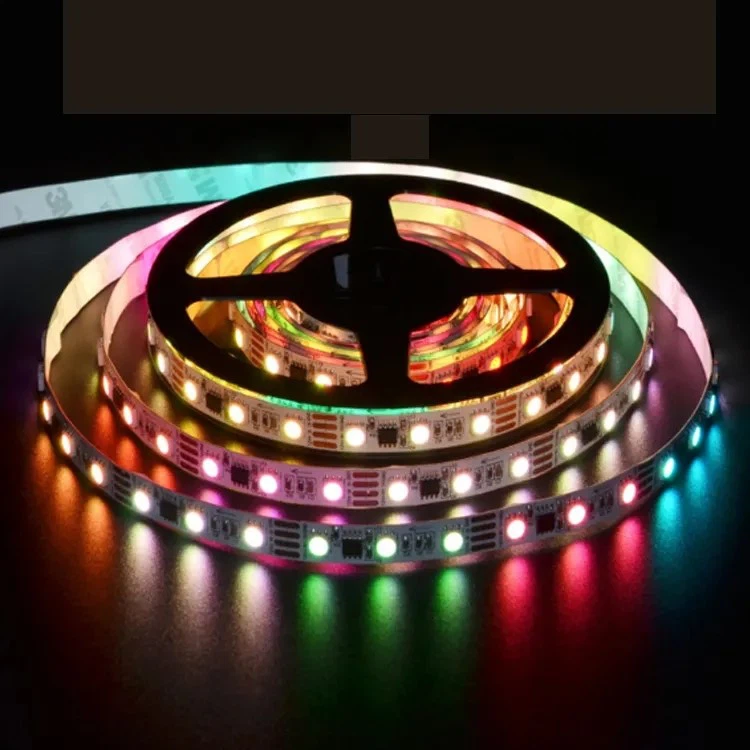
RGB LED strips have become a favoured option for illumination solutions due to their capacity to be customised to one's preference and their extensive colour palette. Nevertheless, numerous individuals encounter difficulties when attempting to connect their RGB LED strips without a controller. This article will provide you with a comprehensive guide to the process of cabling an RGB LED strip without a controller.
It is crucial to acknowledge that the number of colour options available will be restricted when an LED strip is wired without a controller. You will be able to activate all of the LEDs simultaneously, or you may be able to activate individual colours, contingent upon the wiring configuration.
Step 1: Compile your resources
The following materials are required to interconnect your RGB LED strip without a controller:
- Power supply (preferably a 12V DC power supply) - RGB LED strip
- Wire cleaners
- Electrical tape
- Soldering iron and solder
-- Heat-shrink tubing (optional)
Step 2: Ascertain the voltage and current requirements of your RGB LED strip.
It is crucial to confirm the voltage and current specifications of your RGB LED strip prior to proceeding. The majority of RGB LED strips operate at 12V DC; however, it is crucial to verify the manufacturer's specifications to guarantee compatibility with your power supply. Furthermore, it is imperative to ascertain the current rating of your LED strip to guarantee that your power supply can supply sufficient current to operate the LEDs.
Step 3: Trim the LED strand to the desired length.
Cut the LED strip to the desired length using a wire cutter or pointed scissors. Take care to only clip the strip along the designated cut line to prevent any damage to the circuit board or LEDs.
Step 4: Determine the wiring configuration of your RGB LED strip.
The majority of RGB LED strips are equipped with four conductors, one for each of the red, green, and blue LED crystals, in addition to a shared ground wire. Refer to the manufacturer's specifications or meticulously examine the strip to identify each wire in order to ascertain the wiring configuration of your LED strip.
Step 5: Connect the LED strip to the wires using solder.
Solder each wire to the corresponding pad on the circuit board using a soldering iron and solder. To prevent accidental contact or damage to the circuit board, ensure that each connection is secured with electrical tape or heat shrink tubing.
Step 6: Connect the power supply.
Lastly, connect the LED strip to the power supply by using the common ground wire and one or more of the colour wires. For instance, to activate the blue LEDs, you would connect the blue wire to the positive terminal of your power supply and the common ground wire to the negative terminal. On the other hand, it is possible to activate all of the LEDs simultaneously by connecting the power supply to all three colour cables.
Although the colour options of an RGB LED strip are restricted by the absence of a controller, it is a workable alternative for straightforward illumination configurations and can be accomplished with basic tools and materials. In no time, you can experience custom illumination by effectively wiring your LED strip and following these steps.
https://www.benweilighting.com/professional-lighting/led-strip-lights/48v-led-strip-light.html