

Introduction: The Functional and Aesthetic Potential of Track Lighting
Track lighting has evolved from a merely utilitarian solution into a sophisticated design element that offers unparalleled flexibility in modern interior design. Unlike fixed recessed or pendant fixtures, track lighting systems consist of a continuous electrified rail that accommodates adjustable luminaires, allowing designers to reconfigure light direction, intensity, and distribution without structural modifications. This adaptability makes track lighting particularly valuable for residential spaces, where lighting needs vary across daily activities, seasons, and evolving decorative preferences.
This article presents a systematic exploration of five innovative strategies for integrating track lighting into residential interiors. Each strategy addresses distinct design objectives-from artifact accentuation to biophilic enhancement-and is supported by practical guidelines for fixture selection, placement, and optical control. The aim is to provide both design professionals and discerning homeowners with a technical yet accessible framework for leveraging track lighting as a transformative spatial tool.

Curatorial Illumination: Highlighting Artwork and Collectibles
Principles of Art-Specific Lighting
Artwork requires lighting that balances visibility, preservation, and dramatic effect. Excessive ultraviolet radiation or thermal exposure can degrade pigments and substrates, while inadequate illumination fails to reveal texture, color fidelity, and three-dimensionality. Track lighting addresses these concerns by enabling precise beam control, angle adjustment, and lamp selection.
System Configuration for Wall-Mounted Art
For paintings, photographs, or tapestries, install a track 60–90 cm from the wall, positioning individual fixtures at a 30° incident angle to minimize glare on glossy surfaces. Use directional spotlights with narrow beam spreads (15°–25°) for small, detailed works, or wider floods (35°–45°) for large-scale pieces. For sculptural objects mounted on pedestals or shelves, ceiling tracks with adjustable downward-facing heads allow grazing light that accentuates surface texture and undercuts.
Chromatic Tuning and Layering
Color temperature profoundly affects perceived artwork tone. Warm white (2700–3000K) enhances oil paintings with red and gold undertones, creating an intimate gallery ambiance. Cool white (3500–4000K) suits contemporary works, graphic art, or pieces with blue-green palettes, lending a crisp, analytical feel. For dynamic effects, integrate RGBW track heads that permit hue switching via remote control-ideal for rotating exhibitions or mood-based programming. Layering track lighting with ambient cove or wall-wash fixtures produces a luminescent hierarchy that guides the eye without flattening depth.
Architectural Accentuation: Reinforcing Spatial Geometry
Identifying Key Architectural Features
Columns, niches, vaulted ceilings, arches, textured walls, and built-in shelving are prime candidates for accentuation. Track lighting transforms these elements from passive backdrops into active compositional anchors by manipulating light and shadow.
Grazing and Washing Techniques
Grazing light: Mount track close (15–30 cm) to a textured surface-such as brick, stone veneer, or ribbed plaster-with fixtures aimed nearly parallel to the wall. This emphasizes relief and creates exaggerated shadow patterns that announce tactile qualities.
Wall washing: Position track 60–90 cm from a smooth feature wall, spacing fixtures at intervals equal to their distance from the surface. The resulting even illumination erases texture but flattens and expands the perceived wall plane, ideal for making a niche or archway recede or advance.
Contrast Ratios and Drama
For high-contrast drama (e.g., illuminating a freestanding column in a dim living room), use narrow-beam track heads with a 10:1 luminance ratio between the feature and its surroundings. Soft, low-contrast accentuation-suitable for reading nooks beneath arches-requires diffused lenses or track-mounted frosted globes that spill light gently into adjacent spaces. Dimmers are essential for fine-tuning these ratios in real time.
Spatial Zoning and Circulation Guidance in Open Plans
The Challenge of Undifferentiated Volume
Open-plan living, dining, and kitchen areas often suffer from a lack of visual boundaries, leading to acoustic confusion and functional overlap. Track lighting offers a non-structural zoning solution by mapping different light "fields" onto distinct activity zones.
Zoning Strategies by Activity
| Zone Type | Recommended Track Configuration | Photometric Goal |
|---|---|---|
| Cooking/prep | Linear track over counter edges, 3000–3500K, high CRI (>90) | Shadow-free task illumination |
| Dining | Low-hung track (ceiling or suspended rail) with downward spotlights on table, 2700K | Concentrated, warm pool of light |
| Lounge | Perimetral track with indirect upward-firing heads, 2200–2700K | Diffuse ambient glow, no direct glare |
| Circulation | Continuous straight track along primary walking path, gimbal heads set to 45° toward floor | Low-level guiding markers without stepping into seating zones |
Dynamic Path Creation
Use parallel track runs to delineate the edge of a corridor or the transition from entrance to living area. Angling track heads to graze the floor at regular intervals-a technique known as "light scalloping"-creates a non-intrusive visual rhythm that subconsciously directs movement. For multi-functional spaces, install two independent track circuits on separate dimmers, allowing daytime bright task lighting to convert to evening cinematic zoning with one switch.
Eclectic Integration: Mixing Fixture Styles and Color Optics
Breaking Monotony with Hybrid Track Systems
Contemporary track systems are available in numerous profiles (linear, curved, monorail, cable-suspended) and finishes (brass, matte black, chrome, powder-coated colors). Deliberate mismatching-for instance, pairing industrial vintage Edison-style track heads with minimalist white rails and one art-deco glass globe-produces an intellectually playful aesthetic that signals personal curation rather than off-the-shelf uniformity.
Color Filtering and Psychological Effects
Add removable gel filters or integrated color-tunable LED lamps to individual track heads. Key applications:
Temporal coding: Shift from neutral white (daytime) to amber (evening) to deep blue (nighttime relaxation) in a home theater or bedroom.
Seasonal adaptation: Mint green or coral pink for summer; deep burgundy or gold for winter holidays.
Art activation: Colored spotlights (e.g., magenta on a green sculpture) create chromatic tension that transforms ordinary objects.
Material and Texture Coordination
Treat track fixtures as jewelry for the ceiling. In a room with exposed wooden beams, choose raw brass or bronze heads. In a minimalist white kitchen, opt for matte white tracks with black internal wiring for subtle contrast. The track rail itself can be recessed, surface-mounted, or suspended via aircraft cables-each mounting method changes the perceived ceiling height and visual rhythm.
Biophilic Lighting: Enhancing Indoor Flora through Spectral Design
Light as a Substitute for Sunlight
Indoor plants require not only adequate intensity but also appropriate spectral composition and photoperiodic variation. Standard residential lighting often lacks the red and blue wavelengths critical for photosynthesis and photomorphogenesis. Track lighting enables precise positioning of horticultural-grade LED lamps directly above plant clusters.
Recommended Spectral Configurations
Full-spectrum LED (4000–6500K, CRI >95) : Mimics midday sun; suitable for succulents, herbs, and flowering plants placed near windows as supplemental light.
Red-blue ratio (3:1 red 660nm : blue 450nm) : Maximizes vegetative growth; ideal for tropical foliage plants (monstera, ferns) in windowless bathrooms or dark corners.
Dawn-dusk simulation: Equip track heads with programmable dimmers and timers to gradually increase intensity from 0% to 80% over 30 minutes (morning) and reverse in the evening. This reinforces circadian rhythms for both plants and occupants.
Placement and Glare Management
Mount track 30–60 cm above the tallest plant, using parabolic louvered spotlights to confine light to foliage and avoid casting harsh shadows on adjacent seating areas. For vertical green walls, install vertical track sections or wall-mounted track segments every 60–90 cm, aiming heads upward or downward to create cross-lighting that reveals leaf venation and prevents dark under-canopy zones.
Conclusion: Toward a Personalized Luminaire Ecology
Track lighting transcends mere illumination when approached as an adaptive, multidimensional design medium. By strategically deploying the five strategies outlined above-curatorial accentuation, architectural grazing, zonal partitioning, eclectic mixing, and biophilic integration-designers can transform generic interiors into spatially intelligent, emotionally resonant environments. The common thread is controllability: each track head's position, focus, color, and intensity can be modified as needs evolve, making track lighting one of the most future-proof investments in residential lighting design.
Practitioners are encouraged to experiment with combinations (e.g., mixing biophilic full-spectrum heads with warm-white art spotlights on the same track run) and to document parametric adjustments. Ultimately, the most innovative track lighting design is not a fixed scheme but a responsive system that negotiates between architecture, occupant behavior, and the ever-changing quality of light itself.
About Our Company
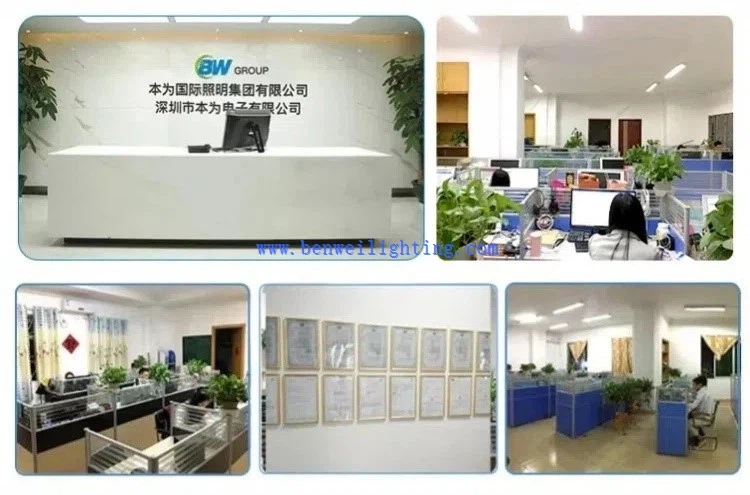
How To Cooperate With Us?
Our firm prides itself on owning its own factory, guaranteeing complete control over the production process and the quality of our goods. We are not only agents; we are manufacturers committed to offering our clients the most competitive rates available. We invite consumers to evaluate our samples first, as we are assured that the quality and pricing of our items are self-evident. Our dedication to excellence and client satisfaction compels us to consistently perform at our best and provide superior quality products.
Our address
3rd Floor, 5th Building, Hebei Industrial Park, Hualian Community, Longhua District, Shenzhen, China





