

Introduction
Historical Context
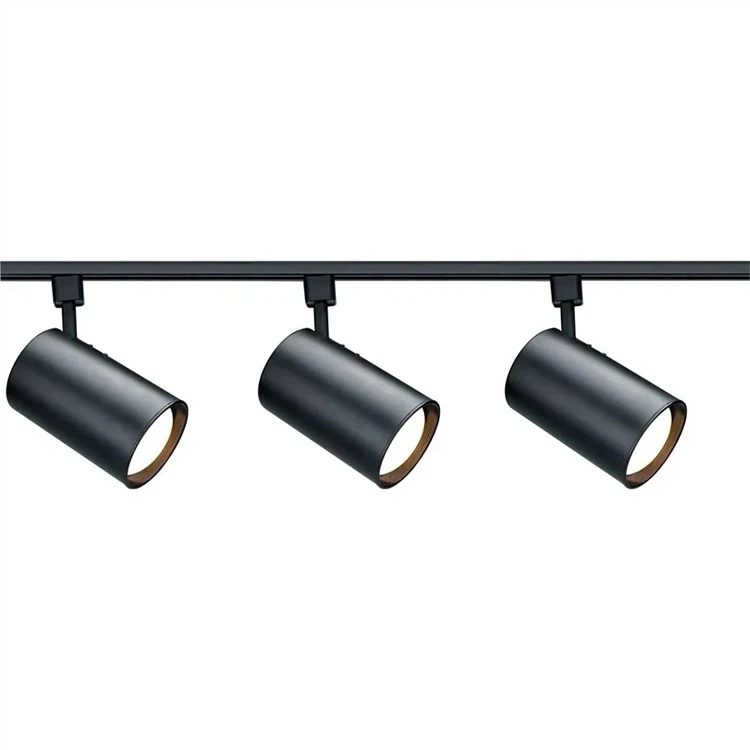
Track lighting emerged in the mid‑20th century as a flexible solution for directional illumination. A linear metal track (surface‑mounted on ceilings or walls) houses multiple independent luminaire heads that can be repositioned along the track and rotated to aim light at specific objects or zones. Its peak popularity occurred during the 1970s–1990s, coinciding with post‑modern and industrial design trends.
Problem Statement and Research Question
Recent years have witnessed a proliferation of alternative lighting systems that promise cleaner aesthetics, lower cost, and simpler installation. Consequently, interior designers and homeowners increasingly question whether track lighting has become anachronistic. This paper addresses the question: Is track lighting outdated in the context of current lighting technology, design preferences, and economic constraints?
Cost Analysis: Initial Investment and Long‑Term Value
Component‑Driven Upfront Costs
A conventional track lighting system requires several discrete components: the track (usually copper‑lined aluminum), live connectors, end caps, mounting hardware, a transformer (for low‑voltage systems, typically 12V or 24V), and individual track heads (each containing a lamp and socket). Compared to standard ceiling‑mounted surface fixtures or recessed downlights, the per‑lumen initial cost of track lighting is approximately 30–60% higher. For a typical 4‑m track with five heads, the material cost ranges from USD 150 to 400, whereas five simple LED downlights may cost USD 80–200 excluding installation.
Hidden Expenses: Accessories and Electrical Work
Track lighting often demands additional electrical infrastructure. Each track segment requires a dedicated power feed point, which may necessitate new junction boxes or rewiring. Low‑voltage systems also include external or internal transformers, adding to component count and potential failure points. In renovation projects, these requirements increase labor costs by 15–25% relative to installing standard fixtures.
Operating and Maintenance Costs
Modern track lighting increasingly uses integrated LED heads (non‑replaceable modules) or GU10/MR16 sockets. LED heads last 25,000–50,000 hours, reducing lamp replacement frequency. However, when compared to integrated LED linear pendants or panel lights, the track system's modularity still incurs higher per‑head replacement cost because each head contains its own driver/optics. Over a 10‑year period, the total cost of ownership of track lighting is often higher than that of recessed LED systems, unless frequent re‑aiming is required.
Aesthetic and Spatial Critiques
Visual Bulkiness and Ceiling Height Constraints
One of the most cited drawbacks is the physical prominence of the track and protruding heads. On ceilings lower than 2.4 m (8 ft), a track profile of 25–40 mm in height plus heads extending 50–100 mm downward creates a visually heavy overhead element. This can make a room feel more crowded and reduce perceived ceiling height. By contrast, recessed downlights sit flush with the ceiling surface, contributing to a clean, minimalist appearance. Surface‑mounted LED linear lights (e.g., slim bars) offer a more streamlined silhouette with typical heights of 15–25 mm.
Shadow Generation and Surface Imperfections
Because track lighting heads are point sources positioned away from the wall (often 300–600 mm), they cast oblique shadows from ceiling irregularities, joists, or textured finishes. These shadows can accentuate drywall seams, uneven plaster, or acoustic panel edges-details that designers typically prefer to obscure. Wall‑washing techniques using track heads are possible but require precise positioning; otherwise, scalloped or harsh shadow patterns result. Modern alternatives such as cove lighting or linear LED profiles produce diffuse, shadow‑free illumination that conceals surface defects.
Style Associations and Perceived Obsolescence
Track lighting remains strongly associated with 1980s–1990s retail stores, basement workshops, and dated kitchen renovations. Although contemporary manufacturers offer sleek, minimalist track designs (e.g., monorail systems with curved tracks, matte black or brushed nickel finishes), the general public often perceives any exposed track as an industrial relic. This "stylistic baggage" can reduce property appeal, particularly in high‑end residential design where seamless integration is prioritized.
Installation Complexity and Labor Requirements
Site Preparation and Mounting Challenges
Installing a track lighting system involves multiple steps: locating joists, mounting the track with screws or toggle bolts, cutting the track to exact length (if not modular), connecting power feed via a canopy or live end connector, and attaching each head. In large spaces or multi‑zone layouts, tracks may need to be joined with L‑, T‑, or X‑connectors, adding alignment difficulty. Misalignment of the track causes heads to tilt or slide poorly. The average installation time for a four‑meter straight track is 2–3 hours for a competent electrician; a comparable set of four recessed downlights takes 1.5–2 hours.
Post‑Installation Adjustment and Maintenance Access
While adjustability is a claimed advantage, frequent re‑aiming can loosen the head‑track connection over time, leading to intermittent electrical contact. Furthermore, cleaning dust from exposed track and heads is more labor‑intensive than wiping a flat recessed trim. In commercial environments (e.g., retail changing rooms), the moving parts of track heads (swivels, tilt mechanisms) are prone to wear after 5,000–10,000 actuations, requiring replacement of individual heads.
Comparative Advantages: Where Track Lighting Still Excels
Unmatched Directional Flexibility
No other surface‑mounted system allows individual luminaires to be independently repositioned along a continuous busbar while simultaneously offering 350° rotation and 90° tilt. This is invaluable in:
Art galleries and museums where exhibit layouts change seasonally.
Retail stores with rotating product displays.
Workshops or garages where task lighting locations vary.
Recessed downlights, once installed, are fixed; linear LED systems provide continuous but non‑aimable illumination. Thus, for high‑churn environments, track lighting remains functionally superior.
Modern High‑Performance Track Systems
Recent innovations have addressed many historical drawbacks:
Low‑profile tracks (as slim as 12 mm height) with integrated 24V constant‑voltage drivers.
LED track heads delivering >100 lm/W with precision optics (15°–60° beam angles).
Magnetic track systems (e.g., "magnetic rail") that allow tool‑free attachment and repositioning of heads, plus snap‑in linear modules.
Smart track lighting with DALI or Zigbee control, enabling individual head dimming and color tuning.
These systems, while more expensive, eliminate the bulky appearance and reduce installation time through plug‑and‑play connectors.
Accent Lighting and Layered Schemes
In layered lighting designs (ambient, task, accent), track lighting excels at the accent layer. A well‑positioned track with narrow‑beam heads can achieve highlight ratios of 5:1 to 10:1 on artwork or architectural features-performance difficult to match with fixed downlights. For spaces with irregular geometry (sloped ceilings, alcoves, lofts), track lighting adapts without custom fabrication.
Decision Framework: When to Use (or Avoid) Track Lighting
Criteria for Track Lighting Being Appropriate
| Condition | Recommendation |
|---|---|
| Frequent layout changes (monthly) | Strongly consider track |
| Ceiling height > 2.7 m (9 ft) | Acceptable visually |
| Need for narrow accent beams (e.g., galleries) | Track is optimal |
| Industrial, loft, or high‑tech aesthetic | Track fits style |
| Budget for premium magnetic/LED track | Modern track recommended |
Criteria for Avoiding Track Lighting
| Condition | Alternative |
|---|---|
| Low ceiling (<2.4 m) | Recessed or surface‑slim LED |
| Minimalist / Scandinavian aesthetic | Flush mounts or linear profiles |
| Tight budget (under USD 100 per fixture) | Downlights or LED panels |
| Owner dislikes visible hardware | Recessed or cove lighting |
| Space requires uniform ambient light (not directional) | Troffers or edge‑lit panels |
Conclusion and Outlook
Synthesis of Findings
Track lighting as a generic category is not universally outdated, but traditional incandescent‑halogen track systems with bulky profiles are increasingly obsolete. Modern low‑profile, LED‑based magnetic track systems retain unique functional advantages-directional flexibility and reconfigurability-that fixed luminaires cannot replicate. However, for typical residential applications where lighting layouts are static and aesthetic minimalism is prioritized, track lighting is often an unnecessary compromise in terms of cost, visual clutter, and installation effort.
Final Answer to the Title Question
No, track lighting is not inherently outdated, but its relevance is context‑dependent. In dynamic commercial environments or design schemes that celebrate industrial character, contemporary track lighting remains a valid, even superior, choice. Conversely, for most standard home interiors, simpler and cleaner alternatives have surpassed it in both economy and aesthetics. The correct answer is not a binary yes/no but a conditional evaluation based on ceiling height, layout flexibility needs, and stylistic preferences.
Practical Recommendation
For readers considering track lighting in 2026: specify magnetic LED track systems with a low‑profile aluminum rail, avoid halogen or MR16 heads, and ensure the track is mounted on a ceiling above 2.5 m. If these conditions cannot be met, explore recessed adjustable gimbals or surface‑mounted linear LED fixtures as more modern substitutes.

How To Cooperate With Us?
Our firm prides itself on owning its own factory, guaranteeing complete control over the production process and the quality of our goods. We are not only agents; we are manufacturers committed to offering our clients the most competitive rates available. We invite consumers to evaluate our samples first, as we are assured that the quality and pricing of our items are self-evident. Our dedication to excellence and client satisfaction compels us to consistently perform at our best and provide superior quality products.
Our address
3rd Floor, 5th Building, Hebei Industrial Park, Hualian Community, Longhua District, Shenzhen, China





