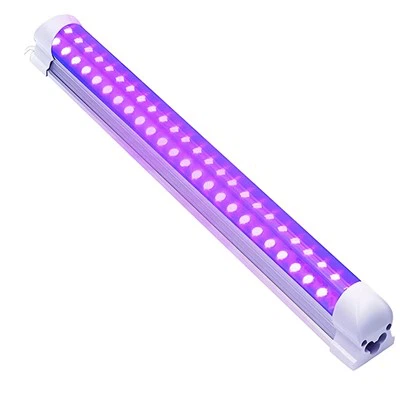
The expanding usage of ultraviolet light-emitting diode (UV LED) devices in everyday beautification, industrial curing, domestic cleaning, and supplementary medical settings has raised public concerns about the safety and possible risks of UV LED lights. The majority of consumers believe UV LED lights are totally safe because of their low power consumption, extended service life, and focused wavelength emission, which set them apart from conventional high-pressure mercury UV lamps. However, it is impossible to categorise UV LED bulbs as completely safe or dangerous. The radiation dosage, length of exposure, product quality, and use guidelines all have a direct impact on the possible health hazards. This study thoroughly examines the possible risks of UV LED lights, explains their risk mechanism, and suggests standardised usage recommendations to give scientific reference for user application. It is based on optical radiation theory and human skin and eye photobiological safety standards.
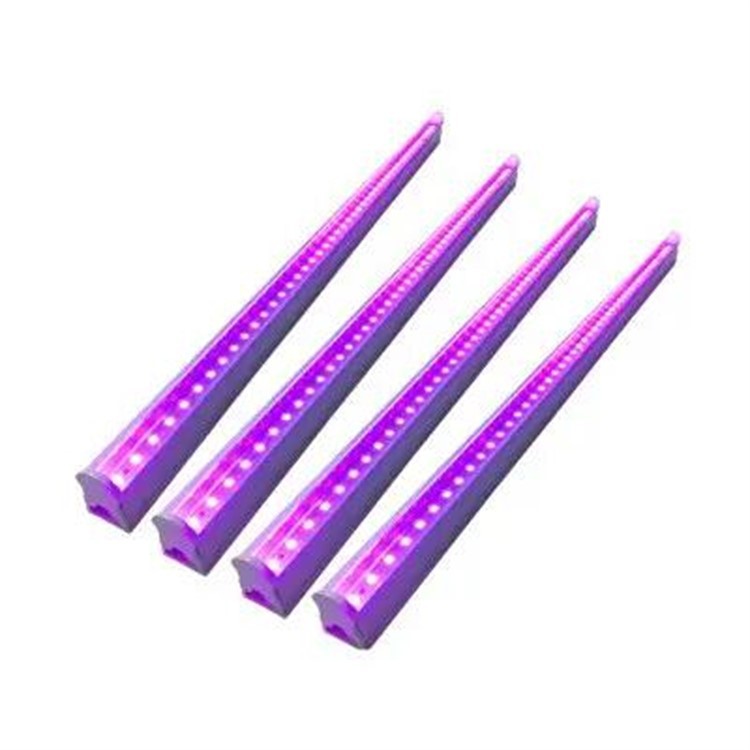
Basic Physical Properties and Biological Mechanism of UV Radiation
A portion of the electromagnetic spectrum with wavelengths between 10 and 400 nm is known as ultraviolet (UV) radiation. It is invisible to the human eye and cannot be detected by the visual senses. UVA (315 nm–400 nm), UVB (280 nm–315 nm), and UVC (100 nm–280 nm) are the three main bands of solar ultraviolet radiation that reach the Earth's surface. UVC is nearly entirely absorbed by the atmospheric ozone layer, whereas UVA and UVB can pass through the atmosphere and affect human skin and ocular tissues.
UV light is classified as non-ionizing radiation from a biological standpoint. Excessive cumulative radiation exposure may cause irreparable biological harm to human cells even if it lacks nuclear radiation's high-energy ionisation capabilities. Short-wavelength UVB radiation primarily affects the human skin's epidermal layer, producing erythema, sunburn, pigmentation, and damage to epidermal cells. Prolonged exposure to high levels of UVB radiation greatly raises the risk of skin cell cancer. Strong tissue penetration caused by long-wavelength UVA radiation may penetrate the epidermis and reach the dermal layer, damaging collagen and elastic fibres and causing wrinkles, ageing, and long-term oxidative damage to the skin. Furthermore, UVA and UVB radiation may enter the cornea of the eye, build up in the lens, denaturise the lens proteins, and eventually result in cataracts, conjunctival damage, and other ocular disorders.
Radiation Emission Characteristics of Commercial UV LED Lamps
Commercial civilian UV LED lights feature unique low-radiation emission properties when compared to natural solar ultraviolet radiation and conventional ultraviolet light sources. High-risk short-wave UVB and UVC radiation is effectively suppressed by the chip wavelength customisation and optical filtering technology used in standard approved UV LED products. Under typical outdoor lighting circumstances, the total UV radiation intensity released by formal UV LED lights is far lower than the effective radiation intensity of natural sunlight, and the instantaneous radiation dosage cannot cause acute harm to human skin and eyes.
Standardised UV LED lights are widely acknowledged as safe for everyday, short-term, and standardised usage in the industry because of the aforementioned structural and technological benefits. With no occurrences of acute radiation damage or poisoning under standard operating conditions, they are frequently used in nail care, skin local care, small-area disinfection, and other civilian situations. However, the low radiation properties of UV LED lights only reduce acute damage concerns; in long-term and irregular usage situations, significant chronic cumulative damage hazards remain and must be disregarded.
Potential Health Hazards of Long-Term UV LED Lamp Exposure
The cumulative biological harm brought on by extended, continuous exposure to low-dose UV radiation is the main possible concern associated with UV LED bulbs. Low-dose UV radiation affects on human tissues for a long period, and the damage will accrue gradually and appear chronically, in contrast to acute high-dose radiation damage that has clear instant signs.
Long-term, continuous exposure to UV LED radiation will damage cell DNA and mitochondrial structure, cause oxidative stress responses in skin cells, and hasten the ageing process of human skin tissues. Skin dryness, fine wrinkles, pigment deposition, and early ageing may be caused by even low-intensity UVA radiation found in UV LED light sources, which can penetrate the epidermis and operate on the dermis for a long time. Unprotected long-term exposure to UV LED light sources will continuously irritate the cornea and lens of the eyes, raising the risk of early lens turbidity in the long term and causing eye tiredness, dry eyes, and conjunctival congestion in the near term.
The degree of UV radiation damage is positively connected with exposure duration and radiation dosage, according to photobiological safety study data. The cumulative radiation damage over months and years will eventually surpass the human body's self-repair threshold, causing irreversible tissue damage in everyday use scenarios like long-term nail baking and indoor auxiliary lighting, where users are frequently in an unprotected exposure state.
Quality Differences of UV LED Lamps and Additional Risk Factors
Another important aspect contributing to the rising safety concerns of UV LED lights is the consumer market's inconsistent product quality. Professional optical filter layers and wavelength calibration technologies found in high-quality certified UV LED lamps allow them to precisely control the UVA, UVB, and UVC radiation ratio and strictly limit the effective radiation dose within the safe range defined by international photobiological safety standards.
On the other hand, inexpensive, uncertified, subpar UV LED lights often lack accurate wavelength screening and radiation suppression technology. These items often emit a lot of UVA radiation, and they may also include traces of high-risk UVB and UVC short-wave radiation. In addition to accelerating skin photoaging and cell oxidative damage, excessive UVA radiation also increases skin penetration damage and significantly raises the incidence of skin lesions. The uncertainty of safety concerns is further increased by subpar goods' fluctuating luminous power and irregular radiation dose fluctuations during long-term operation.
Limitations of UV LED Lamps in Medical Auxiliary Application
A non-standard medical use scenario has emerged in recent years as some customers and merchants have attempted to use UV LED lights for the supplemental treatment of skin conditions including dermatitis, psoriasis, and eczema. However, civilian UV LED bulbs do not satisfy the design criteria and effectiveness requirements of professional medical ultraviolet therapy equipment from the standpoint of clinical medical research and medical device certification specifications.
Professional medical UV therapy equipment can target certain skin lesions for standardised radiation treatment because it has thorough clinical safety calibration, adjustable graded radiation dosage, and accurate wavelength location. Civilian UV LED lights, on the other hand, have unreliable wavelength output, an unpredictable radiation dosage, and no scientific study evidence to support their use in treating illness. The efficacy and safety of civilian UV LED lights for the treatment of inflammatory skin conditions are currently not sufficiently supported by credible medical research. In addition to failing to alleviate the condition, blindly utilising UV LED lights for self-treatment may worsen skin lesions and inflammation by causing secondary UV radiation damage to both normal and sick skin tissues.
Standardized Use Strategies to Avoid UV LED Radiation Risks
To maximize the utilization value of UV LED lamps while avoiding potential health risks, users need to formulate standardized use specifications from product selection, operation protection and application scenarios. In terms of product selection, priority should be given to UV LED lamps with international photobiological safety certification and formal quality inspection reports to avoid unqualified inferior products with excessive radiation.
In terms of operation protection, for scenarios requiring long-term use of UV LED lamps, active protective measures must be taken. Users can apply professional anti-ultraviolet sunscreen products on exposed skin to form a protective layer against UV radiation; meanwhile, wear professional UV-blocking protective eyewear to isolate light source radiation and protect corneal and lens tissues. In addition, it is necessary to control single exposure time and avoid continuous long-term uninterrupted use, so as to reduce the accumulation of radiation dose.
In terms of scenario application, civilian UV LED lamps should be strictly limited to daily civilian scenarios such as beauty curing and household disinfection, and shall not be substituted for professional medical equipment for disease treatment. For any skin and ocular diseases, users must consult professional medical institutions and doctors, and carry out standardized treatment in accordance with clinical medical specifications.
Conclusion
In summary, the safety of UV LED lamps is conditional and scenario-dependent. Standard qualified UV LED lamps have low radiation intensity and no acute damage risk, which are safe and reliable for short-term and standardized daily use. However, long-term unprotected exposure, use of inferior uncertified products, and blind medical application will bring potential chronic radiation damage and health risks. Users should correctly recognize the photobiological characteristics and potential hazards of UV LED lamps, adhere to the principle of standardized selection and scientific use, effectively avoid radiation risks, and safely exert the application value of UV LED technology in daily life and industrial scenarios.

How To Cooperate With Us?
Having its own factory gives our firm complete control over the production process and the quality of our goods, which we take great pride in. We are manufacturers, not only brokers, committed to offering our clients the lowest costs. We invite consumers to evaluate our samples first since we are certain that the cost and quality of our items are evident. Our dedication to excellence and client happiness motivates us to consistently provide superior products.
Our address
3rd Floor, 5th Building, Hebei Industrial Park, Hualian Community, Longhua District, Shenzhen, China