Tunnels are critical infrastructures that allow us to move traffic and goods efficiently and safely. As indispensable parts of modern road, highway, and railway transportation networks, tunnels eliminate geographical barriers such as mountains and rivers, greatly shorten travel routes, ease urban road congestion, and support the smooth operation of passenger and cargo transportation across regions. In contrast to open-air roadways that benefit from natural sunlight throughout the day, tunnels are fully enclosed or semi-enclosed spaces with zero natural lighting inside, making artificial lighting the sole visual guarantee for all road users. It's important to ensure that tunnels are well-lit to prevent accidents and improve visibility for drivers. Poor tunnel lighting can lead to common visual adaptation problems, including the sudden "dark adaptation" when vehicles enter tunnels and "bright adaptation" when exiting, which easily cause driver visual dizziness, misjudgment of road conditions, and rear-end or collision accidents. Floodlights are the most common lighting solution for tunnels due to their wide illumination range, strong light penetration, and adaptable installation conditions, but there are several considerations to keep in mind when installing them. Scientific and standardized floodlight installation is not only related to basic lighting effects but also directly affects tunnel traffic safety, long-term operational costs, and equipment service life.
Here are some key considerations when installing floodlights in tunnels:
1. Light Placement: The placement of floodlights in a tunnel is critical to ensure optimal visibility for drivers. Unlike ordinary outdoor lighting, tunnel lighting requires continuous, uniform, and blind-spot-free illumination along the entire driving lane, and unreasonable light placement will directly destroy the integrity of the visual field. The lights should be evenly spaced and positioned to avoid glare and shadows. Concentrated or irregularly arranged floodlights will cause alternating bright and dark areas on the road surface, which interferes with drivers' visual judgment and induces visual fatigue during long-distance driving. The recommended spacing for floodlights is between 60 and 90 feet, depending on the height and width of the tunnel. Wide and high-span highway tunnels usually adopt a 90-foot spacing to match the large illumination coverage of single floodlights, while narrow urban small tunnels with lower ceiling heights need a tighter 60-foot spacing to avoid local shadow areas and ensure every section of the tunnel roadway obtains consistent lighting brightness.
2. Light Direction: The direction of light is also important when installing floodlights in tunnels. Many tunnel lighting problems, including dazzling glare and uneven road illumination, stem from incorrect light angle adjustment rather than poor lamp quality. Lights should be mounted level with the ground and angled towards the center of the tunnel. This installation method effectively concentrates the light source on the driving roadway and sidewalk areas, avoiding light deviation to tunnel walls or ceilings that causes light waste. This allows for uniform illumination of the roadway and prevents glare for oncoming drivers. When the light is scattered upward or obliquely facing oncoming traffic, strong reflected light and direct light will irritate drivers' retinas, leading to instant visual blurriness. Reasonable light direction control ensures that the light acts directly on the road surface where driving vision is concentrated, creating a stable and comfortable visual environment for two-way traffic in the tunnel.
3. Light Intensity: The intensity of the floodlights must be carefully selected to ensure the proper amount of illumination for the tunnel size. Tunnel light intensity is not a one-size-fits-all standard, and it needs to be dynamically matched according to tunnel length, lane quantity, traffic flow, and external natural light intensity. Especially for tunnel entrances and exits, the light intensity needs to be adjusted adaptively to buffer the visual difference between the bright outdoor environment and the dark tunnel interior. Floodlights that are too bright can cause glare, while lights that are too dim can make driving conditions unsafe. Excessively high light intensity will not only cause visual irritation and fatigue but also lead to unnecessary energy waste and accelerate lamp aging. On the contrary, insufficient light intensity will leave road details, traffic markings, and obstacles invisible, greatly increasing the risk of traffic accidents, especially during night driving and bad weather conditions with low visibility.
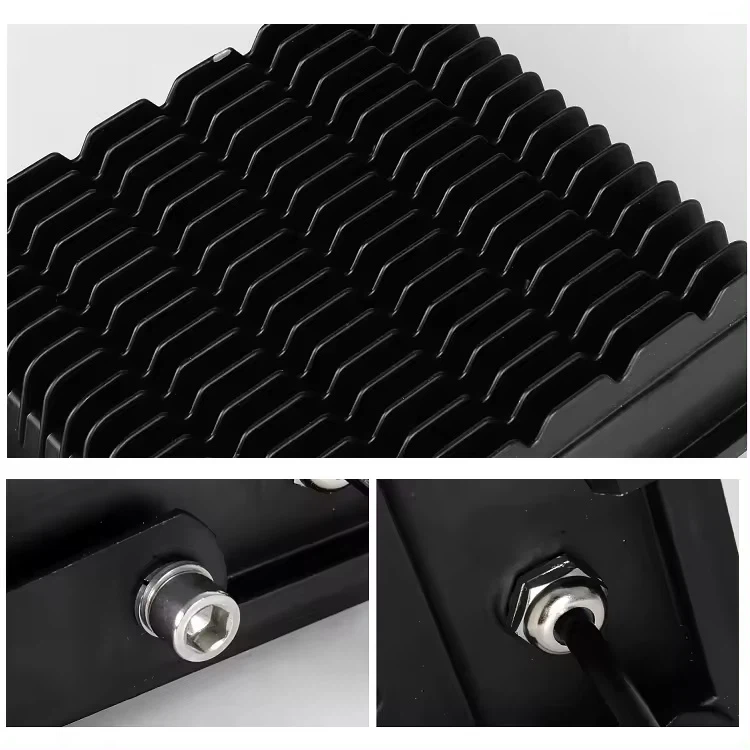
4. Energy Efficiency:Energy efficiency is a crucial factor when selecting floodlights. Tunnel floodlights need to operate stably for 24 hours a day all year round, and energy consumption has always been a core part of tunnel operational costs. With the global emphasis on energy conservation and green transportation infrastructure, high-efficiency and low-energy lighting equipment has become the primary choice for tunnel renovation and new construction projects. LED lights are the most energy-efficient lighting option and can provide the same brightness as other types of lighting while using less energy. They convert most electric energy into light energy instead of heat energy, avoiding the serious energy loss of traditional lighting equipment. They are also more durable and can last up to 50,000 hours compared to traditional lights that last for only 10,000 hours. The ultra-long service life greatly reduces the frequency of equipment replacement, while excellent energy-saving performance cuts down long-term electricity expenses, bringing dual economic and environmental benefits for tunnel operational management.
5. Maintenance:Regular maintenance is essential for ensuring the longevity and proper function of floodlights in tunnels. The internal environment of tunnels is relatively closed, with poor air circulation, and it is easy to accumulate dust, vehicle exhaust deposits, and tiny oil stains on the lamp surface. Long-term accumulation of dirt will block light output, reduce lighting brightness, and affect the overall illumination effect of the tunnel. At the same time, long-term continuous operation will also lead to minor aging and loose parts of lamps. Lights should be cleaned and inspected regularly to ensure that they are functioning at optimal levels. Routine maintenance work includes surface dust cleaning, circuit line inspection, lamp fixation check, and brightness test. Timely maintenance can eliminate potential equipment faults in advance, maintain stable lighting performance, and effectively extend the service life of floodlights.
6. Emergency Lighting: Tunnels require emergency lighting systems that activate in case of power outages or other emergencies. As closed traffic spaces, tunnels are more dangerous than open roads once accidents or power failures occur. Sudden lighting failure will cause instantaneous visual blindness for moving vehicles, easily triggering continuous rear-end collisions and mass traffic accidents. These systems should be tested regularly to ensure that they are functioning properly. Daily regular testing includes emergency power switching test, lamp activation sensitivity test, and continuous working time test of emergency lights. Only by ensuring the emergency lighting system can start instantly and work stably for a long time under abnormal conditions can we provide safe evacuation conditions for vehicles and personnel in emergency situations.
7. Safety Standards:
Floodlight installation in tunnels must comply with specific safety standards. Tunnel lighting is related to public traffic safety, so all installation operations and equipment selection cannot be carried out arbitrarily. Installations must follow strict guidelines set by regulatory authorities to ensure the safety of drivers and workers. These standardized guidelines cover lamp explosion-proof and waterproof grade, circuit safety protection, installation firmness, lightning protection measures, and fire safety specifications. Compliance with official safety standards can effectively avoid equipment failure, circuit short circuit, lighting collapse and other safety hazards, protecting the personal safety of passing drivers and on-site maintenance workers.
Floodlight installation in tunnels is a critical aspect of tunnel infrastructure and requires careful consideration to ensure optimal visibility for drivers. Every link from lamp layout, angle adjustment, intensity matching to later maintenance and safety detection determines the overall quality of tunnel lighting. It is vital to select floodlights that meet specific safety standards, are energy-efficient, and provide the appropriate illumination for the tunnel size. Blindly pursuing high brightness or low cost will bury hidden dangers for tunnel traffic safety and long-term operation. Regular maintenance and inspections are also essential to ensure the longevity and proper function of floodlights. Scientific daily management can maximize the performance of lighting equipment and reduce operational risks and costs. By taking these factors into consideration, tunnel operators can ensure that their tunnels are safe, well-lit, and ready for use, creating a stable, efficient, and safe traffic passage environment for various vehicles and pedestrian traffic, and promoting the safe and orderly operation of modern transportation infrastructure.

How To Cooperate With Us?
Because we have our own facilities, we are pleased to have complete control over the production process and the quality of our goods. We are committed to giving our clients the finest prices since we are manufacturers rather than just brokers. We encourage clients to look at our samples first since we are certain that the cost and quality of our items are transparent. Our dedication to excellence and client happiness motivates us to consistently provide superior products.
Our address
3rd Floor, 5th Building, Hebei Industrial Park, Hualian Community, Longhua District, Shenzhen, China