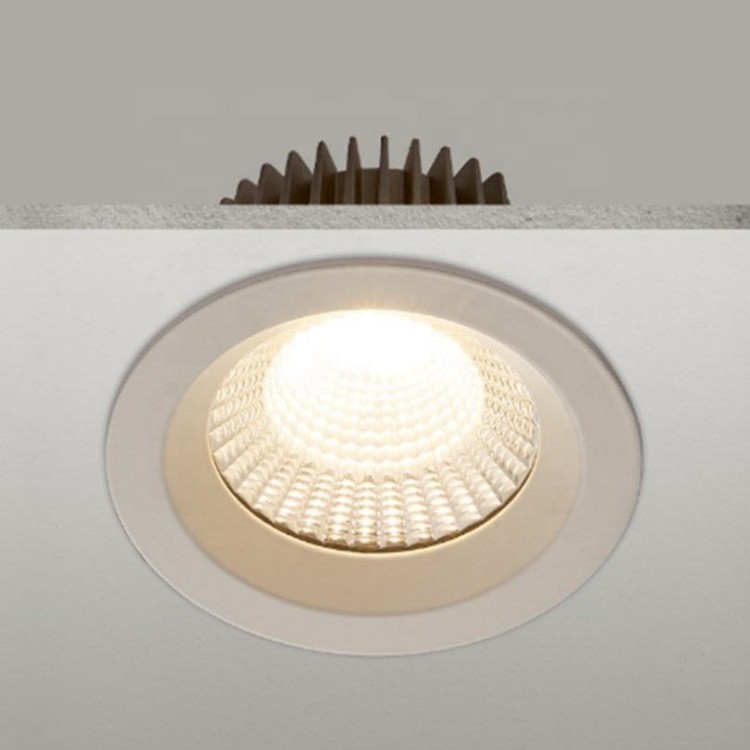
4 Reasons to Choose Recessed Downlights for Your Kitchen
1. Stylish, Compact Design
Recessed downlights are perfect for kitchens with low ceilings or minimalist designs since they sit level with the ceiling, unlike large pendant lights or chandeliers. They let in enough of light without taking up too much room.
2. Adjustable Color and Brightness
Adjustable Color Temperature: Select cold (4000K-5000K) for job lighting or warm (2700K-3000K) for a comfortable atmosphere.
Dimmable Choices: Adjust the brightness to fit various tasks, such as eating and cooking.
3. Efficiency in Energy Use
The energy consumption of modern LED downlights is much lower than that of conventional halogen lamps. Additionally, they endure longer, so fewer replacements are required as often.
4. Simple Upkeep
Recessed downlights are simple to clean and remain dust-free since there are no visible fixtures. Additionally, a lot of models include tool-free features for easy bulb replacement.
How to Create the Ideal Layout for Kitchen Downlights
Step 1: Plan Your Lighting Zones
Task Areas (Sink, Countertops): Install downlights two to three feet apart immediately above.
Ambient Lighting: For general lighting, use broader beam angles (60° to 90°).
Accent Lighting: Use movable downlights to draw attention to artwork or open shelves.
Step 2: Select the Appropriate Details
Brightness: For each downlight, aim for 500–800 lumens.
Beam Angle: 60°+ for ambient light, 30°-45° for job areas.
CRI (Color Rendering Index): To make food and surfaces seem lively and realistic, use a CRI of 90+.
Step 3: Steer clear of typical blunders
Overlighting: Excessive downlighting may produce glare.
Inadequate Spacing: Use the "divide by 2" formula, which states that the ceiling height ÷ 2 equals the distance between lights.
Ignoring Dimming: For flexibility and energy savings, always install dimmers.
Energy-Saving Tips for Kitchen Downlights
Make the switch to LED downlights: Compared to conventional bulbs, LED downlights may use up to 80% less energy.
Employ Motion Sensors: Place sensors in places with little foot activity, such as storage nooks or pantries.
Installing dimmers allows you to save energy during periods of low usage by adjusting the brightness to suit your requirements.