

For your plants to reach their full potential, you need to keep them alive with grow lights. To put it more simply, grow lights are electric lights that give off light that is similar to that of the sun. They also offer a range that is better suited to the needs of different types of plants. If you want to help a plant grow, you should also know how to choose the right grow light and how to use and take care of them.
Different kinds of grow lights
Tech is the first thing you need to choose the right grow light. Candle, Fluorescent, High Intensity Discharge (HID), and LED are the four main types of grow lights. HID, Incandescent, and Fluorescent grow lights have all been used for plant growth in the past, but each has some problems. Even though incandescent grow lights are cheap to buy, they make a lot of heat and don't use energy very efficiently. Because they use less energy and make less heat, fluorescent grow lights have been one of the most popular for growing plants at home. HID grow lights work very well and give off a lot of light to help plants grow at different stages of the grow cycle. However, you have to change the bulbs several times during the cycle to get the right spectrums of light. It is common for HID devices to be pricey to buy and use a lot of electricity.
LED grow lights are becoming more popular because they can set the right range of light for plants, including UV and IR light to help them grow. Because LEDs don't give off much heat, you can put them close to plants to get the most out of them. The small size of LED chips makes it possible for a wide range of light styles to work with different grow sets. Also, LEDs use a lot less energy than standard grow lights-much less power is needed for them to work at the same level of efficiency. The best thing about LED is that you don't have to change the lights.
Wavelengths of light
What makes a light a grow light is the type of light it gives off. For photosynthesis, plants need light with bands between 400nm and 700nm, which is called Photosynthetic Active Radiation (PAR). The red light spectrum (600–700nm) and the blue light spectrum (400–500nm) of the PAR range are the best for photosynthesis. Blue light helps plants grow when they are in the growing stage, while red light helps plants flower when they are in the blooming stage. It has also been found that UV and IR light can help plants grow, and some grow lights include these invisible bands.
Take Care of Your Grow Lights
You can keep your lights working by following a few simple rules. For regular HID or fluorescent grow lights, the ballasts (a part that controls the voltage and current going to the light at start-up and while it's running) will only need a light cleaning. You might need to open the ballast once a year to blow out the dust. Also, you should keep an eye out for bulb light loss. Eventually, all incandescent, fluorescent, and HID grow lights will work less well and use more power. If the lamp is broken, it doesn't give off enough light to make the best crop effects. As a result, you'll need to swap out lights at least once a season to avoid degradation.
But different lights have different life spans, which depend on the type, power, maker, and where they are used in the yard. LEDs wear out the least quickly. For instance, a light bulb with a filament lasts between 6 and 9 months, based on how often you use it. A LED, on the other hand, will last for 15 to 20 years.
Most makers say that LED systems can work for 50,000 to 100,000 hours before the diodes need to be replaced.
No matter what kind, grow lights tend to get dirt and dust on the lens or bulb, which makes them less effective. To get the most out of them, keep them clean and make sure to wipe them down at least once before each grow cycle.

When should I get new bulbs?
We suggest that you change your lights as soon as possible. MH and HPS lamps should be replaced when they're 50% worn out, which should be after every harvest season or every 8 to 10 months. Over time, the gas inside light tubes also runs out, so they should be replaced no more than every six months to a year.
How to Pick the Best Grow Light
Before you buy a Grow Light, you should know that the amount, quality, and length of light affect how much a plant grows. A grow light is not the same as a regular light bulb. A grow light's job is to provide a light source that plants can use to grow, while a regular light's job is to light a place. Photosynthetic Photon Flux (PPF) and Photosynthetic Photon Flux Density (PPFD) are two popular ways to measure how strong or useful a grow light is. They both look at the number of photons. Photons are single particles of light that come in different wavelengths. When choosing a grow light, it's important to know what colors it produces and how many photons it produces. When you measure PPFD, you look at how much light (photons) hits a plant, but when you measure PPF, you look at how many photons the light makes all together.
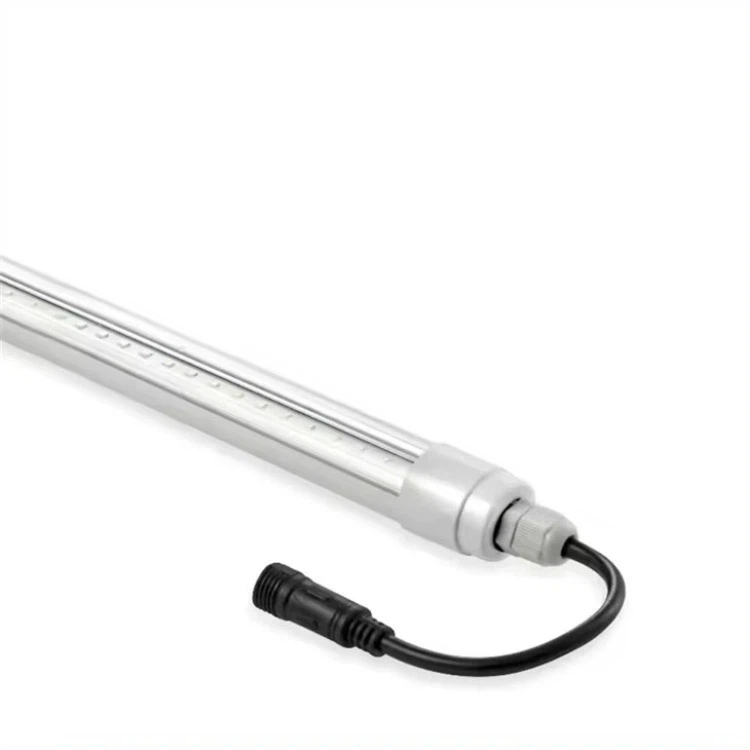
Our high-quality LED grow lights at Benwei are made with energy-saving features that will save you money on your energy bill. You can also choose from different choices based on what your plants need. We sell LED grow light bulbs, panels, tent kits, and strip lights for both businesses and homes. It can be dimmed, has a long life, dissipates heat well, turns on instantly, and more!
About our company
Shenzhen Benwei Lighting Technology Co., Ltd is a well-known company that designs, develops, makes, and sells high-tech goods, including LED lighting products. The plant where we work opened in 2010 and is in Shenzhen.
Our address
3rd Floor, 5th Building, Hebei Industrial Park, Hualian Community, Longhua District, Shenzhen, China






