

Modern intensive egg chicken farming relies on illumination to effect layer bird growth and production. LED illumination technology, with its tunable spectrum, energy-saving efficiency, and precision control, is a scientific way to increase cage-reared layer chicken production.
Light conditions precisely regulate egg-laying chickens' physiological rhythms
Lighting directly regulates hypothalamus-pituitary-gonadal axis neuroendocrine activities in egg-laying chickens' visual systems. Egg-laying chickens' metabolic rhythm depends on light cycle and intensity. Flickering and uneven lighting can trigger stress responses, while LED light sources are stable and homogeneous.
Evidence from research
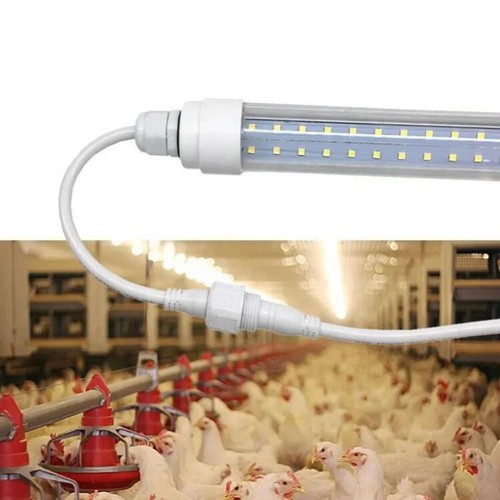
China Agricultural University found that LED lights in chicken coops improve chicken growth, development, and production. Light affects laying hen growth, development, sexual maturity, ovulation, and egg production. LED lights have no harmful effect on cage-reared laying hens during the rearing, growing, and laying periods, and they improve mortality, culling rate, uniformity, etc. LED lights also save lots of lamps and electricity, lowering agricultural production costs. The behavioral observation of the test chickens showed that chickens form conditioned reflexes from a young age and will not directly view LED lights, so this has no effect on their vision. The small illumination angle (about 120 degrees) can be solved by reversing the lights. LED lighting for cage-reared laying hens is safe, effective, energy-saving, and ecologically beneficial, and should be widely promoted in production.
For more details about our offerings, please contact us at bwzm18@ledbenweilighting.com.
References:
[1] Liu Jian, Zhang Qingcai, Zeng Dan, et al. The Effects of LED Lighting on the Growth, Development and Production Performance of Cage-Breeding Layer Chickens [J]. Chinese Poultry, 2012, 34(10): 16-19.
[2] Ma He, Shen Li, Shi Zhengxiang. Research Progress on the Effects of Light on the Physiology and Behavior of Layer Chickens [C]//Proceedings of the 2010 National Symposium on Livestock Environment and Ecology, 2010.
Note:
This article is based on original research and has been adapted to incorporate industry knowledge content. It is provided for reference and sharing only. All data and conclusions are attributed to the author.
Word count:
132





