

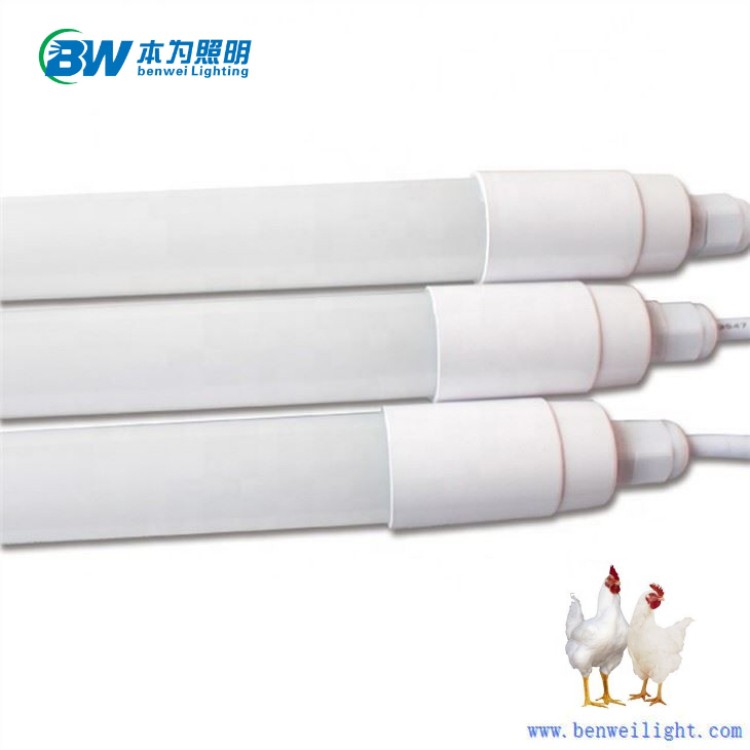
Light colour is an important external component that is becoming more widely acknowledged as a critical management tool in the poultry business. Different colours of light have different effects on chicken performance, depending on whether they are used consistently throughout the production cycle or alternated with other colours.
Generally speaking, birds prefer eating in white light because it helps them discern between different textures that they are unable to see in other hues. In terms of growth performance, hens of other light colours might not always react to feed intake as well as those of white light. Better outcomes, however, might be achieved when light colours combine with other factors like feed colour and light intensity. Therefore, when choosing a lighting colour scheme, the intended production aim or the production issue to be rectified should be taken into mind.
In several studies, high-intensity blue or green lighting, rather than low-intensity lighting, improved feeding behaviour and development rates. Additional tests showed that red-dyed feed administered under blue light was equally effective; however, no other combinations of feed and light colour have been examined to date.
Growth to carcass weight ratio
Bird development is enhanced by early exposure to green light, and growth may be further stimulated by switching to a different light colour at 10 or 20 days of life. It was proposed that grill development and performance may be improved by alternating between green and blue. Birds raised in blue light had the highest carcass weight, whereas those raised in green light had the lowest weight. The carcass weights of the birds raised in the red and white light conditions were comparable.
Behavioural problems
By reducing the manufacture of the hormone hypothalamic gonadotropin, blue or green light can be used to calm birds without compromising their welfare. This reduces energy expenditures, pecking damage, and hyperactivity. Since birds cannot perceive the blood stimulant in red light, poultry growers may also employ it to deter cannibalism.
However, red light shouldn't be the exclusive tactic employed to deal with cannibalism. For better control, other management and feeding techniques should be employed, such as beak trimming, lowering the brooding temperature, removing seriously damaged birds, ensuring continuous access to feed and water, balancing the food according to the age and kind of chickens grown, and more.
Immune response
There was no difference in the blood levels of thyroid hormones (T3) and (T4) between the birds grown under the different lightcolours, but the alternate green-blue light group had the highest concentration of total NDV antibodies. Clinical Newcastle disease should be avoided due to the increased concentration of NDV, even if the virus may still be shed from the trachea.
Features of blood
Haematological measurements in different lighting situations, such as haemoglobin, platelets, white blood cell, and red blood cell counts. The red blood cell count increased as a result of the yellow light treatment's increase in the haematocrit value. This resulted in a larger growth response at 5 weeks of age compared to the other light treatments. The improved performance under the yellow colour treatment may also be due to the increased platelet level in this instance, which affects digestion, kills bacteria, increases the secretion of chemicals that attract neutrophils and monocytes to inflammatory areas, and increases the release of growth factors to maintain the blood vessel lining.
If you are interested, feel free to contact us https://www.benweilighting.com/contact-us.





