

Rows of lamps providing particular light are silently changing chicken flock growth in modern poultry farms. Technology like these "chicken farming lights" improves farming efficiency and flock health. How do they change farms dramatically?
Accurate Regulation: The Bioclock Conductor
Light immediately influences chickens' endocrine system and physiological rhythms due to their sensitivity. Scientific chicken lamps can replicate or extend natural light exposure:
Boosting egg production: Stable and sufficient lighting (14-16 hours) can activate the pituitary gland, increase estrogen release, and boost egg production and weight in laying hens. Studies suggest that appropriate additional illumination can boost egg production by over 5% over natural lighting.
Growth optimization: Broiler chicken chicks need up to 23 hours of light exposure to learn about their environment, find food and water, and survive. Later, restrict light exposure to limit activity and increase energy conversion to weight gain.
Bettering welfare: Setting up a "livable place"
Reducing stress: Soft and consistent lighting reduces chicken flock anxiety and pecking disorder. Sudden brightness or darkness can induce fear, crushing, or death.
Uniform lighting: The chicken-raising lamps' scientific lighting angles and coverage ranges illuminate every nook of the coop. This prevents chickens from huddling or crowding in low-light environments, supporting balanced group behaviors.
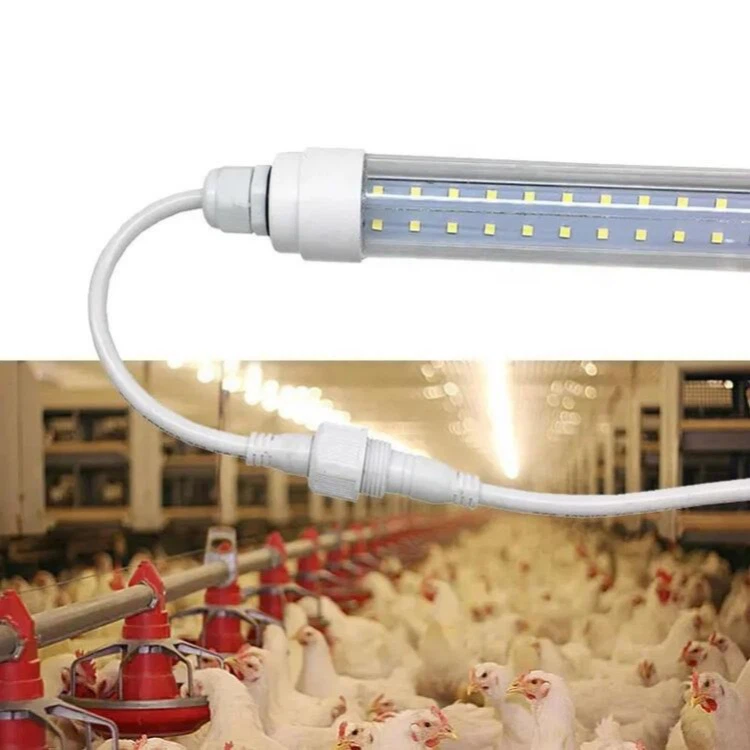
Enhanced Energy Efficiency: Tangible "Economic Accounts"
LED Revolution: Modern poultry farming lights use energy-efficient LEDs. LED lights last tens of thousands of hours and use over 50% less energy than incandescent or fluorescent lamps, lowering electricity bills and bulb replacements.
Directional lighting: To save energy, it accurately directs light energy to the hens' active region by reducing ineffective light scattering.
Scientific Management Boosts Production
Extending the "Working Day": In winter, artificial illumination ensures that chicken flocks have normal feeding and drinking hours, maintaining a consistent production rhythm and allowing year-round operation.
Convenient observation: Proper lighting allows breeders to examine hens' mental state, feeding and drinking conditions, and excrement morphology more clearly and quickly, enabling early disease identification and improved management.
Light Use in Science: Key Considerations
Chicken lamps are excellent, but brighter and longer isn't always better.
Too much light can irritate hens and make them peck at their feathers, while too little can impact their nutrition. Brooding requires 20-30 lux, which can be lowered later.
Science should guide light exposure duration: Based on the breed, age, and production stage (chick rearing, growing, and egg-laying), a strict lighting program must be established to give the flock enough darkness to rest (typically 4 to 8 hours per day).
Color of light matters: Red, blue, and white light affect chicken behavior differently, therefore choose dependent on the objective. Most people utilize white light.
Conclusion
Small chicken-rearing lamps represent modern farming technology. It illuminates the chicken coop and provides a "path of light" for biological rhythm regulation, animal welfare, cost reduction, and efficiency enhancement. Scientific lighting control turns precise light into a silent yet powerful production engine on your farm, illuminating every step of chicken flock growth and agricultural profits. In this perfect light, technology warms.
For more details about our offerings, please contact us at bwzm18@ledbenweilighting.com.





