

Introduction – Why Most Buyers Underestimate the True Cost of Lighting
The Hidden Trap of Low Initial Price
When purchasing LED panel lights, many buyers focus only on the upfront unit price. However, the initial purchase cost typically represents less than 20% of the total cost of ownership over the product's lifetime. The remaining 80% consists of electricity bills, maintenance labor, replacement parts, and downtime losses.
Defining True Cost of Ownership (TCO)
For lighting fixtures, TCO includes four core components:
Initial procurement cost (fixture + shipping + customs)
Energy consumption cost (watts × operating hours × electricity rate)
Maintenance & replacement cost (labor, spare units, disposal fees)
Indirect costs (productivity loss during flicker or failures, safety risks)
The Most Overlooked Factor – Lumen Depreciation
Lumen depreciation (also called lumen maintenance) is the gradual reduction in light output over time. A fixture that starts at 10,000 lumens may drop to 7,000 lumens after 30,000 hours. To compensate, users either add more fixtures (higher capital cost) or tolerate darker spaces (lower productivity). High lumen depreciation effectively shortens the useful life, forcing early replacement and doubling TCO.
This article explains how our ultra-thin LED panel light achieves exceptionally low lumen depreciation and a service life beyond 50,000 hours – directly lowering your true cost of ownership.

The Science of Long Life – Why Some LEDs Fail Fast While Others Last a Decade
Heat Is the #1 Killer of LEDs
The junction temperature of an LED chip directly determines its lifespan. For every 10°C reduction in operating temperature, the lumen maintenance period doubles (Arrhenius model). Conversely, poor thermal management causes:
Accelerated phosphor degradation (yellowing, color shift)
Bond wire fatigue (intermittent connection or total failure)
Driver capacitor aging (reduced capacitance, flickering)
Our Solution – Super Large Heat Dissipation Area
Our panel light features an extruded aluminum housing with a super large heat dissipation surface. Unlike cheap plastic‑back panels that trap heat, the aluminum structure acts as a passive heatsink. The ultra‑thin 8.5mm profile does not compromise thermal performance because the entire back surface radiates heat efficiently.
Key data points (based on thermal simulation and real test samples):
| Parameter | Our Panel | Typical Thin Panel (Cheap Alternative) |
|---|---|---|
| LED junction temperature (Ta=25°C) | <65°C | >85°C |
| Estimated L70寿命 (life to 70% lumen) | >50,000 hrs | 20,000–30,000 hrs |
| Lumen depreciation at 30,000 hrs | <10% | >25% |
Lower junction temperature directly translates to slower lumen depreciation and fewer early failures.
Advanced Driver Technology – Protection Beyond the Chip
A high‑quality LED chip is useless without a reliable driver. Our panel uses an external constant current driver with:
Imported intelligent IC chip – regulates current within ±3% regardless of input voltage fluctuations
Complete protection suite – open circuit protection, short circuit protection, overvoltage protection
Surge immunity (optional 4kV or 6kV for commercial projects)
External drivers run cooler than integrated drivers, further extending electrolytic capacitor life. With proper design, the driver lifespan matches or exceeds the LED chip (50,000+ hours at Tc ≤ 75°C).
Professional LED Solution – Side‑Light Technology and LGP
Our side‑light technology places LEDs along the edges, not directly under the diffuser. This spreads heat evenly across the aluminum backplate instead of concentrating it on a small area. Combined with the advanced PMMA light guide plate (LGP) using laser dotting technology, the panel achieves:
Uniform light distribution without hot spots
Reduced thermal stress on individual LEDs
Lower local temperature rise compared to direct‑down designs
The PC diffuser plate (98% transmittance, non‑yellowing) also withstands UV and heat better than cheap PS diffusers, maintaining optical clarity even after years of operation.
Lumen Depreciation in Real Numbers – What You Can Expect
Standard Testing and Industry Benchmarks
According to IESNA LM‑80 and TM‑21 standards, LED lumen maintenance is projected from actual test data. For quality LEDs driven at nominal current (with proper heatsinking), the reported L70 (time to reach 70% of initial lumens) typically ranges from 36,000 to 100,000 hours.
Our panel is designed for L70 > 50,000 hours under normal operating conditions (ambient 25°C, daily 12‑hour operation). This means after 5.7 years of continuous 24/7 use, the panel will still deliver over 70% of its original brightness – fully meeting commercial lighting requirements.
Low Depreciation = Lower Maintenance Frequency
Consider a 50‑fixture office installation operating 3,000 hours per year (approx. 8.2 hours/day, 365 days).
| Metric | Our Panel | Typical Economy Panel |
|---|---|---|
| Initial lumens per fixture | 3,000 lm | 3,000 lm |
| Lumen maintenance after 30,000 hrs (10 years) | >90% (2,700+ lm) | 75% (2,250 lm) |
| Replacement needed? | No (still >70% at 50k hrs) | Yes, around 30,000 hrs |
| Total replacements over 50,000 hrs | 0 | 1 (or more) |
Each replacement involves:
Labor cost (electrician, ladder, working hours) – typically $50–100 per fixture
New fixture cost – often 80% of initial price
Business disruption (downtime, inconvenience)
With our panel, you eliminate all replacement labor over a 50,000‑hour horizon – a direct saving of thousands of dollars for a medium‑sized project.
Why "Low Lumen Depreciation" Also Saves Energy
When a panel loses 30% of its output, users often compensate by adding more fixtures or running them longer. Both actions waste energy. A fixture that maintains 90% lumens at 30,000 hours delivers the same illuminance as a degraded 75% fixture with 17% fewer watts – or equivalently, you avoid over‑lighting.
In strict TCO terms, low depreciation keeps your lighting design effective without extra energy penalties.
Power Supply & Energy Consumption – The Other Half of TCO
Measured Efficiency and Power Factor
Our external driver achieves:
Driver efficiency >90% (less than 10% loss between input and output)
Power factor >0.95 (reduces reactive power charges in commercial tariffs)
Total fixture efficacy up to 120 lm/W (tested at 4,000K, clear diffuser)
For a typical 40W panel producing 4,800 lm, the electrical input is exactly 40W – no hidden consumption. Compare to a cheap "40W" panel that actually draws 45W due to poor driver efficiency but delivers only 3,600 lm (80 lm/W). The result: our panel consumes 11% less electricity for 33% more light.
Real Annual Energy Cost Comparison
Assume 50 fixtures, 4,000 operating hours per year, electricity rate $0.12/kWh.
| Fixture Type | Real Power Draw | Annual Energy per Fixture | Annual Energy for 50 Fixtures | Annual Cost |
|---|---|---|---|---|
| Our Panel (40W, 120 lm/W) | 40W | 160 kWh | 8,000 kWh | $960 |
| Economy Panel (45W, 80 lm/W) | 45W | 180 kWh | 9,000 kWh | $1,080 |
| Old Fluorescent T5 (2x28W + ballast ~64W) | 64W | 256 kWh | 12,800 kWh | $1,536 |
Annual saving vs. economy LED: $120
**Annual saving vs. fluorescent:** $576
Over a 10‑year lifespan, total energy savings against fluorescent exceed $5,700 for this 50‑fixture installation – enough to pay for the entire fixture purchase several times over.
Smart Power Protection Reduces Downtime Costs
Open circuit, short circuit, and overvoltage protection mean the driver shuts down safely without damaging LEDs or starting a fire. This eliminates expensive site visits for troubleshooting. Additionally, the external driver can be replaced in minutes without dismounting the panel – a critical feature for warehouses or high‑bay applications where access is difficult.
Additional Engineering Features That Lower TCO
Ultra‑Thin 8.5mm Profile – Saves Shipping & Storage Cost
The panel is 8.5mm thick, comparable to a smartphone. This allows:
More units per shipping container – typically 30–40% higher packing density than standard 12‑15mm panels
Lower warehousing footprint – reduces inventory holding cost
Easier single‑person handling – lighter weight per fixture
Reduced logistics cost directly lowers your landed cost, improving your margin or enabling more competitive end‑user pricing.
Triangular Safety Bracket – Faster, Safer Installation
Unlike spring clips or flimsy brackets, our triangular holder provides three contact points, distributing weight evenly. Benefits for TCO:
Less installation time – electricians can mount the panel in under 1 minute
No extra reinforcement – the bracket holds securely even in drop ceilings with moderate vibration
Reduced risk of falling – eliminates damage claims and liability cost
Lower labor cost per fixture = lower total project cost.
Customizable Dimensions – No Wasted Light, No Rework
The extruded aluminum frame allows custom lengths and widths without expensive mold fees. For large projects (linear lighting, grid ceilings with non‑standard sizes), you can order exact dimensions, avoiding:
Light spillage or dark gaps (uniformity issues)
Cutting diffusers on‑site (dust, risk of breakage)
Multiple adapters or bezels
Custom fit reduces installation waste and ensures the optical design performs as intended from day one.
Calculating the True Cost of Ownership – A Concrete Example
Scenario Definition
Project: Small office, 20 pcs of 600×600 mm panel lights
Operating hours: 3,000 hrs/year (≈ 8 hrs/day, 260 working days)
Electricity price: $0.12/kWh
Labor cost for replacement: $60 per fixture (including travel and disposal)
Planning horizon: 60,000 hours (20 years, but practical life considered)
Our Panel vs. Low‑Cost Competitor
| Cost Component | Our Panel (Premium) | Low‑Cost Panel (Economy) |
|---|---|---|
| Initial cost per fixture (including shipping) | $28.00 | $18.00 |
| Total initial cost (20 pcs) | $560 | $360 |
| Real power draw per fixture | 38W (efficacy 110 lm/W typ) | 44W (efficacy 70 lm/W typ) |
| Annual energy per fixture | 114 kWh | 132 kWh |
| Annual energy for 20 fixtures | 2,280 kWh | 2,640 kWh |
| Annual energy cost | $273.60 | $316.80 |
| Energy cost over 10 years (30,000 hrs) | $2,736 | $3,168 |
| Lumen maintenance at 30,000 hrs | 90% (acceptable) | 70% (end of life) |
| Replacement needed before 50,000 hrs? | No | Yes, around 30,000 hrs |
| Replacement labor cost (20 fixtures × $60) | $0 | $1,200 |
| Replacement fixture cost (another 20 pcs) | $0 | $360 (if price unchanged) |
| Total cost over 30,000 hrs (10 yrs) | $560 + $2,736 = $3,296 | $360 + $3,168 + $1,560 = **$5,088** |
Savings with our panel over 10 years: $1,792 (35% lower TCO).
If extended to 50,000 hours, the gap widens because the low‑cost panel may need a second replacement.
RGBW Version – Additional Value Without TCO Penalty
For applications requiring dynamic white or color (hospitality, retail, smart offices), the RGBW version uses the same thermal and driver platform. The only difference is the LED configuration. Lumen depreciation for the white channel remains excellent, while the RGB emitters are independently controlled and equally protected. This means you can offer tunable lighting without sacrificing long‑term reliability – a unique selling point for integrators.
Conclusion – Invest in Low Lumen Depreciation, Reap Long‑Term Rewards
Summary of Key Takeaways
True cost of ownership is dominated by energy and maintenance, not initial price.
Lumen depreciation determines when a fixture becomes unusable – our panel achieves L70 >50,000 hours thanks to advanced thermal design (large aluminum heatsink, side‑light technology) and a protected external driver.
Low depreciation = no replacement labor for decades in typical commercial use.
High driver efficiency (>90%) and high efficacy (up to 120 lm/W) slash electricity bills compared to both old fluorescent and inferior LED panels.
Structural features (8.5mm thickness, triangular bracket, custom sizing) further reduce logistics, installation, and maintenance labor.
Why This Matters for Your Business
Whether you are a distributor, facility manager, or electrical contractor, specifying a panel light with verified low lumen depreciation means:
Fewer warranty claims and customer complaints
Higher project profitability (you can offer longer warranties with confidence)
Better sustainability credentials (less e‑waste from premature replacements)
Final Call to Action
Do not let a low upfront price hide a high true cost of ownership. Request our lumen maintenance test reports (LM‑80 available upon request) and compare our thermal imaging data against any other thin panel on the market.
Contact our team today for sample orders, custom sizing quotes, or bulk pricing. Upgrade to lighting that pays for itself – year after year, without dark spots, without flicker, and without early replacement.
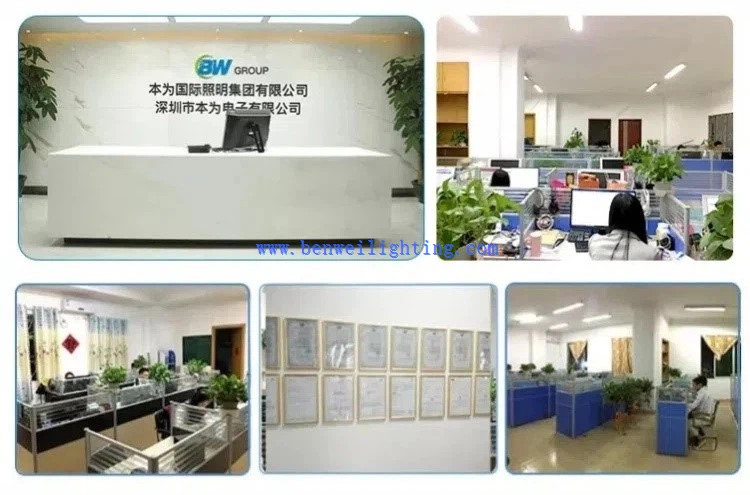
How To Cooperate With Us?
Our firm prides itself on owning its own factory, guaranteeing complete control over the production process and the quality of our goods. We are not only agents; we are manufacturers committed to offering our clients the most competitive rates available. We invite consumers to evaluate our samples first, as we are assured that the quality and pricing of our items are self-evident. Our dedication to excellence and client satisfaction compels us to consistently perform at our best and provide superior quality products.
Our address
3rd Floor, 5th Building, Hebei Industrial Park, Hualian Community, Longhua District, Shenzhen, China





