

Introduction: Lumen Depreciation - The Core Bottleneck of Traditional Solar Street Lights
Industry Definition of LED Lumen Depreciation and Service Life Evaluation
In the professional outdoor lighting industry, LED street light service life is not defined by sudden lamp burnout, but by lumen maintenance standards formulated by the Illuminating Engineering Society (IES). The most widely recognized evaluation metrics are L70, L80, and L90 ratings, which represent the cumulative operating hours when the LED luminous flux decays to 70%, 80%, and 90% of the initial output respectively. Among them, the L70 standard is the universal threshold for judging the end of the effective service life of outdoor street lights. When the luminous attenuation exceeds 30%, the road lighting brightness and uniformity can no longer meet national engineering standards, and the equipment is judged to lose practical use value. Corresponding to the evaluation standards are LM-80 long-term lumen maintenance testing and TM-21 data extrapolation, which are authoritative industry methods to verify LED light source decay performance and predict long-term service life. Traditional ordinary solar street lights generally lack standardized low-decay design, with most products failing to reach L70 standards after 20,000–30,000 hours of operation, resulting in rapid brightness decline and premature equipment elimination.
Hidden Losses Caused by High-Decay Light Sources in Engineering Projects
Many project purchasers and engineering contractors only focus on the initial brightness and unit price of solar street lights while ignoring long-term lumen depreciation performance, leading to huge hidden economic losses in the later stage of the project. Traditional high-decay LED solar street lights will experience obvious light attenuation after 1–2 years of outdoor operation: the lamp brightness drops sharply, road lighting dead zones increase, night traffic safety risks rise, and the lighting project fails to meet acceptance standards. To maintain normal lighting effects, project parties have to invest additional funds in equipment replacement and lamp maintenance every year, which greatly increases the full-cycle operation cost. In addition, frequent equipment failure and brightness attenuation will damage the project reputation of contractors, bring after-sales disputes and customer complaints, and cause invisible losses to long-term business cooperation. It is evident that solving the lumen depreciation problem is the key to improving the comprehensive value of solar street light projects.
Technical Advantages of Modular Low-Decay LED Source
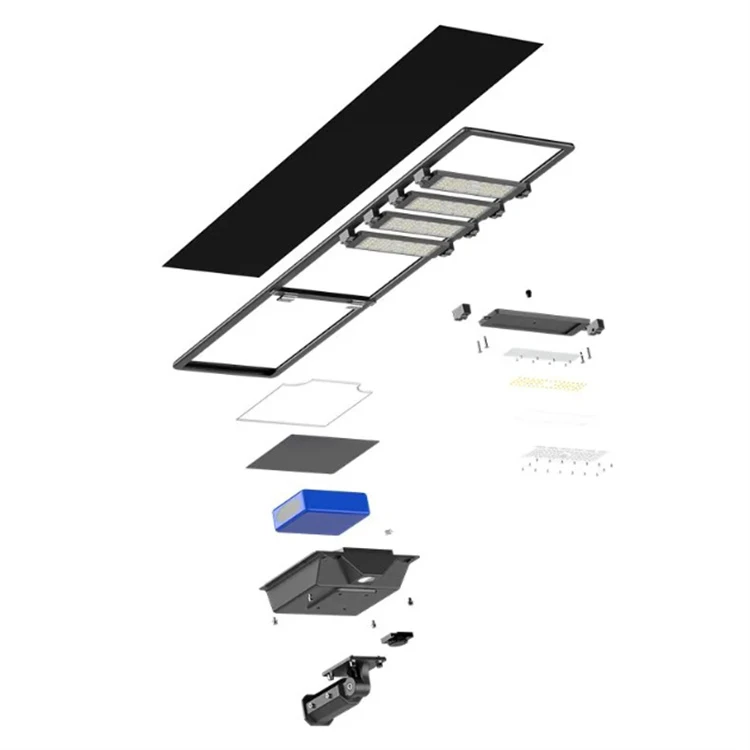
The low-decay modular LED source is an upgraded and optimized lighting technology tailored for long-term outdoor harsh working conditions. Different from the one-piece integrated light source structure of ordinary solar street lights, it adopts independent modular partitioning, targeted thermal management, and high-standard chip packaging technology. Each LED luminous unit is an independent functional module with an exclusive heat dissipation channel and optical protection structure, which fundamentally solves the problem of heat accumulation and luminous attenuation caused by centralized arrangement of traditional light sources. This low-decay modular design can stably control the lumen depreciation rate within the industry ultra-low standard, greatly extend the L70 effective service life of solar street lights, and realize long-term maintenance-free stable lighting, becoming the core technical support for high-quality outdoor solar lighting projects.
Technical Root Causes: Why Traditional LED Sources Suffer Severe Lumen Depreciation
Centralized Heat Accumulation Accelerates Chip Aging
Heat is the primary cause of LED lumen depreciation. The luminous efficiency and service life of LED chips are extremely sensitive to operating temperature. Every 10℃ increase in the junction temperature of the LED chip will significantly accelerate the aging speed of the chip and fluorescent glue, leading to irreversible attenuation of luminous flux. Traditional solar street lights adopt an integrated light source design, with a large number of LED beads densely arranged on a single aluminum substrate. During long-term continuous lighting, the heat generated by each bead overlaps and accumulates, unable to diffuse outward in time, resulting in a sharp rise in the overall junction temperature of the light source. Long-term high-temperature operation will cause fluorescent glue aging and yellowing, chip luminous efficiency decline, and rapid light attenuation. In high-temperature summer outdoor environments, this heat accumulation effect is more obvious, and the decay speed of traditional light sources will increase by more than 40%.
Inferior Packaging Materials Lead to Optical Performance Degradation
Most low-cost traditional solar street light LED sources adopt low-grade packaging glue and ordinary substrate materials, which have poor anti-ultraviolet and anti-aging capabilities. Under long-term outdoor exposure to strong sunlight, wind and rain erosion, and high-temperature baking, the packaging material is prone to yellowing, fogging, and light transmittance decline. Even if the LED chip itself is not damaged, the overall luminous efficiency of the lamp will drop significantly due to the attenuation of optical materials. At the same time, ordinary substrates have low thermal conductivity, which cannot quickly export internal heat, further exacerbating the high-temperature aging of the chip, forming a vicious cycle of "heat accumulation - material aging - light attenuation", which greatly shortens the effective service life of the street light.
Undifferentiated Integrated Design Causes Overall Functional Loss
The traditional integrated light source adopts an undifferentiated overall structure, with all LED beads, circuits, and optical structures integrated together. Once local heat accumulation causes partial bead attenuation or damage, the overall luminous uniformity of the lamp body will be destroyed, and local dark areas and uneven brightness will appear. Moreover, the integrated structure cannot perform partial replacement and maintenance. Local light source attenuation will eventually lead to the overall scrapping of the street light, resulting in serious waste of equipment resources. This non-modular structural defect makes traditional solar street lights unable to resist long-term outdoor environmental erosion, with high comprehensive loss rate and short effective service life.
Core Mechanisms: How Modular Low-Decay LED Source Extends Street Light Service Life
Independent Modular Convection Heat Dissipation Cuts Core Decay Source
The biggest technical breakthrough of the low-decay modular LED source is the independent partition heat dissipation system. The product splits the traditional integrated light source into multiple independent LED luminous modules, each equipped with a separate high thermal conductivity aluminum heat sink and an independent convection heat dissipation channel. All modules are arranged in a partitioned and spaced manner, which completely avoids heat superposition and accumulation between light sources. During long-hour night lighting, each module can independently and quickly export the working heat of the LED chip, effectively control the chip junction temperature within a stable low range, and avoid luminous attenuation caused by high-temperature aging. Professional thermal simulation tests show that the modular heat dissipation structure reduces the long-term operating junction temperature of the chip by 15–20℃ compared with traditional integrated structures, directly reducing the LED lumen depreciation rate by more than 50%, and fundamentally solving the core problem of heat-induced light decay.
High-Standard Chip Packaging Ensures Long-Term Luminous Stability
All modular LED light sources adopt industrial-grade high-brightness SMD LED chips and high-transmittance anti-aging packaging materials, and pass strict LM-80 standardized lumen maintenance testing. The chip has excellent anti-attenuation performance, with uniform luminous color and stable luminous efficiency. The packaging glue adopts UV-resistant and high-temperature resistant formula, which can resist long-term outdoor strong light irradiation and temperature changes, no yellowing, no fogging, and maintain stable light transmittance for a long time. Matching with high-purity aluminum substrates with ultra-high thermal conductivity, it realizes synchronous optimization of heat dissipation performance and optical performance. Based on TM-21 professional data extrapolation, this modular low-decay LED source can maintain more than 80% of the initial luminous flux after 50,000 hours of operation (L80 standard), and still retain more than 70% of the initial brightness after 60,000 hours, far exceeding the industry average level of traditional light sources.
Partitioned Modular Structure Reduces Full-Cycle Equipment Loss
The modular partitioned design brings revolutionary advantages in reducing equipment loss and extending overall service life. Different from the traditional integrated structure of "one damage, overall scrapping", each module of this product works independently without mutual interference. Individual module attenuation or failure will not affect the normal operation and overall luminous effect of other modules, ensuring the long-term stable lighting performance of the whole lamp. More importantly, the modular pluggable design supports single-module independent replacement and maintenance. In the later operation process, only the attenuated or faulty module needs to be replaced, without replacing the whole street light, which minimizes equipment loss and maintenance costs. This design makes the overall service life of the solar street light no longer limited by the attenuation speed of individual light sources, and the comprehensive service life of the whole machine is increased to 8–10 years.
Professional Performance Advantages of Low-Decay Modular LED Solar Street Lights
Ultra-Low Lumen Attenuation, Long-Term Compliance with Lighting Standards
Benefiting from the modular low-decay technical system, the product has industry-leading luminous maintenance capability. After 5 years of continuous outdoor operation, the overall lumen depreciation is controlled within 25%, which is far lower than the 50%+ attenuation rate of ordinary solar street lights in the same period. It can stably maintain national standard road lighting brightness and uniformity for a long time, without brightness decline, dark areas, and color deviation. Whether it is used for urban trunk roads, rural village roads, community parking lots, or scenic outdoor roads, it can maintain high-quality lighting effects throughout the whole service cycle, avoid project unqualified acceptance caused by light attenuation, and eliminate the hidden danger of traffic safety caused by insufficient long-term lighting.
Consistent Luminous Performance, No Glare and Uniform Illumination
The modular LED light source adopts professional secondary optical light distribution design, matched with high-transmittance PC optical mask, realizing uniform surface light emission. Each independent module outputs light stably, with consistent luminous angle and brightness, no local over-bright hot spots and no dark blind areas. Even with long-term operation and slight attenuation of individual modules, the overall luminous uniformity of the lamp body will not be damaged. Compared with traditional street lights that are prone to uneven brightness and serious glare after light decay, this product always maintains comfortable and standardized lighting effects, improves outdoor night vision environment, and enhances the overall grade of road lighting projects.
High Environmental Adaptability, Stable Decay Resistance in Harsh Scenarios
Outdoor high temperature, low temperature, humid rain and dust weather are important factors accelerating LED light attenuation. This low-decay modular LED source is optimized for all-climate working conditions. The independent heat dissipation structure avoids heat accumulation in high-temperature summer environments and prevents accelerated aging of light sources; the fully sealed module protection structure isolates external humid air, dust and rainwater erosion, prevents internal circuit and chip damp aging, and ensures stable anti-attenuation performance in rainy and humid seasons. It can maintain ultra-low decay operation in the temperature range of -40℃ to +60℃, adapt to various complex climatic environments in the north and south, and solve the problem of rapid light attenuation of ordinary solar street lights in extreme weather.
Full-Cycle Economic Value: Low Decay Brings Ultra-High Project ROI
Reduce Secondary Investment and Equipment Replacement Costs
The high decay rate of traditional solar street lights means frequent equipment renewal. Ordinary products need large-scale replacement after 2–3 years of use, resulting in repeated investment of project funds. The low-decay modular LED solar street light has an effective service life more than 3 times that of traditional products, which can avoid large-scale equipment replacement within 5–8 years. From the perspective of full-cycle project cost, it saves more than 60% of later equipment renewal costs, completely changing the profit loss caused by "low initial price but high later cost" of traditional low-quality street lights, and greatly improving the economic return rate of lighting projects.
Minimize Maintenance Labor and Time Costs
Traditional integrated street lights with severe light attenuation require regular manual inspection, brightness detection and overall equipment maintenance, consuming a lot of labor and time costs. The modular low-decay product has extremely low long-term failure and attenuation rate, realizing long-term maintenance-free stable operation. Even if individual modules have attenuation problems in the later stage, the pluggable modular design can complete replacement maintenance in a few minutes, without professional construction equipment and complex operation processes. It greatly reduces the daily maintenance workload and labor cost of the project, saves project operation and management resources, and is especially suitable for large-scale, scattered and difficult-to-maintain outdoor lighting projects such as rural roads and suburban trunk roads.
Improve Project Quality and Long-Term Brand Value
For engineering contractors and procurement merchants, the long-term stable lighting performance of low-decay modular solar street lights is an important support for project quality and brand reputation. The product can maintain standard lighting effects for a long time after project delivery, avoid customer complaints and after-sales disputes caused by light attenuation and unqualified lighting, improve customer satisfaction and repurchase rate. In municipal bidding and engineering cooperation, stable low-decay performance and long service life are important competitive advantages, which can help enterprises win more high-quality projects and establish a good professional brand image in the outdoor lighting industry.
Conclusion
Lumen depreciation is the core factor determining the service life and full-cycle value of solar street lights. Traditional integrated LED solar street lights are restricted by heat accumulation, inferior materials and non-detachable structure, with severe light attenuation and short effective service life, bringing huge hidden losses to outdoor lighting projects. The low-decay modular LED source completely subverts the technical defects of traditional products through independent partition heat dissipation, high-standard anti-aging packaging and detachable modular structure. It effectively controls the LED lumen depreciation rate at the ultra-low industry level, greatly extends the L70/L80 effective service life of solar street lights, and realizes long-term stable, uniform and standard outdoor lighting. In terms of engineering application and economic benefits, this technology reduces full-cycle project investment, minimizes maintenance costs, and improves project quality and brand value. For all outdoor solar street light procurement and engineering projects, low-decay modular LED solar street lights are the most professional, reliable and cost-effective long-term lighting solution, which can maximize project profit margins and create sustainable lighting value.
How To Cooperate With Us?
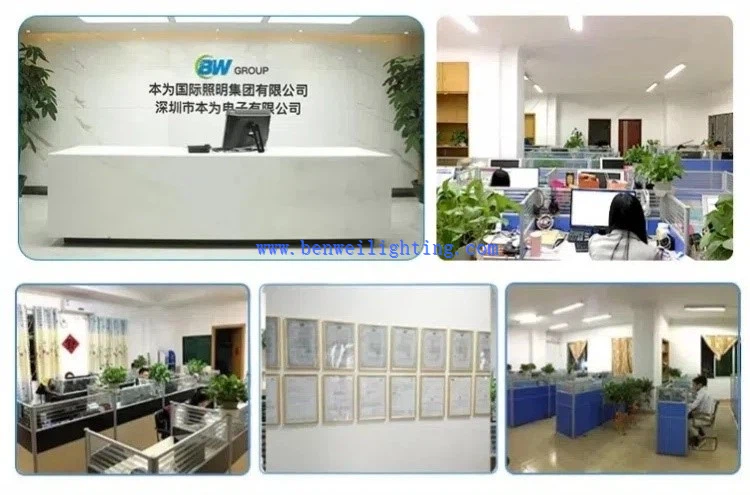
We are happy to have total control over the manufacturing process and the calibre of our products since we have our own facilities. Since we are producers rather than just brokers, we are dedicated to providing our customers with the best pricing. Since we are certain that the price and quality of our products are clear, we invite customers to see our samples first. Our commitment to quality and customer satisfaction drives us to continuously provide top-notch goods.
Our address
3rd Floor, 5th Building, Hebei Industrial Park, Hualian Community, Longhua District, Shenzhen, China





