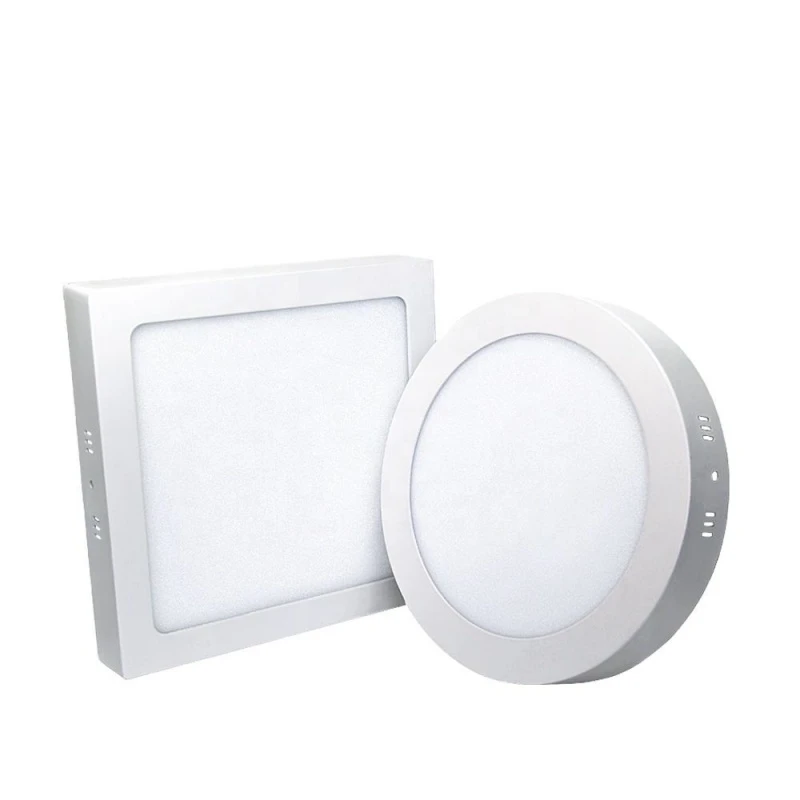
LED panel lights are the most common choice for general lighting in large-scale projects such as offices, supermarkets, schools, factories, and commercial complexes. When selecting fixtures, procurement teams and contractors often face a key dilemma: which is better-recessed panel lights or surface-mounted panel lights?
While both types offer similar lighting performance, power consumption, and lifespan, the primary differences lie in installation methods, aesthetic compatibility, installation costs, and suitable applications. There is no absolute "best" option-only the one that best fits the specific requirements. In this article, we compare the pros and cons of both fixtures from a practical engineering perspective to help you make a precise selection and avoid issues like rework or compatibility problems.
Recessed Panel Lights: Pros, Cons, and Applications
Recessed panel lights are the standard choice for suspended ceiling projects. They require a pre-cut opening in the ceiling or installation within a grid ceiling system; the fixture body sits flush with the ceiling surface.
Key Advantages: They offer a minimalist, clean look; the fixture does not protrude, creating an open, high-end feel without visual clutter. The fixture sits flush against the ceiling, making it resistant to dust accumulation and easy to clean-ideal for high-standard commercial and office interiors. Additionally, the recessed structure is stable and vibration-resistant, ensuring the light remains secure over long-term use.
Main Disadvantages: They have strict installation requirements, necessitating a suspended ceiling and a pre-prepared mounting space; they cannot be installed in areas without suspended ceilings. The installation process is complex and time-consuming; retrofitting requires ceiling modifications, resulting in higher costs and reduced flexibility.
Suitable Applications: High-end offices, large supermarkets, shopping mall showrooms, school classrooms, and office buildings featuring suspended ceiling systems.
Surface-Mounted Panel Lights: Pros, Cons, and Applications
Surface-mounted (ceiling-mounted) panel lights do not require suspended ceilings or cutouts; they can be fixed directly onto ceiling or wall surfaces, making them an excellent choice for simple lighting setups and renovation projects. Key Advantages: Extremely low installation barrier; compatible with all ceiling structures; can be installed directly in unfinished industrial facilities or existing spaces without suspended ceilings. Offers fast installation, low labor costs, and convenient maintenance/replacement without altering the ceiling structure-providing maximum flexibility.
Main Disadvantages: The fixture protrudes from the ceiling, so the visual finish is less streamlined than recessed models; it slightly reduces effective ceiling height, which may create a sense of confinement in spaces with low ceilings; the edges of the fixture tend to accumulate dust, requiring periodic cleaning during long-term use.
Suitable Scenarios: Industrial plants, offices without suspended ceilings, lighting retrofits for older sites, temporary office spaces, warehouses, corridors, and other settings where practicality and cost-effectiveness are priorities.
Direct Comparison of Key Factors
A concise comparison based on key procurement and implementation factors to help you make a quick decision:
1. Installation Requirements: Recessed models require a suspended ceiling or pre-cut openings; surface-mounted models have no special requirements and can be installed directly.
2. Aesthetics: Recessed models offer a minimalist, flush finish with a premium look; surface-mounted models are simple and standard, protruding slightly from the ceiling.
3. Installation Costs: Recessed models involve more steps and higher costs; surface-mounted models save time and labor, offering better cost-effectiveness.
4. Project Suitability: Recessed models are ideal for new high-end fit-out projects; surface-mounted models are suitable for renovations and commercial projects without suspended ceilings.
Final Selection Recommendations by Venue
For new high-end commercial, office, or school projects with sufficient budgets where overall finish quality is paramount, prioritize recessed panel lights; they provide a unified, premium look that meets high-standard acceptance criteria.
For industrial plants, warehouses, lighting upgrades in existing sites, or commercial projects without suspended ceilings, prioritize surface-mounted panel lights; they require no ceiling modification, allow for rapid installation, save money and effort, and fully meet basic lighting needs.
For large-scale projects requiring a mix of styles, consider using recessed lights in public areas and surface-mounted lights in back-of-house or utility areas; this balances aesthetics with practicality while controlling overall project costs.
Summary
Ultimately, there is no absolute superiority or inferiority between recessed and surface-mounted panel lights; the key differences lie in the installation method and compatibility with the interior design. Recessed lights excel in aesthetics and neatness, making them ideal for high-end fit-out projects, while surface-mounted lights offer the advantages of easy installation and lower costs, making them perfect for renovation projects. Both types offer comparable brightness, energy efficiency, and lifespan; the best choice depends simply on factors such as ceiling conditions, fit-out standards, and the project budget.
Do you need to source high-brightness, flicker-free, long-lasting recessed or surface-mounted LED panel lights in bulk? We offer customization for standard sizes, color temperatures, and voltages, catering to commercial lighting projects for offices, supermarkets, schools, and factories. We provide sample testing, project solution coordination, and competitive bulk pricing-feel free to contact us for inquiries!