

Introduction: The Light You Cannot See Is the Light That Hurts You
Most homeowners evaluate a light fixture by three visible criteria: brightness, color temperature, and aesthetics. The fourth criterion-one that operates below the threshold of conscious perception-is the one that shapes how the body feels after eight hours beneath it. That criterion is flicker.
The human visual system did not evolve for the flickering oscillations of artificial light. When a light source modulates its output-brightening and dimming at a frequency, even one too rapid for the conscious eye to register-the nervous system still responds. Foundational research has established that continuous exposure to 100 Hz lighting, despite the flicker being imperceptible, can cause headaches, eyestrain, and increased visual-cortex activity. The discomfort is not imagined. It is physiological.
The residential lighting market has reached an inflection point. As LED technology has displaced incandescent and fluorescent sources, the dominant health concern has shifted from the mercury content of lamps to the invisible modulation embedded in their drivers. Regulatory bodies and large-scale buyers are increasingly treating flicker mitigation not as a technical footnote but as a fundamental quality and wellness attribute. In this context, the flicker-free LED linear light is not a premium indulgence. It is the baseline of responsible illumination.
This article proceeds in four movements: first, a clinical account of how flicker produces eyestrain and associated symptoms; second, an analysis of why conventional LED drivers generate flicker and how constant-current architecture eliminates it; third, a component-level examination of a representative flicker-free linear fixture; and fourth, a concluding case for why this product category merits a place in the contemporary home.
The Clinical Case: How Flicker Becomes Eye Strain
The Physiology of Invisible Modulation
The eye does not merely receive light; it processes temporal patterns. When luminance oscillates, the retina and the visual cortex track that oscillation, even when the frequency exceeds the critical flicker fusion (CFF) threshold-the point at which the light appears steady. The biological machinery continues to respond, and the cost of that response is borne by the occupant in the form of asthenopic symptoms: eyestrain, fatigue, and diminished performance on sustained visual tasks.
A focused review published in Epilepsia Open distinguishes between visible flicker and "supra-critical" modulation, noting that even without conscious perception of flicker, continuous exposure to 100 Hz light produces measurable increases in visual-cortex activity alongside reported headaches and eyestrain. The mechanism is not a matter of comfort preference. It is a matter of neural load. The brain is working harder to stabilize a visual field that the light source is continuously destabilizing.
The Phantom Array: When the Eye Moves, the Flicker Appears
One of the most insidious manifestations of flicker is the phantom array effect. When the eye performs a saccade-a rapid movement from one fixation point to another-a flickering light source can leave a trail of discrete ghost images across the visual field. This phenomenon can occur even at modulation frequencies as high as 13 kHz in sensitive individuals. The practical implication for a living room or a home office is direct: reading, scanning a bookshelf, or shifting attention between a screen and a document involves constant saccadic movement. A flickering overhead linear light turns each saccade into a minor visual disruption.
The phantom array effect is particularly relevant to linear fixtures, which occupy broad portions of the upper visual field. A concentrated point source may be avoidable; a four-foot linear luminaire spanning a ceiling is not. When that luminaire flickers, the occupant cannot simply look away.
Vulnerable Populations and the Residential Context
Flicker sensitivity is not uniformly distributed. Individuals with migraine histories, visual impairment, or heightened sensory processing are more likely to experience eyestrain, headaches, or migraines from temporal light modulation. Children represent another concern: their visual systems are still developing, and the cumulative exposure in a home study environment is substantial.
The residential setting amplifies these risks. Unlike a commercial office with prescribed lighting schedules, the home is occupied across long, fragmented periods-morning routines, work-from-home hours, evening reading, nighttime navigation. A flickering fixture in a kitchen or study is not a momentary inconvenience; it is a persistent environmental condition. The decision to specify a flicker-free fixture is therefore not a niche health intervention. It is an act of basic environmental hygiene.
The Driver Divide: Why Most LEDs Flicker and How Constant-Current Architecture Solves It
The Root Cause: Driver Topology, Not the LED Chip
The misconception persists that flicker is an inherent property of LED technology. It is not. The LED chip itself responds to current with near-instantaneous emission. The modulation originates upstream, in the driver-the power electronics that convert mains AC into the low-voltage DC the LED requires.
The most common driver architecture in low-cost fixtures relies on pulse-width modulation (PWM) for dimming and current regulation. PWM switches the LED on and off at high frequency, varying the duty cycle to simulate dimming. This technique "can introduce rectangular modulation with varying duty cycles and high Fourier frequency content," which increases the likelihood of unwanted visual and physiological responses. A fixture that appears bright and stable to the naked eye may be oscillating between full output and zero output hundreds of times per second.
The IEEE 1789 Threshold and the Compliance Gap
The Institute of Electrical and Electronics Engineers addressed this problem directly with IEEE Standard 1789-2015, "Recommended Practices for Modulating Current in High-Brightness LEDs for Mitigating Health Risks to Viewers." At the 120 Hz fundamental frequency common to many mains-powered LED sources, the standard recommends that health risk is low only if percent flicker-the modulation depth-is less than 9.6%.
The gap between this recommendation and market reality is substantial. One analysis of proposed energy code language noted that a 30% flicker threshold was being put forward as minimal compliance, while the research clearly indicates that "30% flicker is NOT sufficiently protective". A fixture operating at 30% modulation is delivering a light output that swings by nearly one-third of its average value, cycle after cycle, for the entire duration of operation. The occupant may not see the swing. The visual system registers it nonetheless.
The Constant-Current Solution: Reducing Ripple to Near-Zero
The alternative to PWM-based flicker is a driver architecture built around continuous current regulation. An intelligent constant-current driver employs a negative feedback control loop: it monitors the output current through a sensing resistor, compares it against a reference, and adjusts the switching element to maintain the current at the target value with minimal deviation. The objective is not merely to regulate average current but to suppress the ripple component-the oscillation around that average-to a level that produces no perceptible or physiologically meaningful modulation.
Patent literature in this domain describes the mechanism precisely: through the control of the constant-current circuit, "the ripple component, if generated, in the output current can be reduced to a sufficiently low level," with the result that "the light from light emitting diode thereby does not flicker". In more advanced implementations, the current ripple is "reduced to near zero, and the flicker effect is therefore eliminated".
This is the technical distinction that separates a flicker-free fixture from a flickering one. It is not a marketing label applied after the fact; it is a circuit-level property determined by the driver topology. A constant-current driver with adequate ripple suppression operates below the IEEE 1789 low-risk threshold by design, not by accident.
Component-Level Validation: Why the Architecture Must Be Matched by Execution
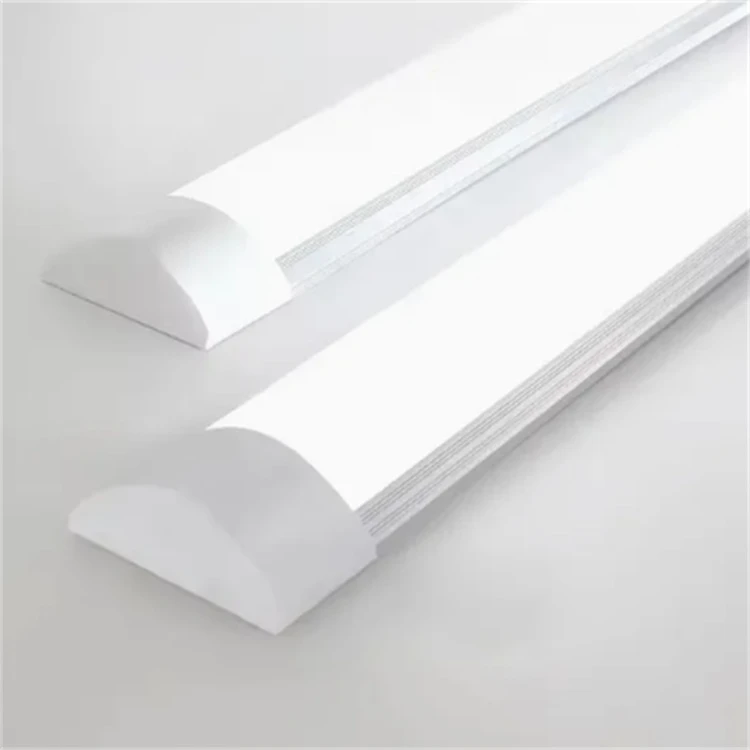
A flicker-free driver is necessary but not sufficient. The complete performance of a linear fixture depends on three mutually reinforcing subsystems: the driver, the thermal pathway, and the optical interface. Each corresponds to a numbered feature in the product's own engineering documentation, and each plays a distinct role in delivering the health promise of flicker-free illumination.
Feature 03 - Intelligent Constant-Current Driver: The Foundation of Stability
The driver's function has been established at the circuit level. What matters at the system level is temporal stability across the full operating envelope. A driver that suppresses ripple at nominal voltage but degrades under dimming or voltage sag is not a reliable health solution. The intelligent constant-current architecture is designed to maintain output regulation across input variations, "escort[ing] for lamps" with "stable current and voltage" and preventing the "stroboscopic occurrence" that characterizes lesser drivers.
For the homeowner, this translates into a simple but consequential guarantee: the absence of flicker is not contingent on the dimmer setting, the time of day, or the stability of the local grid. The light remains optically steady under all conditions in which the fixture is rated to operate.
Feature 02 - Iron-Clad Base: Thermal Integrity as a Prerequisite for Optical Stability
LED performance is thermally coupled. As junction temperature rises, forward voltage shifts, luminous flux declines, and-critically for the present discussion-the driver's operating environment becomes more hostile. A driver that performs cleanly at 25°C may exhibit elevated ripple if its thermal design is inadequate. The iron-clad base addresses this by providing a structurally rigid, corrosion-resistant heat-spreading surface with direct thermal contact to the LED board and driver enclosure.
The engineering logic is sequential: efficient heat dissipation maintains the LED and driver within their thermal design envelopes; operation within those envelopes preserves the constant-current regulation that suppresses ripple; preserved regulation delivers sustained flicker-free output. A plastic or thin-gauge housing may pass a flicker test at the factory, but only a thermally robust base sustains that performance across years of residential duty cycles. "Long life" and "good heat dissipation" are not marketing abstractions here; they are the conditions under which the flicker-free claim remains true over time.
Feature 01 - High-Transmittance Soft Mask: Optical Comfort Beyond Flicker Suppression
Flicker elimination removes one source of visual stress. Glare introduces another. A linear fixture that is electrically flicker-free but optically harsh can still produce eyestrain through uncontrolled luminance and veiling reflections. The high-transmittance soft mask serves a dual optical function: it transmits a high proportion of the LED's luminous flux while "filter[ing] out irritating light"-that is, diffusing the discrete emitter sources into a uniform, low-glare luminous surface.
The combination is synergistic rather than additive. A flicker-free driver without diffusion delivers a steady but harsh light. A diffused mask without flicker suppression delivers a soft but oscillating light. Only when both are present does the occupant receive illumination that is simultaneously temporally stable and spatially comfortable. The soft mask ensures that the light reaching the eye is not merely steady in time but uniform in space-a complete optical condition for sustained visual work.
Conclusion: Flicker-Free Is Not a Feature-It Is the Definition of a Responsible Light
The case for the flicker-free LED linear light rests on a simple inversion of conventional product logic. Most lighting purchases begin with appearance and end with price. The evidence presented here suggests that the sequence should be reversed: begin with the question of what the light does to the occupant's nervous system over time, and let aesthetic and economic considerations follow.
The clinical literature is unambiguous. Invisible modulation at ordinary mains frequencies produces measurable cortical activation, reported headaches, and eyestrain. The standards landscape is equally clear: IEEE 1789 establishes a low-risk modulation threshold that many low-cost LED drivers fail to meet, and proposed compliance floors of 30% flicker are demonstrably inadequate. The market response is already underway, with flicker-free performance moving from a technical footnote to a fundamental quality and wellness attribute in residential and commercial specifications.
The fixture examined in this article meets that standard through architecture rather than accommodation. Its intelligent constant-current driver suppresses current ripple at the source; its iron-clad base preserves that suppression thermally over the product's service life; and its high-transmittance soft mask completes the optical condition by eliminating glare without sacrificing luminous efficacy. The three features are not a checklist. They are a chain of causation, in which the failure of any link dissolves the health claim.
"Say goodbye to eye strain" is therefore not a slogan. It is a testable proposition. A light that modulates below the threshold of physiological consequence, delivers that stability through a thermally sound platform, and presents its output through a diffusion medium that respects the eye's optical tolerances is a light that earns the description. In a residential environment where occupants spend thousands of hours beneath a single fixture, that description is not a luxury. It is the minimum standard of care that a light source owes to the people who live beneath it. The flicker-free LED linear light does not reinvent illumination. It restores to illumination the quality that conventional LEDs were permitted to abandon: the quiet, invisible steadiness that the human eye was never designed to live without.
How To Cooperate With Us?
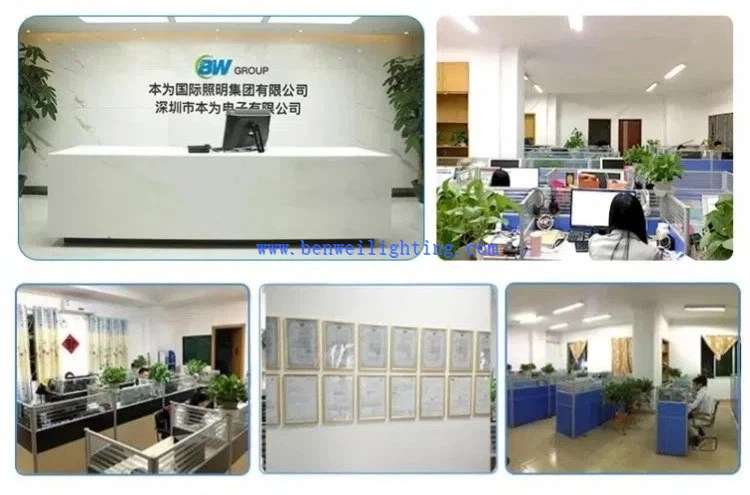
We are happy to have total control over the manufacturing process and the calibre of our products since we have our own facilities. Since we are producers rather than just brokers, we are dedicated to providing our customers with the best pricing. Since we are certain that the price and quality of our products are clear, we invite customers to see our samples first. Our commitment to quality and customer satisfaction drives us to continuously provide top-notch goods.
Our address
3rd Floor, 5th Building, Hebei Industrial Park, Hualian Community, Longhua District, Shenzhen, China





