

Introduction: The Challenge of Illumination in Hazardous Zones
Defining the Hazardous Environment
Hazardous locations, as defined by global standards such as IECEx and ATEX, are areas where the risk of fire or explosion is present due to the presence of flammable substances. These environments include oil and gas refineries, chemical processing plants, mining operations, grain handling facilities, and wastewater treatment centers. In such zones (classified as Zone 1, Zone 2, Zone 21, or Zone 22), the lighting infrastructure must be engineered to prevent any spark or high-temperature surface from igniting the surrounding atmosphere.
The Limitations of Legacy Lighting
Historically, facilities relied on high-pressure sodium (HPS) or metal halide lamps for industrial illumination. While effective at producing light, these legacy technologies are inherently flawed for hazardous environments. They consume massive amounts of energy, generate extreme surface temperatures, and have notoriously short lifespans. Furthermore, they contain fragile filaments or arc tubes that are highly susceptible to mechanical vibration-a constant presence in heavy industrial settings. The frequent replacement of these bulbs requires costly maintenance shutdowns and exposes workers to hazardous conditions, driving up the Total Cost of Ownership (TCO) exponentially.
The Paradigm Shift to Solid-State Lighting (SSL)
The transition to Light Emitting Diode (LED) technology has revolutionized industrial illumination. LEDs are solid-state devices, meaning they contain no fragile filaments or glass tubes. They generate light through the movement of electrons across a semiconductor junction, resulting in vastly higher energy efficiency and a significantly longer operational lifespan. However, not all LED chips are created equal. The specific architecture of the LED chip dictates the fixture's lumen output, thermal profile, and overall durability. This is where the SMD 2835 and 3030 architectures emerge as the industry benchmarks.
The Core Challenge: High Lumens in a Sealed Vessel
The fundamental engineering paradox of explosion-proof lighting is this: to prevent an internal spark from igniting external gases, the housing must be completely hermetically sealed (achieving an IP65 or higher rating). However, LED chips generate heat, and heat cannot escape a sealed vessel via ventilation. Therefore, the internal LED chips must be highly efficient (producing maximum light with minimum heat) and capable of withstanding the elevated ambient temperatures of the sealed enclosure. The SMD 2835/3030 platform is uniquely positioned to solve this paradox.
The Anatomy of SMD2835 and SMD3030 LED Chips
Understanding Surface Mount Device (SMD) Technology
SMD technology represents a significant leap forward in LED packaging. Unlike older Through-Hole (DIP) LEDs, which require legs to be soldered through a circuit board, SMD LEDs are mounted directly onto the surface of a Printed Circuit Board (PCB). This surface-mount architecture allows for a denser arrangement of chips, superior thermal transfer to the underlying PCB, and a smaller physical footprint.
The Nomenclature: Decoding the Numbers
The numbers "2835" and "3030" are not arbitrary; they denote the physical dimensions of the LED package in millimeters. An SMD 2835 chip measures 2.8mm by 3.5mm, while an SMD 3030 chip measures 3.0mm by 3.0mm. These compact dimensions allow engineers to pack a massive array of diodes into the footprint of the floodlight, which is precisely what is seen in the dense, grid-like arrangement of the "Highlight LED beads" in our luminaire.
Technical Specifications of SMD2835: The Efficiency King
The SMD 2835 is renowned for its exceptional luminous efficacy. It features a specialized heat sink pad directly beneath the LED die, allowing for rapid heat transfer away from the P-N junction.
High Lumen Output: The 2835 typically operates at a drive current of 60mA or 150mA, delivering a highly competitive lumen-per-watt ratio.
Thermal Resistance: Due to its unique structural design, the 2835 boasts lower thermal resistance compared to older 3528 models, making it ideal for sealed explosion-proof enclosures where heat management is critical.
Cost-Effectiveness: By maximizing lumen output per unit of energy, the 2835 is a highly cost-effective solution for large-scale industrial illumination.
Technical Specifications of SMD3030: The Powerhouse
The SMD 3030 is a step up in power and robustness. While similar in size to the 2835, the 3030 is designed to be driven at higher currents (typically 100mA to 150mA or more), generating greater raw lumen output per chip.
Enhanced Durability: The 3030 architecture features a ceramic or high-thermal-conductivity plastic substrate, providing excellent resistance to thermal shock and UV degradation.
Optical Design: The 3030 often incorporates advanced primary lenses and phosphor coatings that result in highly uniform light distribution and excellent color rendering, which is vital for safety and precision work in industrial environments.
Synergistic Integration in the Floodlight
The product in question utilizes a dense matrix of these SMD 2835/3030 chips. By combining thousands of these micro-light sources, the luminaire achieves an extraordinarily high luminous flux. Furthermore, the multi-point light source design eliminates the harsh, concentrated glare of traditional spotlights, providing a soft, uniform, and highly penetrating illumination across the entire work area.
Delivering High-Lumen Performance: Optical and Thermal Synergy
Maximizing Luminous Flux and Efficiency
In the context of this floodlight, "High-Lumen Performance" is not just about raw brightness; it is about sustained, efficient brightness. The SMD 2835/3030 chips are selected for their high binning codes, meaning they represent the top tier of luminous efficacy from the manufacturer.
Energy Conservation: By converting a higher percentage of electrical energy into visible light rather than heat, these chips reduce the electrical load on the facility.
Beam Control: The arrangement of the chips on the PCB is meticulously engineered to optimize light distribution. Combined with the high-transmission tempered glass lens, the fixture delivers a high-intensity beam that cuts through dust, smoke, and fog-common hazards in industrial settings.
Overcoming the Thermal Barrier in Sealed Enclosures
As previously stated, heat is the ultimate enemy of LED lifespan. If the heat generated by the SMD chips cannot escape the hermetically sealed IP65 enclosure, the junction temperature will spike, leading to catastrophic lumen depreciation and premature failure.
The "Heat is the Enemy" Theorem
For every 10°C increase in operating temperature above the optimal threshold, the lifespan of an LED chip is halved. In an explosion-proof fixture, the aluminum housing must act as a massive thermal capacitor. The low thermal resistance of the SMD 2835/3030 chips allows heat to transfer rapidly into the PCB, which is directly bonded to the high-purity die-cast aluminum body.
The Role of the Finned Aluminum Heat Sink
The high-lumen output of the SMD chips is only sustainable because of the luminaire's "Strong Heat Dissipation" design. The rear housing features an array of deep, vertical cooling fins. This architectural design dramatically increases the surface area exposed to the ambient air. As the aluminum body absorbs heat from the SMD chips, the fins facilitate rapid convection, drawing cool air in and venting thermal energy outward. This continuous cycle ensures the SMD chips operate within their optimal temperature range, guaranteeing prolonged lumen maintenance and extending the fixture's lifespan by tens of thousands of hours.
Surviving the Extremes: SMD Chips in Hazardous Environments
Vibration Resistance for Heavy Industry
In facilities with heavy machinery, conveyors, and compressors, vibration is a constant, destructive force. Traditional filament bulbs would shatter within days. Even some lesser LED packages with fragile wire bonds can fail under continuous vibration.
Solid-State Durability
The SMD 2835/3030 chips are solid-state devices. They feature robust die-attach and wire-bonding techniques designed to withstand severe mechanical shock and vibration. This makes the floodlight highly reliable when mounted on structural beams near vibrating equipment or on cranes and mobile machinery.
Integration with Explosion-Proof Housing
The true strength of this product lies in the holistic integration of the SMD chips with the housing.
The "Ex" Mark and Tempered Glass Protection
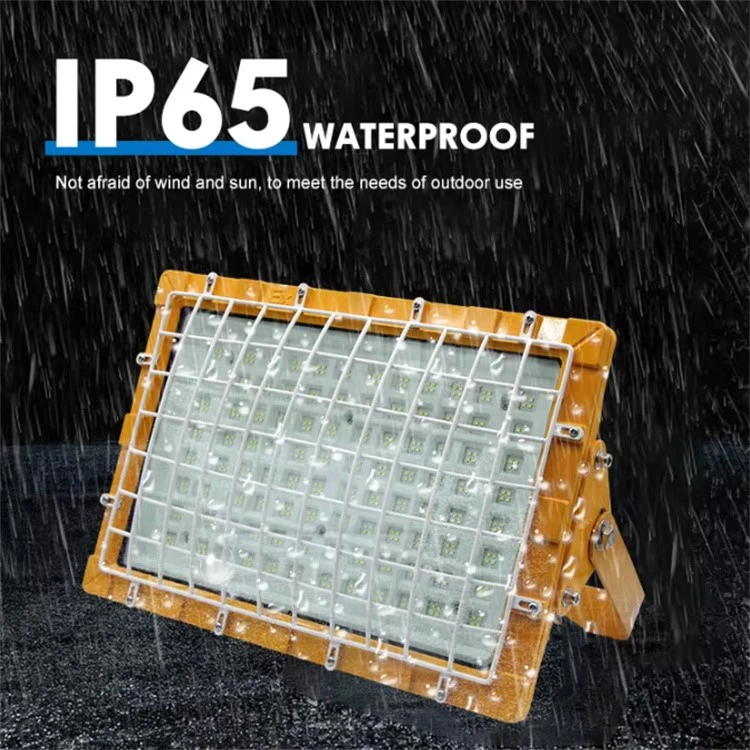
The luminaire bears the official "Ex" (Explosion-proof) mark, verifying its ability to contain an internal explosion without rupturing or allowing flames to escape. The SMD chips are protected by a high-strength, tempered glass lens. This glass is engineered to withstand severe impact (as demonstrated by rigorous hammer tests) and extreme thermal shock (such as cold rain hitting a hot fixture). The SMD chips are hermetically sealed behind this glass and a specialized silicone gasket, achieving an IP65 waterproof and dust-tight rating. This ensures that moisture, corrosive chemicals, and combustible dust cannot penetrate the housing to attack the LED array.
Maintaining IP65 Integrity
The heat generated by the SMD chips, while managed by the heat sink, causes the internal air to expand. As the fixture cools down, the air contracts, creating a vacuum effect that can draw in moisture if the seals are not perfect. The robust multi-bolt perimeter flange of this floodlight ensures the silicone gasket maintains a constant, even pressure, preventing the ingress of water and maintaining the IP65 integrity over thousands of thermal cycles.
The Procurement Advantage: Cost, Longevity, and ROI
Total Cost of Ownership (TCO) Reduction
For procurement officers, the decision to invest in this SMD-based explosion-proof floodlight is a strategic financial move. The higher initial cost is rapidly offset by significant reductions in operational expenditure.
Energy Savings: The high luminous efficacy of the SMD chips means drastically lower wattage is required to achieve the same (or greater) brightness compared to legacy HPS lights. This translates to immediate and substantial savings on the facility's energy bill.
Maintenance Reduction: The long lifespan of the SMD chips (bolstered by the aluminum heat sink) means fewer replacement cycles. In hazardous areas, the labor cost of sending a specialized crew to replace a fixture is astronomical. By eliminating frequent maintenance, the fixture pays for itself over its lifecycle.
Enhancing Safety and Compliance
Operating in a hazardous environment requires strict adherence to safety regulations. A failure in lighting can lead to slips, trips, falls, or the inability to identify dangerous leaks. The high-lumen output of this fixture ensures a brilliantly lit workspace, reducing accidents and improving worker productivity. Furthermore, compliance with IECEx and ATEX standards is non-negotiable; the "Ex" mark on this fixture provides documented assurance that it meets the most stringent global safety codes, mitigating legal liability for the facility operator.
OEM Customization and Scalability
Recognizing the diverse needs of the industrial sector, this product line supports OEM custom processing. Whether a facility requires specific color temperatures (e.g., 3000K, 4000K, or 5700K), specialized beam angles, or higher-wattage configurations, the SMD 2835/3030 platform is highly modular. This flexibility allows procurement managers to tailor the lighting solution precisely to the physical layout and operational requirements of their facility, ensuring optimal performance and maximum ROI.
Conclusion
The title "SMD2835/3030 LED Chips: Delivering High-Lumen Performance in Hazardous Environments" encapsulates the core engineering triumph of this explosion-proof floodlight. By utilizing these advanced semiconductor architectures, the fixture achieves a level of luminous efficacy that was previously impossible in a hermetically sealed enclosure.
The SMD chips provide the raw, high-lumen power; the tempered glass provides the unyielding physical protection; and the high-purity die-cast aluminum heat sink provides the essential thermal management that keeps the entire system operating at peak efficiency. Together, these components form a synergistic system that beats the heat, defies the elements, and ensures continuous, safe, and brilliant illumination.
For facility managers and B2B procurement professionals, this floodlight is not just an equipment purchase; it is an investment in operational resilience and safety. In the unforgiving reality of hazardous industrial environments, settling for inferior lighting is a risk that cannot be justified. Choose the technology engineered to illuminate the most dangerous places on earth-choose the ultimate in explosion-proof LED innovation.
How To Cooperate With Us?
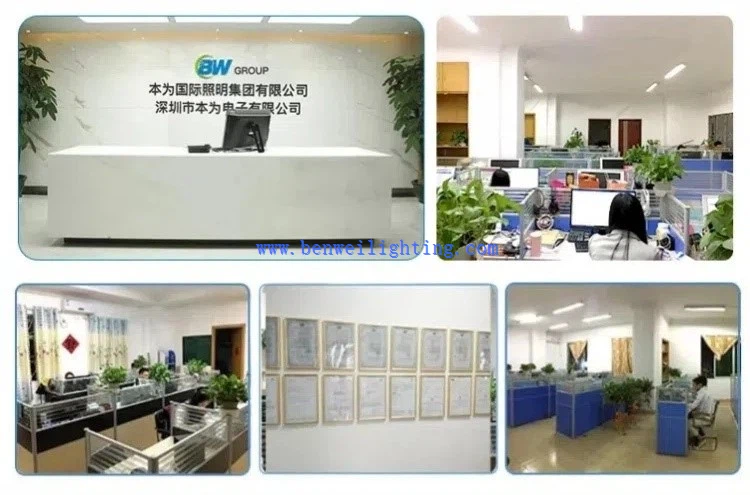
We are happy to have total control over the manufacturing process and the calibre of our products since we have our own facilities. Since we are producers rather than just brokers, we are dedicated to providing our customers with the best pricing. Since we are certain that the price and quality of our products are clear, we invite customers to see our samples first. Our commitment to quality and customer satisfaction drives us to continuously provide top-notch goods.
Our address
3rd Floor, 5th Building, Hebei Industrial Park, Hualian Community, Longhua District, Shenzhen, China





