

Here are the steps you need to follow to install festoon lights.
Create a lightening layout and plan the fixing points
First things first, plan the lighting layout, which includes figuring out where the fixing points are going to be installed. The advantage of visualizing the project before starting is that you will then know exactly how much lighting are going to need.
While you are at it, decide the lighting pattern. Most people prefer to use the V, X, pinwheel, or parallel pattern, but you can create any pattern you want. While visualizing a pattern, pay attention to the fixing points to ensure they will be able to aptly support the desired pattern. Tall trees are excellent fixing points, as are the side of homes and fence posts.
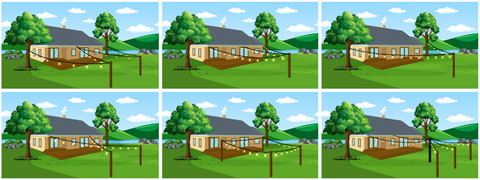
Sometimes, people have difficulty with those fixing points that are quite a distance away from their home. However, this problem can be solved using wooden posts. They are not only easy to install but also give you more options as far lighting patterns are concerned. The fixing points, ideally speaking, should not be more than 8m apart; otherwise, you will have to use supporting wires.
Install the fixing points
Your choice of pattern design determines the kind of fixing points needed. That said, eyes or metal hooks work fine for most people.
It’s important you close the fixing points. Else, there is a risk of the cable coming off hooks, especially if you live in a windy area. That’s why drilling holes for your hooks and then screwing them into place one by one. You may use adhesives for extra protection, but most surfaces don’t require them.
Attach the festoon lights to the fixing points
Cable ties help to attach the festoon lights firmly to the fixing points or supporting wire. Once the support lines are up, this is a pretty straightforward process.
If the distance between two fixing points is less than 10m apart, you don’t need support wire but we highly recommend. You can simply install them to your fixing points. Make sure the power cord is snug closely against the ground or wall. This will minimize the risk of someone accidentally tripping over it.
Screw-in the bulbs and turn on the power
Simply screw all the LED light bulbs into their sockets and turn the power on.





