

Introduction
Indoor lighting design is a core component of architectural interior decoration and spatial environmental optimization, which not only undertakes the basic functional lighting task of improving spatial luminance, but also profoundly affects indoor spatial atmosphere, human visual comfort, psychological mood and work efficiency. With the continuous upgrading of modern architectural lighting technology and personalized interior design concepts, traditional single lighting modes can no longer meet the diversified needs of residential and commercial spaces for hierarchical lighting, decorative aesthetics and energy-saving operation.
Recessed downlights and track lighting systems are two mainstream embedded and assembled lighting solutions widely adopted in modern architectural lighting engineering. Both of them have outstanding advantages in directional lighting, environmental coordination and green energy conservation, but they differ significantly in structural form, optical performance, spatial adaptability and scene application orientation. In order to scientifically select lighting fixtures matching spatial attributes and functional positioning, this paper systematically sorts out the structural characteristics, functional advantages and practical application values of recessed downlights and track lights, conducts multi-dimensional comparative analysis, and summarizes targeted selection strategies, so as to provide professional theoretical basis and practical guidance for modern indoor lighting design and engineering configuration.
Comprehensive Performance Advantages of Recessed Downlight Systems
Structural Characteristics and Spatial Aesthetic Advantages
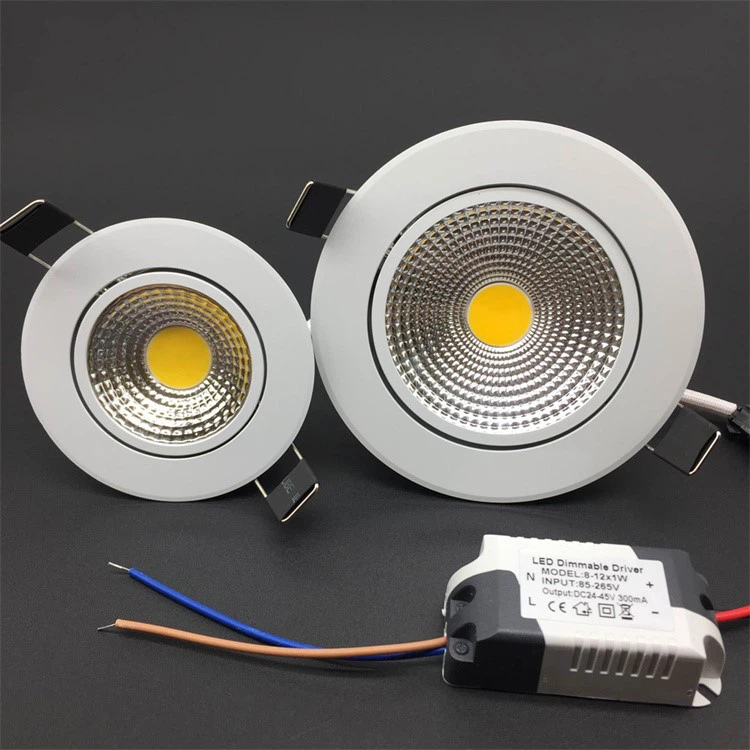
Recessed downlights, also known as can lights or pot lights, belong to embedded ceiling lighting fixtures. The main body of the lamp is completely hidden inside the ceiling keel structure, and only the narrow edge faceplate is flush with the ceiling surface after installation. This fully embedded installation mode abandons the protruding structure of traditional lighting fixtures, presenting an extremely concise, smooth and modern spatial visual effect. The integrated and hidden structural design will not produce redundant structural protrusions, effectively avoids spatial visual clutter, and highly fits the minimalist, modern and light-luxury mainstream interior decoration styles.
In terms of spatial utilization, the flush installation feature of recessed downlights does not occupy indoor vertical space, which effectively solves the problems of head collision risk and spatial compression caused by exposed lighting fixtures. It has unique application advantages in low-ceiling floors, compact residential spaces and neat office environments. Moreover, the unified and regular arrangement of embedded downlights can optimize the ceiling hierarchical sense, visually stretch the indoor space, and make the whole space more open, transparent and orderly.
Optical Performance and Functional Lighting Advantages
Different from traditional omnidirectional diffused ceiling lamps, most modern recessed downlights adopt directional beam lighting design, with adjustable lamp holder angle and precise light control performance. The built-in light guide lens and shading structure can concentrate the light beam in the effective irradiation area, realize accurate directional projection, and avoid invalid light diffusion and light energy waste. This precise lighting capability enables downlights to not only meet the basic uniform flood lighting of the whole space, but also realize local key lighting for indoor art decorations, wall paintings, architectural lines and structural details, forming a layered and progressive indoor light environment.
In terms of scenario adaptability, recessed downlights have strong universal applicability. They can be stably configured in multiple functional spaces such as living rooms, bedrooms, kitchens, corridors and study rooms. The soft and uniform light output is suitable for long-term indoor activity scenarios, effectively reducing visual fatigue caused by uneven light and dark, and improving the overall comfort of spatial lighting.
Energy-Saving Performance and Operational Sustainability
Modern recessed downlight products are basically equipped with high-efficiency LED light sources, which have revolutionary advantages over traditional incandescent and fluorescent lamps in photoelectric conversion efficiency and energy consumption control. LED downlights realize direct conversion from electric energy to light energy through semiconductor electroluminescence, with extremely low thermal energy loss and photoelectric conversion efficiency as high as 90%. Under the same luminous flux standard, the power consumption of LED downlights is far lower than that of traditional lighting fixtures, which can effectively reduce daily building lighting energy consumption and reduce users' long-term electricity expenditure.
In addition, LED light sources have ultra-long service life and stable luminous performance, with a theoretical service life of more than 50,000 hours. The long-life characteristics greatly reduce the frequency of lamp replacement and later maintenance cost, and reduce the resource waste and environmental pollution caused by frequent fixture renewal. The low-energy and long-life operating characteristics make recessed downlights conform to the design concept of green energy-saving buildings and low-carbon interior decoration.
Installation and Maintenance Convenience
Recessed downlights adopt standardized modular structural design, with unified installation accessories and simple assembly procedures. For conventional ceiling environments that have reserved lamp positions and wiring circuits, the installation operation is highly operable, and most household downlight renovation and installation can be completed by users with basic hand tools. Although individual complex embedded installations need professional electricians to cooperate with ceiling construction, the overall installation difficulty and construction cycle are far lower than those of customized lighting systems.
In the daily operation and maintenance stage, the hidden installation structure of downlights is not easy to accumulate dust and sundries, and the lamp body structure is stable and durable without vulnerable parts. The later maintenance work only includes regular bulb replacement and simple surface cleaning, which has low maintenance difficulty and high operational stability, suitable for long-term uninterrupted indoor lighting operation.
Multidimensional Application Advantages of Track Lighting Systems
Structural Design and Flexible Combination Characteristics
Track lighting system is a combined assembled lighting device composed of fixed mounting track and multiple independent movable lamp bodies. Different from the integrated fixed structure of downlights, the track lamp body is not fixed in a single position, and can freely slide along the track and adjust the installation position according to lighting needs. Each lamp body is an independent luminous unit with adjustable pitching and horizontal rotation angles, realizing multi-angle and multi-directional flexible light beam adjustment.
This modular combined structure breaks the fixed limitation of traditional lighting layout. Users can freely increase or decrease the number of lamp bodies on the track, adjust the spacing and angle of light sources, and dynamically optimize the lighting layout according to spatial functional changes and decorative adjustment needs. The flexible combination mode makes track lighting have unparalleled dynamic adaptability in personalized lighting design.
Adjustable Lighting Performance and Scene Customization Ability
Track lighting has ultra-high lighting adjustability in terms of light position, light direction and local luminous flux. Each independent track lamp can realize independent switch control and angle calibration, which can not only cooperate with basic space flood lighting, but also complete high-precision key lighting for local areas. In commercial scenarios such as exhibition halls, retail stores and restaurants, track lights can accurately illuminate display goods, art exhibits and decorative structures, highlight spatial visual focus, and create a strong sense of hierarchical lighting atmosphere.
In residential interior scenarios, track lighting can dynamically adjust the lighting focus according to daily scene changes such as leisure, reading and entertainment, realizing the customized switching of multiple lighting modes, and solving the problem of single and unchangeable lighting effect of traditional fixed lighting fixtures.
Energy-Saving Operation and Low-Carbon Environmental Protection
Similar to downlight systems, modern track lighting equipment is mainly equipped with high-performance LED light sources, with outstanding energy-saving, low-heat and long-life advantages. LED track lights have low working power and low thermal radiation, which can effectively reduce indoor heat accumulation caused by lighting operation and improve indoor environmental comfort. Compared with traditional high-power lighting equipment, track lights can realize accurate local lighting, avoid full-space long-term high-power lighting, and achieve precise energy-saving control through regional lighting and segmented switch control.
The long-life LED light source reduces the replacement frequency of lamps and accessories, and the durable track structure can be reused for a long time. The overall system has low operating energy consumption and low maintenance cost, which meets the energy-saving and emission-reduction requirements of modern commercial and residential buildings.
Construction Convenience and Diversified Style Adaptability
The installation mode of track lighting is simple and efficient. The overall system only needs to fix the track on the ceiling or wall surface and complete circuit docking, and then the lamp body can be installed and debugged in a modular manner. The whole construction process does not need complex ceiling embedding and grooving operations, with low construction difficulty and short cycle. It is suitable for new decoration construction and old space lighting renovation, and has high DIY operability and engineering practicability.
In terms of aesthetic design, track lighting has extremely rich style diversification. The track and lamp bodies have various shapes, sizes, surface processes and color matching schemes, covering modern minimalist, industrial wind, classic business and other mainstream design styles. The diversified style options can be perfectly matched with different interior decoration systems, realizing the organic integration of lighting function and spatial aesthetic design.
Wide Scene Adaptability of Track Lighting
Track lighting systems have cross-scenario application capabilities covering residential and commercial fields. In residential spaces, they can be applied to living room atmosphere lighting, bedroom local lighting, kitchen auxiliary lighting and aisle decorative lighting. In commercial fields, they are widely used in retail store commodity display lighting, restaurant atmosphere creation, exhibition hall exhibit lighting and office key area lighting. The flexible adjustable performance enables track lights to adapt to diversified functional lighting needs of different spaces, and has higher scene flexibility than fixed downlights.
Comparative Analysis and Scientific Selection Strategy
Core Difference Between the Two Lighting Systems
Recessed downlights focus on integral hidden aesthetics, overall space uniform lighting and stable basic light environment. Their advantages lie in neat and concise spatial vision, high overall lighting uniformity and low space occupancy, which are more suitable for creating stable, comfortable and unified basic lighting atmosphere. However, due to the fixed installation position, the later layout adjustment flexibility of downlights is low, and it is difficult to realize large-range dynamic lighting switching.
Track lighting is positioned in flexible adjustable lighting and local key lighting. Its core advantage lies in dynamic layout adjustment and personalized scene customization, which can meet the diversified and changing lighting needs of spaces. Nevertheless, the exposed track and lamp body structure will form obvious visual lines on the ceiling, which is slightly insufficient in overall spatial simplicity and integrity compared with embedded downlights.
Targeted Selection Based on Spatial Demand
For indoor spaces that pursue minimalist ceiling aesthetics, require overall uniform flood lighting, and focus on long-term stable basic lighting effects such as conventional residential living rooms, bedrooms and office overall lighting, recessed downlights are the optimal choice. They can balance functional lighting, spatial aesthetics and energy-saving operation, and maintain the integrity and neatness of interior decoration.
For commercial spaces and personalized residential spaces that need frequent lighting adjustment, local key lighting and multi-scene atmosphere switching, such as commodity display spaces, art exhibition areas and customized decorative spaces, track lighting systems have more prominent application value. Their flexible combination and adjustable performance can maximize the personalized and artistic expression of space lighting.

Conclusion
Recessed downlights and track lighting systems are both mature and efficient modern indoor lighting solutions with their unique performance advantages and application scenarios. Recessed downlights rely on hidden embedded structure, uniform directional lighting, stable energy-saving performance and simple maintenance, which are suitable for conventional space basic lighting and minimalist decorative environments. Track lighting systems take flexible structural combination, adjustable lighting effect, diversified styles and wide scene adaptability as core advantages, and are committed to personalized customized lighting and local key atmosphere creation.
In modern architectural lighting design and spatial decoration engineering, there is no absolute superiority between the two lighting systems. The scientific selection should be based on the functional positioning of the space, decorative style orientation, lighting effect demand and later use flexibility. Reasonable selection and even collocated application of downlights and track lights can realize the organic combination of basic flood lighting and key decorative lighting, build a hierarchical, comfortable and artistic modern indoor light environment, and maximize the functional and aesthetic value of architectural lighting.

How To Cooperate With Us?
We take great satisfaction in having total control over the manufacturing process and the quality of our products thanks to our own facility. As producers rather than just brokers, we are dedicated to providing our customers with the best prices. Since we are certain that the price and quality of our products are clear, we encourage customers to assess our samples first. Our commitment to quality and customer satisfaction drives us to continuously provide top-notch goods.
Our address
3rd Floor, 5th Building, Hebei Industrial Park, Hualian Community, Longhua District, Shenzhen, China





