

Introduction
Background and Significance
In construction sites and industrial workspaces, lighting is not merely a convenience but a critical factor influencing both occupational safety and operational efficiency. Harsh environmental conditions-such as moisture, airborne dust, corrosive chemicals, and mechanical vibrations-pose significant challenges to conventional lighting systems. Frequent fixture failures, poor illumination uniformity, and high maintenance demands are common issues that can compromise worker well-being and project timelines. In this context, the adoption of specialized lighting solutions, particularly three-proof lights (also known as tri-proof lights), has emerged as a best practice for demanding work environments.
Definition and Core Characteristics of Three-Proof Lights
Three-proof lights derive their name from their engineered resistance to three primary environmental stressors: water ingress, dust accumulation, and corrosive agents. Typically rated with an IP (Ingress Protection) level of IP65 or higher, these luminaires are fully protected against low-pressure water jets and dust-tight. Additionally, they feature anti-corrosion coatings or housings made from materials such as polycarbonate or stainless steel, ensuring functionality in the presence of oils, solvents, or saline atmospheres. Modern three-proof lights predominantly utilize LED technology, which further enhances their reliability and energy performance compared to fluorescent or high-intensity discharge (HID) alternatives.
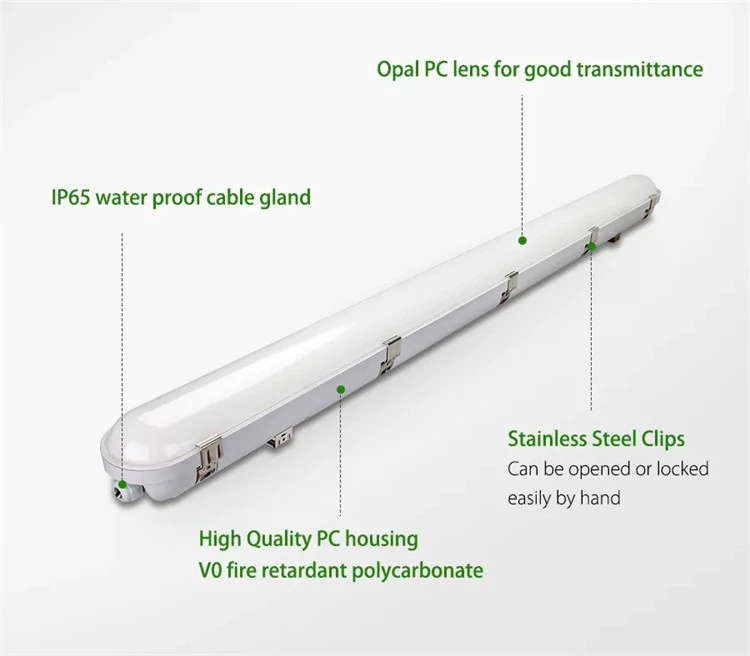
Principal Benefits of Three-Proof Lights in Industrial Settings
Enhancing Occupational Safety
Adequate and uniform illumination is a cornerstone of hazard prevention. Three-proof lights deliver high luminous efficacy (typically 120–150 lm/W) and excellent color rendering (CRI > 80), enabling workers to detect trip hazards, moving machinery, sharp edges, and slippery surfaces more effectively. In construction environments, where uneven terrain and scaffolding are common, improved visibility directly correlates with a lower incidence of falls and collisions. Studies have shown that upgrading to high-quality LED three-proof lighting can reduce site accident rates by approximately 30–40% during night shifts or in poorly lit indoor zones.
Because three-proof lights are sealed against moisture and dust, they do not suffer from sudden failure due to condensation or particulate intrusion-a frequent cause of electrical shorts in standard fixtures. This reliability ensures that critical areas (e.g., emergency exits, stairwells, material transfer points) remain illuminated at all times, thereby supporting continuous safe operations.
Increasing Operational Productivity
Bright, even lighting minimizes visual fatigue and improves task accuracy. In assembly lines, warehouse picking zones, or steel fabrication plants, workers can locate tools, read measurements, and inspect workpieces without pausing to adjust to shadows or dark spots. Field observations indicate that replacing outdated fluorescent fixtures with three-proof LED lights can shorten manual assembly times by 12–18%, while also reducing error rates in quality inspection tasks.
Many construction and industrial projects operate around the clock to meet tight deadlines. Three-proof lights provide stable, flicker-free illumination that reduces eye strain during long night shifts. Their robust design also allows them to function reliably in temperature extremes (−20°C to +50°C typical range), making them suitable for outdoor and unheated facilities.
Lowering Long-Term Maintenance Costs
Traditional lighting options-such as metal halide or compact fluorescent lamps-have rated lifetimes of 6,000 to 20,000 hours and degrade rapidly in dusty or humid environments. In contrast, high-quality three-proof LED lights offer operational lifespans of 50,000 to 100,000 hours (equivalent to 5–11 years of continuous use). This dramatically reduces the number of lamp replacements required over a facility's lifetime.
Each unscheduled lighting failure interrupts work, requires a maintenance crew to access often-heightened locations (e.g., overhead cranes or scaffolding), and creates temporary dark zones. By virtually eliminating such failures, three-proof lights cut direct maintenance labor costs and, more importantly, avoid costly production downtime. A case study of a mid-sized automotive parts factory showed that switching to three-proof LED systems reduced annual lighting maintenance expenditure by 74%.
Improving Energy Efficiency and Environmental Footprint
Three-proof lights leverage the inherent efficiency of LEDs: they convert over 80% of input energy into light, compared to only 10–15% for incandescent bulbs and 30–40% for fluorescent tubes. For the same illuminance level (e.g., 300 lux on a work plane), a three-proof LED fixture consumes 50–70% less power than a fluorescent fitting. This translates directly into lower electricity bills and reduced cooling loads (since LEDs emit less heat).
Occupying facilities that prioritize energy efficiency-such as those seeking LEED or BREEAM certification-can benefit from the low energy intensity and long replacement intervals of three-proof lights. Moreover, LEDs contain no hazardous mercury, simplifying end-of-life disposal and aligning with corporate sustainability goals.
Versatility and Adaptability to Diverse Environments
Three-proof lights are available as linear battens, high-bays, floodlights, and compact bulkheads. They can be surface-mounted, suspended by chains or hooks, or recessed into ceilings. This flexibility allows the same family of luminaires to be used for general area lighting (e.g., 6000 lm linear fixture) as well as task or accent lighting (e.g., 2000 lm wall-mounted unit).
From open-pit construction sites and port loading docks to chemical storage warehouses and food processing plants, three-proof lights withstand rain, dust storms, high-pressure washdowns, and exposure to dilute acids or alkalis. Their IP65–IP68 ratings and IK08–IK10 impact resistance ensure uninterrupted performance even when subjected to vibration, falling debris, or accidental collisions from forklifts.
Many modern three-proof LED fixtures are compatible with occupancy sensors, daylight harvesting dimmers, and wireless control systems. This enables dynamic adjustment of light output based on real-time activity and ambient light levels, further conserving energy while maintaining optimal working conditions.
Discussion: Comparative Advantages and Selection Criteria
While three-proof lights entail a higher initial purchase cost than basic fluorescent or halogen fixtures, a total cost of ownership (TCO) analysis over a 5-year period typically reveals net savings of 40–60% due to lower energy consumption and negligible maintenance. When selecting three-proof lights for a specific application, engineers should consider:
Required IP rating: IP65 for general washdown areas, IP66/IP67 for temporary submersion or heavy rain.
Corrosion resistance: Salt spray test (ASTM B117) certification for coastal or chemical environments.
Thermal management: Passive cooling design that ensures LED junction temperature remains below 85°C to preserve lumen maintenance.
Optical distribution: Symmetric vs. asymmetric beam angles depending on mounting height and spacing.
Conclusion
Three-proof lights represent a well-engineered response to the demanding illumination requirements of construction sites and industrial workspaces. Their key advantages-enhanced safety, increased productivity, lower maintenance costs, superior energy efficiency, and remarkable versatility-have been substantiated by both empirical studies and field deployments. For enterprises seeking to protect their workforce and optimize operational economics, investing in high-quality three-proof LED lighting is not merely an upgrade but a strategic necessity. As lighting technology continues to evolve, future iterations may incorporate even higher efficacy (200+ lm/W) and enhanced smart connectivity, further solidifying the role of three-proof luminaires as the gold standard for industrial illumination.
About Our Company
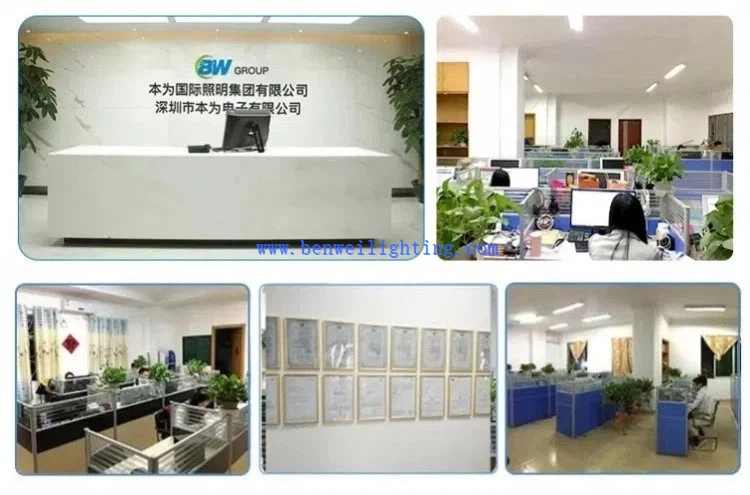
Our firm prides itself on owning its own factory, guaranteeing complete control over the production process and the quality of our goods. We are not only agents; we are manufacturers committed to offering our clients the most competitive rates available. We invite consumers to evaluate our samples first, as we are assured that the quality and pricing of our items are self-evident. Our dedication to excellence and client satisfaction compels us to consistently perform at our best and provide superior quality products.
Our address
3rd Floor, 5th Building, Hebei Industrial Park, Hualian Community, Longhua District, Shenzhen, China





