

Does the plant factory have "sunshine"? Indeed, I have! From where does "sunshine" originate? From some unique plant lights!
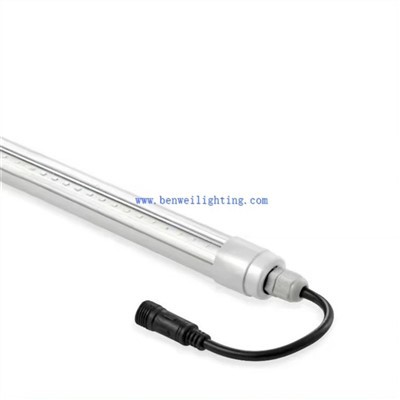
Incandescent, high-pressure sodium, gold halide, fluorescent, and other conventional lamps were first employed in plant industries. Today, LED light sources are the most widely utilised plant light sources. Since its inception, the LED light source has gained popularity among researchers and developed into an effective production tool due to its many intrinsic advantages.
LED plant lighting is efficient and energy saving.
After LED lamps are applied to agriculture, because the use density of lamps is relatively high for general lighting, especially for plants with high light demand, the electricity power per square meter of planting area is as high as 500-1000 W. This puts forward strict requirements for the electro-optic conversion efficiency of plant lamps. At present, the electro-optical conversion efficiency of LED plant lamps is more than 20 times that of incandescent lamps, 3 times that of fluorescent lamps, and nearly 2 times that of high-pressure sodium lamps. Therefore, the application of LED plant lights can greatly reduce electricity consumption, thus achieving energy saving.
LED spectral bands are broad
Provide monochromatic light easily, and cover the entire spectrum. There are many of monochromatic light LEDs available today, and they can cover the wavelength range of 200-950 nm. Additionally, the monochromatic LED chip can be activated by phosphor to produce the full spectrum of white light or to increase the half-wave width of monochromatic light or monochromatic light composite spectrum. In addition to enabling the spectrum customisation of various plants to provide the optimal light formula for plants, this offers an extremely advantageous experimental environment for researching the light absorption of various plants.
LED plant light is strong and the spectrum is adjustable.
LED is a current driven light source, and its brightness increases with the increase of current. Therefore, the power output current driving the LED is adjusted to get the corresponding brightness. The current size of the LED with different light colors can be controlled separately, and the spectrum can be adjusted. At present, the adjustable spectrum plant lamps on the market are mainly used for scientific research, and the plant lamps with adjustable light intensity have been widely used in production.
the LED has less heat
It can be in close contact with plants without causing problems such as plant leaves and operator burning. The rapid development of indoor multi-layer planting technology is also mainly due to this feature of LED plant lights.
If you are interested, feel free to contact us https://www.benweilighting.com/contact-us.





