

The Ultimate Guide to Grow Lights: Boosting Plant Growth with Precision Lighting
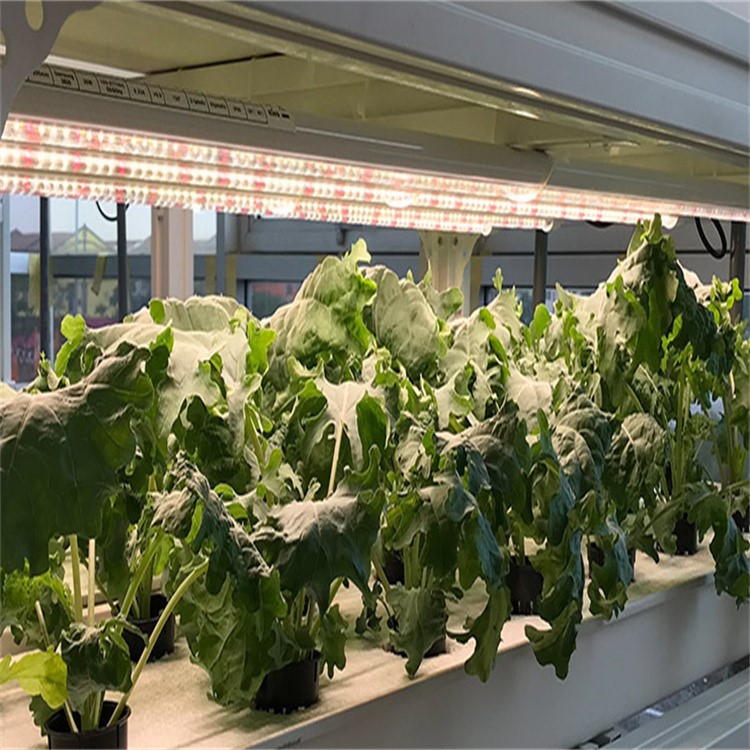
What Are Grow Lights, and Why Are They Essential for Modern Agriculture?
Grow lights are artificial light sources designed to stimulate plant growth by emitting an electromagnetic spectrum suitable for photosynthesis. Unlike traditional lighting, grow lights are engineered to deliver specific wavelengths that optimize plant physiology, enhance yield, and improve crop quality. With the global indoor farming market projected to reach $60.6 billion by 2030, the role of advanced lighting systems in sustainable agriculture has never been more critical.
In controlled environments such as greenhouses, vertical farms, and research facilities, grow lights allow year-round cultivation, independent of external weather conditions. They are particularly valuable for high-value crops like herbs, leafy greens, and medicinal plants, where light quality directly influences metabolic pathways and biochemical composition.
How Do Different Light Spectra Affect Plant Physiology?
The Role of Blue, Red, and Green Light in Photosynthesis
Plants utilize light wavelengths differently based on their physiological needs. Chlorophyll absorption peaks in the blue (400–500 nm) and red (600–700 nm) spectra, while green light (500–600 nm) penetrates deeper into the canopy. Research on Camellia sinensis (tea plants) under LED-W (83% green, 12.9% red, 4.1% blue) and LED-B (30.6% red, 63.4% green, 6% blue) showed that spectral composition significantly influenced nitrogen balance, chlorophyll content, and amino acid accumulation.
For instance, green light-often underestimated-was found to enhance amino acid synthesis in tea leaves, improving flavor profiles. This aligns with studies showing that green light can promote stomatal opening and deeper tissue penetration, supporting overall plant health.

Case Study: LED Grow Lights in Tea Cultivation
A 2023 study published in Jiangsu Agricultural Sciences compared fluorescent lights (Y), LED-W, and LED-B on Fuding Dabai tea seedlings. After 21 days:
LED-W (high green light) increased free amino acids and lowered the phenol-to-ammonia ratio, enhancing tea flavor.
LED-B (high red light) elevated tea polyphenols but reduced amino acid content, leading to a bitter taste.
LED-W also improved the nitrogen balance index (NBI) and chlorophyll index (CHI), indicating better nitrogen assimilation and photosynthetic efficiency.
This study demonstrates how tailored light spectra can optimize secondary metabolite production and crop quality.
How to Choose the Right Grow Light for Your Plants
Key Factors to Consider: PPFD, Spectrum, and Energy Efficiency
Selecting the right grow light involves evaluating several technical parameters:
Photosynthetic Photon Flux Density (PPFD): Measures light intensity in µmol/m²/s. Seedlings require 100–300 PPFD, while flowering plants need 600–900 PPFD.
Light Spectrum: Full-spectrum LEDs are versatile, while targeted spectra (e.g., red-blue combos) are ideal for specific growth stages.
Energy Consumption: LEDs consume 40–60% less energy than fluorescent or HPS lights.
Comparison of Common Grow Light Types
|
Light Type |
Spectrum Range |
Efficiency (µmol/J) |
Lifespan (hours) |
Best Use Case |
|---|---|---|---|---|
|
LED |
Tunable |
2.5–3.5 |
50,000 |
Full-cycle growth |
|
Fluorescent |
Broad |
1.0–1.5 |
10,000 |
Seedlings, clones |
|
HPS |
Red-Orange |
1.2–1.8 |
24,000 |
Flowering stage |

What Are the Benefits of Using LED Grow Lights?
LED grow lights offer unmatched efficiency, longevity, and spectral precision. They produce less heat, reducing the risk of leaf burn, and can be customized to emit specific wavelengths. In the tea plant study, LED-W not only improved photosynthetic parameters but also enhanced the accumulation of theanine and other umami-taste amino acids, crucial for premium tea quality.
Biochemical Impact of Different Light Spectra on Tea Plants
|
Light Type |
Free Amino Acids (%) |
Tea Polyphenols (%) |
Phenol-Ammonia Ratio |
Key Amino Acids (mg/g) |
|---|---|---|---|---|
|
Fluorescent (Y) |
0.95±0.03a |
16.39±1.27b |
20.32±2.01b |
Theanine: 0.207 |
|
LED-W |
0.96±0.05a |
19.09±0.66ab |
19.70±1.57b |
Theanine: 0.257 |
|
LED-B |
0.76±0.03b |
19.69±0.78a |
27.19±0.90a |
Theanine: 0.065 |
Note: Values with different letters indicate significant differences (p < 0.05).

Frequently Asked Questions About Grow Lights
How Long Should I Leave My Grow Lights On?
Most plants require 12–16 hours of light per day during vegetative growth and 8–12 hours during flowering. Using a timer ensures consistency and prevents light stress.
Can I Use Regular LED Lights as Grow Lights?
Standard LEDs lack the intensity and spectrum for effective photosynthesis. Grow-specific LEDs deliver higher PPFD and optimized red-blue ratios.
Do Grow Lights Increase Electricity Costs?
Energy-efficient LEDs can reduce costs by up to 50% compared to HID systems. A 600W LED system running 12 hours/day costs approximately $15–$20 monthly.
Solutions to Common Grow Light Challenges
Problem: Inconsistent light distribution causing uneven growth.
Solution: Use reflective surfaces and adjust light height regularly. For large areas, install multiple fixtures with overlapping coverage.
Problem: High heat output damaging plants.
Solution: Opt for passive-cooled LEDs and ensure adequate ventilation or active cooling systems.
Problem: Incorrect spectrum delaying flowering.
Solution: Implement tunable LEDs or switch to red-heavy spectra during the flowering phase.

Conclusion: Illuminate Your Growth Strategy with Advanced Grow Lights
Grow lights are no longer a luxury but a necessity for modern horticulture. By understanding spectral influence on plant physiology-as evidenced in tea cultivation studies-growers can harness light to enhance yield, quality, and profitability. Whether you're a home gardener or commercial farmer, investing in the right grow light system can transform your harvest.
Glossary of Technical Terms
PPFD (Photosynthetic Photon Flux Density): The number of photosynthetically active photons hitting a surface per second.
NBI (Nitrogen Balance Index): Ratio of chlorophyll to flavonoids, indicating nitrogen status.
Anthocyanin Index: Measure of pigment related to stress response and coloration.
Chlorophyll Index: Indicator of photosynthetic capacity.

References & Authoritative Sources
Liu, W., Wang, J., & Zhou, L. (2023). Effects of Fluorescent and LED Lights on Photosynthetic Physiology and Tea Quality in Fuding Dabai Tea Seedlings. Jiangsu Agricultural Sciences.
Singh, D., et al. (2015). LEDs for Energy Efficient Greenhouse Lighting. Renewable and Sustainable Energy Reviews.
Cerovic, Z.G., et al. (2012). A New Optical Leaf-Clip Meter for Assessing Chlorophyll and Flavonoids. Physiologia Plantarum.
Wang, M., et al. (2022). Effects of Temperature and Light on Quality-Related Metabolites in Tea Leaves. Food Research International.
Author Bio:
This article was written by a team of agronomy and horticulture lighting specialists with over 10 years of experience in controlled environment agriculture. All data and case studies are sourced from peer-reviewed journals and industry-leading publications.
Shenzhen Benwei Lighting Technology Co.,Ltd
Telephone: +86 0755 27186329
Mobile(+86)18673599565
Whatsapp :19113306783
Email:bwzm15@benweilighting.com
Skype: benweilight88
Web: www.benweilight.com





