

Construction site lighting is a fundamental auxiliary facility for ensuring safe construction, standardized operation and continuous on-site construction. Complex construction environments, uneven site terrain and scattered operation areas lead to poor natural light conditions at night and in cloudy weather, which easily cause visual obstacles for construction personnel and further induce safety accidents such as collision, falling and misoperation. As a flexible, high-efficiency and low-energy-consumption temporary lighting device, construction rope lights have outstanding advantages such as strong environmental adaptability, convenient layout, simple installation and low later maintenance cost, and are widely used in walkway lighting, workstation auxiliary lighting, boundary warning lighting and entrance and exit lighting of modern construction sites.
Different from ordinary indoor decorative rope lights, construction-grade rope lights need to adapt to harsh outdoor environments such as wind, rain, dust and temperature changes, and their selection, layout, installation and maintenance have strict professional specifications. Irregular installation operations will lead to unstable lighting, poor waterproof performance, loose fixation and circuit hidden dangers, which affect construction safety and equipment service life. Based on the actual operation standards of construction site temporary lighting engineering, this paper systematically sorts out the full-process standardized installation steps of construction rope lights, summarizes professional selection criteria, layout design principles, on-site construction specifications and daily maintenance mechanisms, and provides systematic technical guidance for the safe and standardized application of rope lights in construction sites.
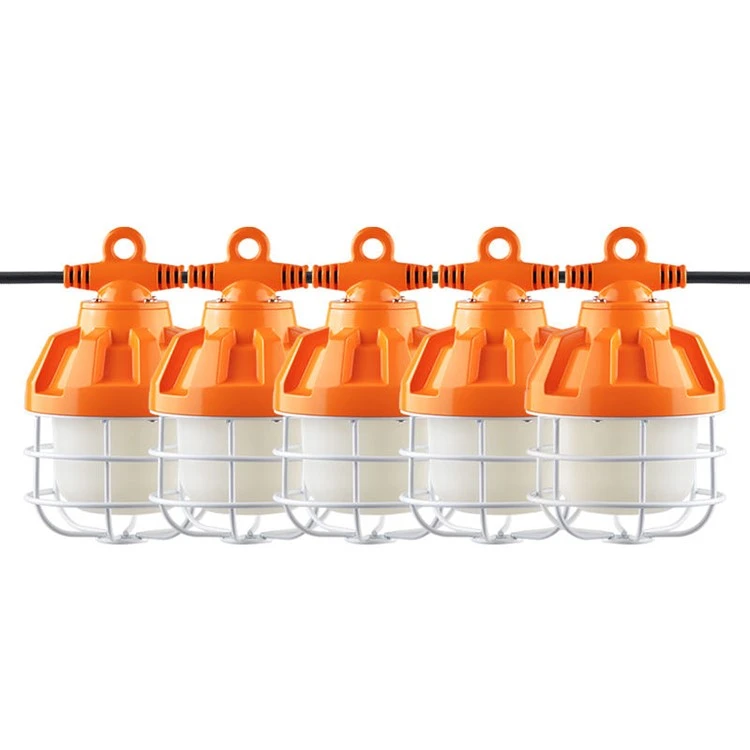
Professional Selection Standards of Construction-Grade Rope Lights
Product selection is the primary link to ensure the stable operation and practical effect of construction rope lights. Construction site scenarios put forward higher requirements for the weather resistance, safety, energy efficiency and applicability of rope lights compared with conventional indoor lighting. The selection process needs to comprehensively evaluate environmental adaptability, lighting performance, product quality and application matching to eliminate potential safety hazards from the source.
Environmental Adaptability Selection
Construction rope lights are exposed to open-air environments for a long time, and need to resist natural environmental interference such as rain erosion, dust accumulation, high-temperature sunlight exposure and low-temperature frost. Therefore, the selected products must have professional outdoor waterproof and dustproof grades, meeting IP65 and above industrial protection standards. Products with poor sealing performance are prone to water ingress, circuit short circuit and lamp bead damage in rainy and humid environments, which will lead to lighting failure and even electrical safety accidents. It is necessary to prioritize rope lights with integrally sealed outer rubber sleeves and waterproof connector design to adapt to long-term outdoor construction site operation.
The construction site has complex operation conditions, frequent personnel and mechanical activities, and easy friction and collision of lighting equipment. The outer protective layer of construction rope lights should be made of high-quality PVC or rubber composite materials, which have excellent tensile resistance, wear resistance and anti-aging performance, and can avoid cracking and circuit damage caused by external extrusion and friction, ensuring structural stability in complex construction scenarios.
Lighting Parameter Matching
The core purpose of construction site lighting is to ensure operation visibility and on-site safety, so the light color selection must meet the safety vision standard. Warm yellow light and pure white light are the optimal choices for construction sites. Yellow light has strong fog penetration and soft light, which is suitable for rainy, foggy and low-visibility environments, and can effectively reduce visual fatigue of construction workers. White light has high brightness and high color rendering, which can clearly present the details of construction operation surfaces and site obstacles, and is suitable for high-precision construction operation areas. Colored decorative lights are not recommended for construction site functional lighting to avoid visual interference affecting operation judgment.
The length of the rope light should be reasonably configured according to the actual lighting range of the construction site, avoiding excessive overlapping layout leading to energy waste and local overheating, or insufficient length leading to lighting blind areas. The lamp bead density and luminous brightness should match the functional positioning of the area: high-brightness high-density rope lights are used for key workstations and operation areas, and conventional brightness products can be used for auxiliary lighting areas such as walkways and boundaries to balance lighting effect and energy consumption.
Energy Efficiency and Quality Screening
In view of the long-term continuous operation demand of construction site lighting, high-energy-efficiency LED rope lights should be prioritized. LED light sources have the advantages of low power consumption, low heat generation and long service life, which can effectively reduce the energy consumption cost of on-site temporary lighting and avoid frequent equipment replacement. At the same time, it is necessary to select regular manufacturer products with complete safety certification, stable circuit performance and uniform luminous effect, eliminate inferior products with uneven brightness, unstable voltage resistance and easy aging, and ensure the continuous and stable operation of lighting equipment during the construction cycle.
Scientific Layout Design of Construction Rope Lights
Reasonable layout planning is the key to realize full coverage and high-efficiency lighting of construction sites. Before formal installation, combined with the site terrain, functional zoning and construction operation characteristics, targeted layout design must be carried out to avoid random installation leading to uneven lighting, blind areas and unreasonable line layout, so as to maximize the lighting utility of rope lights.
Key Lighting Area Confirmation
Construction site walkways, fire exits, site entrances and exits are high-frequency pedestrian flow areas and key safety protection areas. Continuous rope light layout should be adopted to form linear lighting belts, ensuring unobstructed sight of pedestrians, effectively identifying road boundaries, obstacle positions and site isolation areas, and preventing pedestrian falling and collision accidents caused by dim light at night.
Fixed workstations, material processing areas, mechanical operation areas and high-risk construction operation areas need focused lighting layout. The rope lights should be arranged around the operation boundary and above the operation surface to eliminate local lighting blind areas, ensure that construction personnel can clearly identify operation details and equipment status, and provide reliable lighting support for standardized construction operation.
Site Layout Sketch Planning
On the basis of confirming key lighting areas, professional site layout sketching is required. According to the actual scale and terrain characteristics of the construction site, mark the installation trend, length range and fixed position of the rope lights one by one, formulate a standardized layout scheme, and avoid random bending, disorderly wiring and excessive winding of the lights. The layout design should follow the principles of neat wiring, uniform lighting, convenient later maintenance and no obstruction to construction operation, and coordinate with the temporary circuit layout of the site to ensure the standardization of the overall site lighting system.
Standardized Pre-Installation Site Preparation
The flatness, cleanliness and dryness of the installation base surface directly determine the fixing firmness and service life of construction rope lights. Construction site surfaces are mostly accompanied by dust, mud, oil stains and sundry residues. Effective pre-installation treatment is required to eliminate surface interference factors and create qualified installation conditions for rope light fixing.
Surface Cleaning Treatment
Use professional degreasers, industrial alcohol and sterile cleaning tools to thoroughly clean the installation base surface, completely removing surface dust, mud stains, oil stains and floating sundries. Residual oil stains and dust will form an isolation layer on the surface, resulting in reduced adhesion of the rope light adhesive backing, loose pasting and later peeling and falling off, which seriously affects the installation stability. For rough concrete surfaces and wall surfaces, floating ash and bulging attachments on the surface need to be polished and cleaned to ensure a flat and clean base.
After cleaning, the installation surface must be fully dried through natural ventilation or manual drying treatment. Wet surfaces will reduce the adhesive force of the adhesive backing, and long-term moisture retention will also cause water vapor erosion on the back of the rope light, leading to circuit damp aging. The installation operation can only be carried out after the surface is completely dry and free of residual water stains to ensure the firm fitting of the rope lights.
Formal Standard Installation Construction of Rope Lights
On the premise of completing product selection, layout planning and site preparation, the formal installation of construction rope lights can be carried out. The installation process must follow standardized operation procedures to ensure neat layout, firm fixation and intact equipment performance, avoiding equipment damage and potential safety hazards caused by irregular construction.
Unfolding and Positioning Layout
According to the pre-formulated site layout scheme, slowly unroll the rope lights to avoid violent pulling, twisting and bending, so as to prevent internal lamp beads and circuit wires from breaking and damaging. Align the rope lights with the planned installation track, adjust the bending radian and laying trend in real time according to the site terrain and structural characteristics, ensure the overall layout is neat and smooth, and reserve a reasonable margin at the turning and wiring positions to avoid tension damage caused by terrain deformation.
Fixed Pasting and Cutting Treatment
Tear off the isolation protective paper of the rope light adhesive backing, fit the light strip closely to the cleaned and dry base surface, and press it evenly and forcefully along the trend of the light strip for multiple times to ensure no gaps and bubbles between the adhesive layer and the base surface, so as to realize firm fitting and fixing. For outdoor long-term exposed installation positions, auxiliary fixing accessories such as fixing clips can be added to enhance the wind resistance and anti-falling performance of the rope lights.
When the rope light length does not match the actual installation size, professional cutting tools such as utility knives and sharp scissors should be used for precision trimming. It is necessary to strictly cut along the reserved cutting mark of the rope light, avoiding random cutting at will, so as to prevent damage to the internal circuit structure of the light strip and cause local lighting failure. After cutting, the incision shall be checked and trimmed to keep the section flat, and waterproof treatment shall be done for the exposed circuit to prevent water and dust erosion.
Circuit Connection and Safety Protection Specifications
Power connection is the core link related to the electrical safety of construction rope lights. Standardized wiring and power connection operations can effectively avoid circuit short circuit, electric leakage, overload and other faults, ensuring the safe and stable power supply of on-site lighting equipment.
Power Supply Matching and Wiring Mode
According to the power parameters and laying length of the rope lights, select matching qualified power strips and waterproof extension cords to ensure that the power supply load meets the equipment operation requirements and avoid circuit overload operation. The wiring path should avoid mechanical rolling, personnel trampling and sharp object scratching, and the lines should be laid neatly and fixed in sections to prevent disorderly winding and hanging.
Outdoor Safety Protection Measures
All power connection parts, power strips and power supply terminals must be placed in waterproof and dustproof protective boxes, avoiding direct exposure to rain and dust. The power supply equipment should be installed in a high and dry safe area away from water accumulation, construction slag and mechanical operation areas, and obvious safety warning signs should be set to prevent accidental collision and line damage, eliminating electric leakage and electric shock safety hazards in rainy and humid environments.
Post-Installation Inspection and Effect Testing
After completing the installation and wiring of the rope lights, a comprehensive equipment inspection and lighting effect test must be carried out before formal use to troubleshoot hidden faults such as poor contact, local no light and unstable power supply, ensuring that the lighting system meets the construction site safety use standards.
Comprehensive Equipment Inspection
Check the overall fixing state of the rope lights to confirm that there is no warping, falling off and loose fitting; inspect the wiring joints to ensure firm connection and good waterproof sealing; sort out the power lines to eliminate winding, extrusion and damage risks, and check whether the power supply equipment operates normally and the load is safe.
Lighting Effect Debugging
Switch on the power supply to test the overall lighting effect of the rope lights, check whether all lamp beads are lit normally, whether the light brightness is uniform, and whether there is local dark area, flashing and abnormal light failure. For abnormal lighting parts, timely troubleshoot circuit faults and re-fix and adjust the equipment. After confirming that the whole lighting system operates stably and the lighting coverage meets the site safety standards, the equipment can be put into formal construction use.
Daily Operation and Long-Term Maintenance Specifications
Scientific daily maintenance is the key to prolong the service life of construction rope lights and maintain stable lighting effect. Construction site environments are complex and changeable, and rope lights are prone to dust accumulation, circuit aging and loose fixation during long-term operation. Formulating standardized maintenance mechanisms can effectively reduce equipment failure rate and replacement cost.
Regular Surface Cleaning and Maintenance
Regularly clean the surface dust, mud and construction sundries of the rope lights with dry soft cloths and neutral cleaning solutions to avoid long-term dirt coverage affecting luminous efficiency and heat dissipation performance. Dirt accumulation will cause local overheating of lamp beads, accelerate equipment aging, and even lead to short-circuit damage in severe cases. Keeping the surface clean can effectively maintain the long-term stable lighting performance of the rope lights.
Regular Circuit and Equipment Inspection
Arrange special personnel to regularly inspect the rope light fixing state, line connection tightness and power supply operation status. Focus on checking whether the joints are loose, whether the lines are aging and damaged, and whether the waterproof protective equipment fails. Timely repair and replace faulty equipment and aging lines, and re-fix loose light strips to avoid equipment failure affecting on-site lighting safety. In addition, special inspection and maintenance should be carried out before and after rainy days to ensure the waterproof and electrical safety of the lighting system.
Conclusion
As an efficient and flexible temporary lighting device, construction rope lights play an important role in optimizing construction site lighting conditions, eliminating night operation safety hazards and improving construction efficiency. The standardized application of construction rope lights is a systematic project covering product professional selection, scientific layout planning, standardized site preparation, formal installation and construction, safe power connection, post-installation testing and daily maintenance. Strictly abiding by the whole-process professional operation specifications can effectively ensure the stable lighting effect, safe operation state and long service life of the rope light system.
Reasonable selection and standardized installation of rope lights can effectively make up for the defects of insufficient night lighting and uneven coverage of construction sites, provide safe and reliable visual conditions for construction personnel's night operation and site patrol, and reduce the incidence of site safety accidents. In the daily management of construction sites, establishing a standardized installation and maintenance mechanism of rope light lighting system is of great practical significance for improving the refined management level of construction site safety and ensuring the stable progress of construction projects.

How To Cooperate With Us?
Having its own factory gives our firm complete control over the production process and the quality of our goods, which we take great pride in. We are manufacturers, not only brokers, committed to offering our clients the lowest costs. We invite consumers to evaluate our samples first since we are certain that the cost and quality of our items are evident. Our dedication to excellence and client happiness motivates us to consistently provide superior products.
Our address
3rd Floor, 5th Building, Hebei Industrial Park, Hualian Community, Longhua District, Shenzhen, China





