

Introduction: The Universal Pain Point of Frequent HID Lamp Replacement
Application Status of Traditional HID Lamps
High-intensity discharge (HID) lamps have been the mainstream of high-power industrial and outdoor lighting since the late 20th century. With the advantages of high single-lamp brightness and mature manufacturing technology at that time, HID lamps are widely used in large-space warehouse lighting, factory high-bay lighting, urban courtyard and community road lighting, highway auxiliary lighting, and commercial plaza lighting. For a long time, most infrastructure lighting projects and industrial park lighting systems take HID lamps as the default configuration due to their low initial procurement cost and wide compatibility with traditional lamp holders.
Nevertheless, with the continuous improvement of global energy-saving standards and the increasing demand for long-term stable operation of lighting systems in commercial and industrial scenarios, the inherent performance defects of HID lamps are constantly amplified. Unlike daily household lighting, industrial and municipal lighting equipment needs to support long-hour continuous operation, even 24-hour uninterrupted lighting throughout the year. Such harsh operating conditions make the performance shortcomings of HID lamps fully exposed, and frequent lamp replacement has become an unavoidable operational burden for most users.
Harms of Frequent Lamp Replacement for Commercial and Industrial Users
The frequent failure and replacement of traditional HID lamps bring multiple economic and operational losses to users, which are far beyond the low initial cost advantage of HID lamps. First of all, frequent lamp replacement directly increases the material cost of lighting operation. HID lamps have a short service life, and most of them need to be replaced every 8,000 to 15,000 hours. For large-scale lighting scenarios with hundreds or thousands of lamps, the annual replacement cost of lamp sources is extremely huge.
Secondly, manual maintenance and replacement labor costs form a long-term hidden expenditure. Most industrial and municipal lighting equipment is installed at high altitudes, including high-bay factory lamps, street lamps, and courtyard post top lamps. The replacement operation requires professional construction personnel, lifting equipment, and safety protection measures, which consumes a lot of human resources and time costs. In addition, frequent maintenance operations will also affect the normal operation of factories and the daily travel of residents, bringing potential operational risks and safety hazards.
More importantly, the unstable luminous performance of aging HID lamps will affect the lighting effect. After a period of use, HID lamps will have serious luminous attenuation, uneven light emission, stroboscopic flicker, and slow startup. Insufficient lighting brightness will reduce the working efficiency of factory operators, and unstable light sources will also affect the visual comfort of outdoor public spaces, reducing the overall service quality of lighting projects.

Core Technical Defects of Traditional HID Lamps Leading to Frequent Failure
Short Service Life and Severe Lumen Depreciation
Service life is the most intuitive shortcoming of traditional HID lamps. The theoretical average service life of ordinary metal halide lamps and mercury vapor lamps is only 10,000 to 18,000 hours, while the actual service life in high-temperature, humid, and long-hour continuous operation scenarios is even shorter, usually only 6,000 to 12,000 hours. Compared with modern LED lighting products, the service life of HID lamps is less than one-fifth, which directly determines its frequent replacement cycle.
In terms of luminous attenuation, HID lamps have extremely poor light decay control capability. During long-term operation, the internal gas discharge tube of HID lamps will age continuously, and the electrode material will be consumed and oxidized, resulting in a rapid decline in luminous flux. After 2,000 hours of operation, the luminous attenuation rate of HID lamps can reach 20% to 30%, and after 5,000 hours, the brightness loss is more than 50%. Severe light decay makes most HID lamps lose practical lighting value long before they are completely burned out, forcing users to replace lamps in advance.
Poor Thermal Dissipation Performance and Easy Overheating Damage
Traditional HID lamps rely on gas discharge to generate light, and the photoelectric conversion efficiency is extremely low. More than 70% of the electric energy is converted into heat energy, resulting in extremely high operating temperature of the lamp body. Most HID lamp housings adopt simple plastic or ordinary metal structures without professional heat dissipation design and heat conduction structure. The heat generated during operation cannot be discharged in time, resulting in long-term high-temperature operation of internal electrodes, circuits, and gas tubes.
Long-term high-temperature environment will accelerate the aging of internal components of HID lamps, cause electrode oxidation and failure, gas leakage, and circuit burnout, and greatly reduce the service life of lamps. Especially in outdoor high-temperature environments and closed warehouse lamp housings, the heat accumulation problem is more serious, and the failure rate of HID lamps will increase exponentially, forming a vicious cycle of "high temperature aging - frequent failure - frequent replacement".
Weak Environmental Adaptability and Low Protection Level
Most traditional HID lamps only have a basic IP20 to IP40 protection level, which can only adapt to indoor dry and dust-free environments. In outdoor scenes such as courtyards, roads, and open warehouses, the lamps will be eroded by dust, moisture, splashing rainwater, and humid air for a long time. The low protection level leads to easy dust accumulation and water vapor penetration inside the HID lamp body, causing internal circuit short circuit, corrosion, and component damage.
In addition, HID lamps have poor voltage resistance and cannot adapt to unstable voltage fluctuations in regional power grids. In some areas with unstable power supply, voltage surge and instantaneous voltage fluctuation will easily break down the internal discharge structure of HID lamps, resulting in sudden burnout of lamps and further increasing the frequency of equipment replacement and maintenance.
Core Advantages of High-Efficiency LED Corn Light to Solve HID Lamp Replacement Pain Points
Ultra-Long Service Life and Low Lumen Depreciation, Reducing Replacement Frequency Fundamentally
This high-efficiency LED corn light completely solves the frequent replacement problem of traditional HID lamps through advanced chip technology and optimized structural design. Equipped with high-grade Samsung and Epistar SMD 5730 professional LED light-emitting chips, the product has extremely stable light-emitting performance and ultra-long service life, with a rated average service life of up to 50,000 hours, which is 3 to 8 times that of traditional HID lamps. In the actual long-hour continuous operation scenario, the service cycle of a single LED corn light can reach 5 to 8 years, completely changing the replacement cycle of HID lamps that requires annual replacement.
In terms of lumen depreciation control, this LED corn light adopts industry-leading light decay suppression technology. The high-quality SMD 5730 chip has low thermal resistance and stable light-emitting attenuation, matched with a professional constant current drive system, which effectively controls the aging speed of the light source. After 50,000 hours of long-term operation, the luminous attenuation rate of the product is less than 30%, and the brightness can still maintain more than 70% of the initial state. There is no problem of rapid brightness decline and early scrapping like HID lamps, which greatly extends the effective service life of the lamp and fundamentally reduces the frequency of lamp replacement and maintenance.
Professional Aluminum Heat Dissipation Structure, Avoiding Overheating Aging and Failure
Aiming at the overheating aging defect of traditional HID lamps, this LED corn light adopts an integrated aviation-grade aluminum fin heat dissipation structure, which is the core guarantee for long-term stable operation of the product. Different from the simple heat dissipation design of HID lamps, the aluminum heat sink of the LED corn light adopts a large-area hollow convection structure, which increases the heat dissipation area by more than 60% compared with ordinary lamp bodies. The aviation-grade aluminum material has high thermal conductivity, which can quickly conduct the heat generated by the LED chip and the driving circuit to the surface of the heat sink, and accelerate heat dissipation through air convection.
The optimized heat dissipation structure effectively reduces the operating temperature of the lamp body, keeps the working temperature of the LED chip and internal drive components within a safe and stable range for a long time, avoids component aging and performance degradation caused by high-temperature accumulation, and eliminates the overheating burnout failure that frequently occurs in HID lamps. Even in high-temperature summer environments and closed lamp housing operation scenarios, the LED corn light can maintain stable heat dissipation performance, greatly reduce the failure rate, and further reduce subsequent replacement and maintenance costs.
IP64 High-Level Protection, Strong Environmental Adaptability and Low Failure Rate
This high-efficiency LED corn light is equipped with a professional IP64 dustproof and waterproof protection level, which completely surpasses the low protection performance of traditional HID lamps. The lamp body joint is equipped with high-density waterproof silicone rubber sealing rings, which forms an all-round sealed protection structure. It can effectively block external dust, floating particles, splashing rainwater, and humid air from penetrating into the lamp body, avoid internal circuit corrosion, short circuit, and component damage caused by dust and moisture erosion.
The IP64 high protection level enables the LED corn light to adapt to various complex application scenarios, including outdoor courtyard lighting, street post top lighting, open warehouse lighting, and humid industrial workshop lighting. Whether it is rainy, foggy, or dusty weather, the lamp can operate stably for a long time without frequent failure and damage due to environmental factors. Compared with HID lamps that are prone to failure in harsh environments, the LED corn light has extremely high environmental adaptability and operational stability, greatly reducing unexpected replacement demands caused by environmental failures.
High-Stability Drive System, Anti-Fluctuation and Anti-Burnout
The internal drive system of the lamp determines the operational stability and service life of the lighting equipment. This LED corn light adopts a high-precision constant current drive system, equipped with original Japanese Rubycon brand capacitors and high-quality electronic components. The drive circuit has ultra-low power loss and high power conversion efficiency, which not only improves the energy-saving performance of the product, but also ensures the stable operation of the circuit for a long time.
Different from the simple and unstable circuit structure of HID lamps, this drive system has strong anti-surge and anti-voltage fluctuation capabilities, which can adapt to the voltage fluctuation of 85-265V wide voltage range, and is compatible with the power grid standards of most countries and regions in the world. It can effectively resist instantaneous voltage surge and unstable power supply impact, avoid lamp burnout and failure caused by power grid fluctuation, solve the problem of sudden damage of HID lamps caused by power supply instability, and further reduce the replacement frequency of lighting equipment.
Comprehensive Cost Advantage of Replacing HID Lamps with LED Corn Lights
Sharp Reduction of Material Replacement Costs
Although the initial procurement cost of high-efficiency LED corn lights is slightly higher than that of traditional HID lamps, the ultra-long service life and low failure rate make its comprehensive material cost far lower than that of HID lamps. Calculated based on 50,000 hours of operating time, traditional HID lamps need to be replaced 3 to 6 times on average, while the LED corn light only needs one-time installation and long-term use. For large-scale lighting projects with hundreds of lamps, the annual material replacement cost can be reduced by more than 70% after upgrading to LED corn lights, and the long-term cost-saving effect is extremely significant.
Save Manual Maintenance and Operation Costs
The high stability and long service life of LED corn lights greatly reduce the frequency of daily inspection and maintenance of lighting equipment. Traditional HID lamps require regular inspection, troubleshooting, and batch replacement every year, which consumes a lot of labor costs and equipment rental costs for high-altitude operation. After replacing with LED corn lights, the equipment basically realizes maintenance-free operation within 5 years, which completely saves the long-term manual maintenance cost of lighting systems. At the same time, it avoids the normal operation interruption of factories and communities caused by frequent maintenance, and indirectly creates economic benefits for users.
Ultra-High Energy-Saving Efficiency, Reducing Long-Term Electricity Costs
While solving the pain of frequent replacement, LED corn lights also have excellent energy-saving performance. The photoelectric conversion efficiency of this product is as high as 120lm/W, which is 2 to 3 times that of traditional HID lamps. Under the same lighting brightness and coverage, LED corn lights can save 70% to 80% of electricity consumption compared with HID lamps. For industrial enterprises and municipal facilities with long-term uninterrupted lighting, the annual electricity cost saved is extremely huge, forming a dual cost-saving advantage of "low maintenance + low power consumption".
Application Scenarios and Practical Effect Verification
Industrial Warehouse and Factory High-Bay Lighting
In factory workshops and large warehouses, lighting equipment needs to operate continuously for 12 to 24 hours a day, which is the most severe application scenario for traditional HID lamps. The frequent failure of HID lamps in this scenario will seriously affect production and storage operations. After upgrading to this high-efficiency LED corn light, the lamp can operate stably for a long time, with no stroboscopic flicker, uniform 360° omnidirectional lighting, no dark areas, and stable brightness. Practical application verification shows that the failure rate of LED corn lights in industrial scenarios is less than 1% per year, which completely avoids the production impact and cost loss caused by frequent lamp replacement.
Municipal Courtyard and Road Post Top Lighting
Municipal outdoor lighting is affected by wind, rain, dust, and temperature changes, and HID lamps have always had the problems of short service life and easy damage. The IP64 high protection level and excellent environmental adaptability of LED corn lights make them perfectly suitable for outdoor municipal lighting scenarios. The ultra-long service life reduces the maintenance pressure of municipal facilities, and the stable light output ensures the safety and comfort of urban outdoor lighting, which is an ideal upgraded substitute for traditional municipal HID lighting systems.
Conclusion
The frequent replacement of traditional HID lamps is an inevitable problem caused by its inherent technical defects such as short service life, severe light decay, poor heat dissipation, and low protection level, which brings huge economic costs and operational troubles to global commercial, industrial, and municipal lighting users. The high-efficiency LED corn light launched for HID lamp replacement pain points achieves comprehensive performance breakthroughs in service life, luminous stability, heat dissipation performance, environmental adaptability, and energy-saving efficiency through high-quality chip configuration, professional aluminum heat dissipation structure, IP64 high-level protection, and stable constant current drive system.
Compared with traditional HID lamps, LED corn lights have ultra-long 50,000-hour service life, ultra-low luminous attenuation, almost maintenance-free long-term operation, and excellent complex environment adaptability, which fundamentally solve the core pain point of frequent lamp replacement. At the same time, it has significant advantages in energy saving and cost reduction, which can help users reduce comprehensive lighting operation costs in an all-round way. In the context of global energy conservation and emission reduction and upgrading of lighting system standards, high-efficiency LED corn lights will completely replace traditional HID lamps and become the mainstream solution for industrial, commercial, and municipal outdoor lighting upgrades, bringing long-term stable, efficient, and economical lighting services for all kinds of lighting projects.
How To Cooperate With Us?
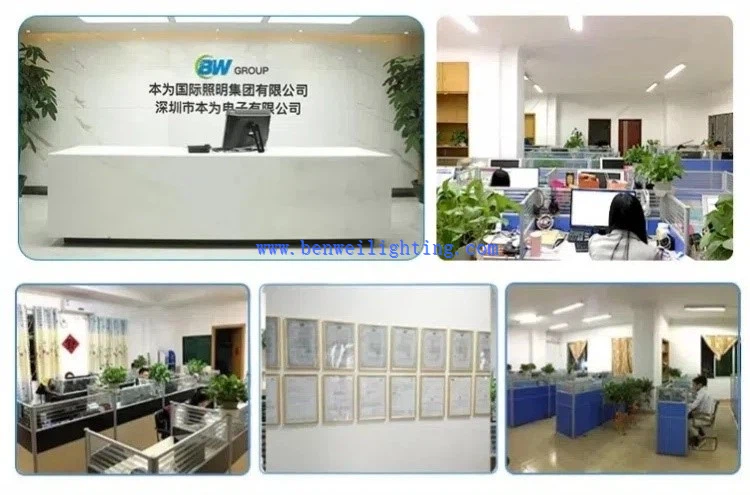
We are happy that we have total control over the manufacturing process and the quality of our products since we have our own facilities. Since we are producers rather than just brokers, we are dedicated to providing our customers with the best pricing. Since we are certain that the price and quality of our products are transparent, we advise customers to examine our samples first. Our commitment to quality and customer satisfaction drives us to continuously provide top-notch goods.
Our address
3rd Floor, 5th Building, Hebei Industrial Park, Hualian Community, Longhua District, Shenzhen, China





