

Top Stadium Lights: Things to Consider Before Selecting LED Sports Lighting
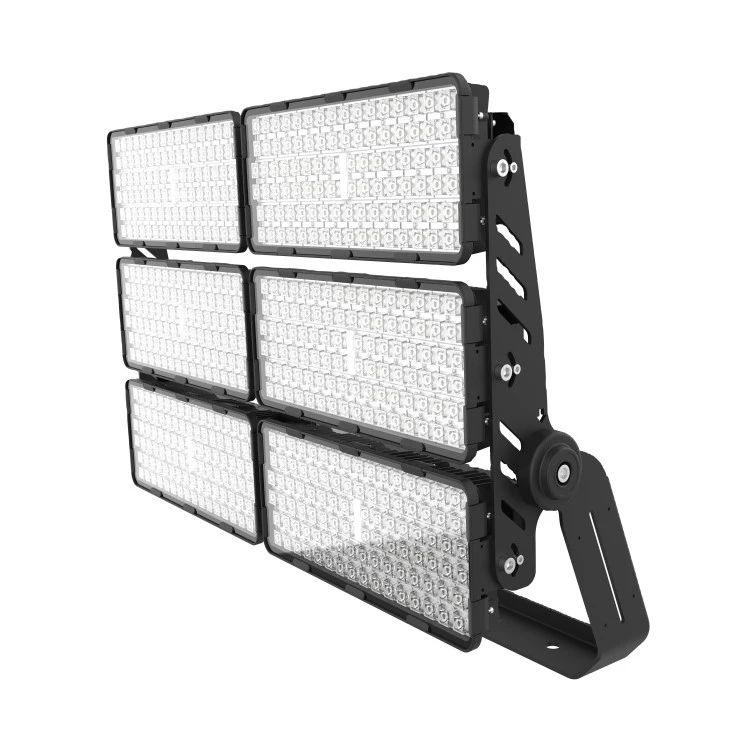
Athletic fields, courts, tracks, and other large outdoor spaces are lit by stadium lights, which are high-output lighting. The brightest fixture on a catalogue page is not the finest system. It is the system that provides the proper amount of light on the playing field, controls glare, supports cameras and spectators, withstands weather and surges, and is safe to maintain.
Because LED sports lights start fast, have better optical control than previous HID systems, need less maintenance, and work well with controllers, they are used in the majority of contemporary stadium constructions. The field, poles, electricity and targeting strategy still need to meet the fixture.
What Constitutes a Powerful LED Stadium Light?
With controlled optics, the designer can reach the field without wasting light thanks to choices for small, medium, and large beams.
Glare management: players, spectators, neighbours, and cars are protected by lens design, shields, shooting angles, and pole placement.
Uniformity: average brightness is just as important as even light.
Surge protection: strong defence against electrical events is necessary for outdoor circuits and tall poles.
CRI and flicker performance: while using cameras or broadcast video, colour quality and driver performance are more important.
Serviceability: lifetime costs are influenced by drivers, mounts, targeting gear, and access plans.
Beam Angle and Mounting Height
Depending on the sport and location, stadium lights are often installed between 40 and more than 100 feet high. To throw light further, higher poles often need smaller lenses. Wider lenses and more cautious glare control are often required for shorter poles. To balance the near side, far side, corners, and center, a single field may use several beam angles.
Steer clear of regulations like one watts per pole height. Interactions occur between LED fixture wattage, lumens, optical dispersion, mounting height, aiming, and field dimensions. The practical method of comparing possibilities is via a photometric layout.
Can Metal Halide Stadium Lights Be Replaced by LEDs?
Yes, most of the time, but don't expect a one-to-one replacement. Compared to older fixtures, LED sports lights may be lighter or heavier, have various wind areas, use different drivers, draw different currents, and display light in different patterns. Verify pole strength, bracket condition, breaker size, voltage, grounding, surge protection, and field light levels before starting any retrofit work.
Selection of Products
There are many wattages, lumen packages, beam angles, and control choices for high-output LED stadium lights. Event effects may be added with RGBW fixtures, but they should be considered a feature layer rather than a replacement for white-light sports visibility. When the control system is integrated with the electrical architecture, wireless controls may make scheduling, dimming, scene changes, and special events easier.
A sturdy white-light sports fixture with the appropriate optics and surge protection is often the best investment for community fields, schools, and parks. Stricter specifications for flicker, vertical illumination, CRI, camera angles, and control scenes should be included for professional or broadcast locations.
Top Stadium Lights: The Requirements for the Shortlist
High-lumen lamps alone are not the greatest stadium lighting. For the field, they need the proper beam angles, targeting, glare shields, homogeneity, pole fit, surge protection, controls, and service access. Before making a purchase, a photometric scheme for competitive gaming should display average light, minimums, max/min ratio, spill light, and fixture targeting.
More Details to Consider
Prior to purchasing, a photometric plan should display average light, minimums, max/min ratio, targeting, and spill. Vertical illumination and flicker performance may be just as crucial for broadcast or higher-level play as horizontal light on the pitch.
In many retrofits, LED stadium lights may take the place of metal halide lights; nevertheless, a one-to-one replacement should be evaluated in relation to pole construction, wind area, fixture weight, voltage, breakers, grounding, surge protection, and final commissioning.





