

Introduction
Lighting is an essential component of contemporary interior design since it has the ability to define the atmosphere, improve functioning, and even have an effect on one's mood and daily productivity. In spite of this, a significant number of homeowners choose for lighting solutions that are universally applicable, but fail to accommodate the specific requirements of their spaces. This leads to sections that are either underlit, have intense glare, or uneven illumination, all of which reduce the level of comfort and visual appeal in their homes. There is a revolutionary solution available in the shape of adjustable LED recessed downlights for anyone who have ever had the feeling that the lighting in their house is not in harmony with how they live, entertain, or rest. These cutting-edge fixtures combine cutting-edge technology, sturdy construction, and flexible design to adapt to every area of your house. This is in contrast to standard fixed downlights, which only project light in a single direction that cannot be changed. It has been brought to the attention of industry professionals that downlights have become an essential component of modern house lighting. They provide a solution that is subtle and seamless, and they strike a balance between usefulness and elegant aesthetics. A comprehensive investigation of adjustable LED recessed downlights will be carried out in this blog. Topics that will be covered include their fundamental technology, key purposes, the five various ways in which they revolutionise house illumination, and the best practices for installing and using them. In this tutorial, we will illustrate why adjustable LED downlights are a game-changer for contemporary residential spaces. Whether you are remodelling, updating your lighting system, or just want to raise the atmosphere of your home, this article will help you understand why.

Core Technology of Adjustable LED Recessed Downlights
The adjustable LED recessed downlights are designed with a collection of cutting-edge technologies that collaborate with one another to provide improved performance, durability, and flexibility. By addressing fundamental pain points of conventional lighting, such as glare, limited lifetime, and inflexibility, these solutions provide energy efficiency and aesthetic adaptability. Glare is specifically addressed by these technologies. On the basis of the technical criteria and installation recommendations established by the industry, the following is a list of the fundamental technologies that are used in premium adjustable LED downlights:
High-Transmittance PMMA Fresnel Lens Technology
It is the high-transmittance PMMA (Polymethyl Methacrylate) Fresnel lens that anchors the lighting performance of adjustable LED downlights. This lens is an essential component that maximises light output while simultaneously minimising glare via its high level of transparency. PMMA is a material that is lightweight, resistant to shattering, and has outstanding light transmittance (usually falling between 92 and 95%). This means that almost all of the light that is released by the LED chips is able to travel through the lens without suffering substantial loss. When compared to standard glass lenses, which are often heavier, more prone to breaking, and typically have lower transmittance rates, this is a clear and significant improvement. The Fresnel lens design, which is distinguished by its ridged surface, is meticulously crafted to scatter light in an equal manner, so removing harsh hot spots and producing a gentle, homogeneous glow that improves visual comfort. Furthermore, PMMA lenses are resistant to ultraviolet light, which ensures that they do not yellow or deteriorate with time. This ensures that the clarity and performance of the fixture are preserved during its entire lifetime. This lens technology is especially significant for adjustable versions since it guarantees that the light dispersion is uniform regardless of the angle at which the fixture is adjusted.
Flicker-Free Constant Current Driver Technology
An crucial element that differentiates premium adjustable LED downlights from alternatives of lesser quality is the use of a constant current driver, which allows for a lighting experience that is both reliable and free of flickering. while used for lengthy periods of time (for example, while reading, working, or studying), traditional lighting fixtures can generate an undetectable flicker that may induce eye strain, headaches, and an overall feeling of exhaustion. When compared to this, the constant current driver used in adjustable LED downlights ensures that the LED chips get a continuous and consistent flow of power, hence completely removing the possibility of stroboscope effects. In addition to improving the visual comfort, this also helps to lengthen the lifetime of the LED chips, which is important since unsteady current may speed up the deterioration process. It is common for premium models to include separated constant current drivers. These drivers provide extra safety features, such as fireproof performance and low-temperature operation, which makes them ideal for use in all parts of the house. Additionally, as stated in the technical requirements, these drivers guarantee a constant brightness independent of variations in the electrical voltage of the house, therefore ensuring that they continue to provide dependable performance in any domestic environment.
Adjustable Illumination Angle Mechanism
The mechanism that allows for variable adjustment of the direction in which light is directed is the distinctive characteristic of these downlights. It is precisely constructed to allow for a changeable lighting angle. The luminous surface, which includes the LED chips and lens, is set on a dual-axis or gimbal bracket that enables movement at many angles, often ranging from 24 degrees to 60 degrees, depending on the model. This range is designed to meet the requirements of the real world: smaller angles (24°-45°) are perfect for accent lighting that is particularly concentrated, while broader angles (36°-60°) are suitable for ambient illumination. It is possible for users to modify the direction of the light by applying mild pressure, even after the light has been installed, since the mechanism is intended to be smooth and long-lasting. A high-quality metal material, such as powder-coated aluminium or stainless steel, is used in the construction of the bracket in order to guarantee its stability and guarantee that it will not go loose.
Die-Cast Aluminum Housing & Heat Dissipation Technology
The die-cast aluminium casing and the cutting-edge heat dissipation technology both contribute to the product's outstanding durability and long-term performance. It is essential for LED fixtures to be made of die-cast aluminium since it is a high-strength material that also has great thermal conductivity. This is because insufficient heat may cause LED chips to deteriorate and shorten their lifetime. A finned heat sink structure has been included into the design of the housing. This structure enhances the surface area for heat transmission, which in turn enables heat to disperse into the environment in a rapid and effective manner. In this way, the LED chips are able to function within their ideal temperature range, which is normally between 0 and 35 degrees Celsius. As a result, their service life may be extended to 50,000 to 60,000 hours or even longer. In addition, the die-cast aluminium casing is resistant to corrosion and scratches, allowing it to keep its elegant look even after an extended period of usage. Many of the variants come with a powder-coated finish, which not only provides an additional layer of protection but also enables the fixture to mix in seamlessly with a variety of ceiling colours and interior design styles, ranging from modern to classic.
Easy Installation & Compatibility Technology
The installation procedure is made easier for both homeowners and electricians by the use of user-friendly technology that is included into premium adjustable LED downlights. Standard ceiling cutout widths (usually ranging from 54mm to 108mm, depending on the model) are compatible with the fixtures, which include high-elasticity spring-loaded mounting clips that enable recessed installation to be undertaken in a short amount of time and without the need of any tools. By expanding and contracting, these clips are able to firmly install the downlight in the ceiling cutout without the need for extra screws or hardware. This ensures that the downlight will fit flush and securely. Because of the tiny recessed design, the fixture is able to sit flush with the ceiling, so preserving a clean and uncluttered appearance that gives the impression that the room is larger than it really is. In addition, a number of variants are suitable for retrofitting projects, meaning that they may be installed into pre-existing recessed housings, making it easier to upgrade from conventional downlights. Furthermore, some versions are equipped with removable drivers, which make the process of wiring and installation in confined locations much simpler. Additionally, compatibility with ordinary dimmers enables additional customisation of the brightness levels.
The Main Functions of Adjustable LED Recessed Downlights
With their ability to be adjusted, LED recessed downlights are adaptable fixtures that serve numerous tasks in the house. They combine beauty, utility, and efficiency in a single package. The fact that their primary functions are intended to cater to the various lighting requirements of various areas and activities makes them a very important addition to any contemporary place of residence. Based on the insights provided by the industry, the fundamental functionalities of these products are explained below; each of these products addresses a critical lighting demand in residential spaces:
Ambient Lighting Provision
Adjustable LED downlights serve a number of purposes, one of the most important of which is to create ambient lighting. Ambient lighting is a mild and consistent illumination that covers a whole space, so producing an ambiance that is pleasant and inviting. The diffused brightness that these downlights create avoids glare and shadows, making them a great choice for living rooms, bedrooms, and corridors. This is in contrast to the harsh overhead lighting that is often employed. Users are able to direct light to fill corners and dark areas thanks to the adjustable angle, which ensures that the whole space is brought to a consistent level of illumination. In order to create an atmosphere that is conducive to relaxation, ambient lighting is vital. This kind of lighting alleviates eye strain and makes it simpler to move about the area. Whether they want a bright, dynamic room for partying or a soft, cosy glow for relaxing, homeowners can customise the intensity and direction of ambient light to fit their mood with adjustable LED downlights. This allows them to create the ideal environment for their needs. This versatility is further improved by the fact that many models have colour temperature adjustment ranging from 2700K to 5000K. This feature enables users to vary between warm and cold tones depending on the time of day or the reason for the event.
Accent Lighting for Highlighting Features
Accent lighting is another important purpose that adjustable LED downlights may do. Accent lighting is the process of directing concentrated light to emphasise certain characteristics in the house, such as artwork, wall dcor, architectural details, or furniture designs. Users have the ability to precisely focus the light on the desired element, so calling attention to it and establishing a focal point in the space. This is made possible by the adjustable angle, especially the tighter range of 24 degrees to 45 degrees. You may, for instance, alter the downlights in a living room so that they draw attention to a picture or a bookcase. Similarly, in a kitchen, you can direct light to a countertop or a backsplash. Accent lighting gives a room a sense of depth and dimension, which not only makes it seem more dynamic but also makes it more visually fascinating. Adjustable downlights, in contrast to fixed downlights, which can only throw light in a downward direction, provide the freedom to emphasise features at varied angles, so guaranteeing that every detail is shown to its fullest potential. This capability is further enhanced by premium models that have a high colour rendering index (CRI) greater than 90, which ensures that the emphasised characteristics are reproduced in a natural environment with rich colours.
Task Lighting for Functional Activities
LED downlights that can be adjusted also function as excellent task lighting, which means that they provide concentrated and strong illumination for particular tasks such as reading, cooking, working, or applying cosmetics. As a result of its ability to alleviate eye strain and boost productivity, task lighting is an essential component in areas that need accuracy and clarity. When you are working on a computer or reading papers in a home office, for instance, you can adjust the downlights so that they shine directly on your desk. This provides a strong light that does not flicker, which is ideal for these activities. In a bathroom, you can direct light to the vanity mirror, which ensures that you have an even lighting when you are shaving or applying cosmetics. The great brightness (up to 1218 lumens in many versions) and homogeneous light distribution of these downlights make them perfect for work lighting because they deliver constant illumination without glare or shadows. Their high brightness makes them suitable for task lighting. Cooler colour temperatures, ranging from 4000K to 5000K, are especially useful for task areas because they better simulate natural sunshine and improve visibility for work that requires a high level of detail.
Energy Efficiency and Cost Savings
Downlights that are tunable with LEDs provide a number of practical benefits, one of which is their energy efficiency, which is in line with contemporary sustainability aims. The light-emitting diode (LED) technology is substantially more efficient than conventional incandescent or fluorescent bulbs. LED technology can convert up to 80 percent of the electrical energy into light, while incandescent bulbs only convert 10 to 20 percent of the energy into light. In comparison to conventional lighting solutions, this results in significant energy savings for homeowners, who may cut their monthly power expenditures by as much as 70 percent for their homes. A 15W adjustable LED downlight, for instance, is capable of producing up to 1218 lumens, which is comparable to the output of a 100W incandescent bulb, but using a far lower amount of energy. Additionally, since LED chips have a long service life (up to 50,000-60,000 hours), the downlights need to be changed much less often, which results in a reduction in both the costs of maintenance and the amount of trash in the environment. Users are able to focus light just where it is required, so preventing wasted light in areas that are not being used, which is another way in which the adjustable angle aids to energy efficiency.
Aesthetic Enhancement and Design Versatility
In addition to the practical advantages they provide, adjustable LED downlights also contribute to the visual attractiveness of a particular residence. The sleek and recessed form of these fixtures allows them to be installed flush with the ceiling, resulting in a clean and contemporary appearance that is suitable for any interior design style, from contemporary to classic. The fixtures are offered in a variety of finish choices, including as black, white, and grey, which enables them to mix in well with a variety of ceiling colours and styles of decoration. The adjustable angle also provides design freedom, as it allows users to create varied lighting effects to fit their taste. For example, users may generate a warm, ambient glow for a cosy living area, or they can create a concentrated accent light for a contemporary art show. A simple ceiling may be transformed into a main point with the help of these downlights, which also lend a sense of depth and refinement to any room. Because of their inconspicuous nature, homeowners are able to get good lighting performance while yet maintaining a minimalist look, as is mentioned in industry recommendations.
5 Ways Adjustable LED Downlights Transform Your Home's Lighting
LED downlights that can be adjusted are not only utilitarian lighting fixtures; rather, they are revolutionary instruments that reinvent the way in which homeowners engage with their living environments. These fixtures provide five unique advances that increase the utility as well as the visual appeal of house lighting. They do this by overcoming the restrictions that are associated with standard fixed lighting. The fundamental technologies and functionalities that were described earlier serve as the foundation for each change, which, when combined, results in a lighting environment that is more pleasant, adaptable, and energy efficient. The following is an in-depth analysis of the five most important ways in which adjustable LED downlights affect the lighting in a home:
Eliminate Harsh Glare and Create Eye-Friendly, Uniform Illumination
The eradication of harsh glare and the production of soft, homogeneous illumination is one of the most significant modifications. This is particularly significant since it addresses a major problem that is associated with conventional overhead lighting. It is common for traditional fixed downlights, incandescent bulbs, or fluorescent fixtures to emit direct, unfiltered light, which may lead to glare, eye strain, and tiredness, particularly when used for a prolonged period of time. Adjustable LED downlights are able to tackle this problem because they include a high-transmittance PMMA Fresnel lens. This lens diffuses light evenly and avoids hot spots, and the flicker-free constant current driver guarantees that the light flow is consistent and stable. By enabling users to move light away from eye level (for example, by angling toward walls or ceilings in living rooms or bedrooms), the adjustable angle further promotes comfort by preventing light from beaming directly on sitting areas or workplaces. Every room will seem cosier and more livable as a result of this alteration, which will create an atmosphere that is more appealing and pleasant for inhabitants, allowing them to read, work, or rest without the pain of bright glare.
Customize Lighting to Match Every Room, Activity, and Mood
In contrast to conventional lighting, which is designed to be universally applicable, adjustable LED downlights allow for complete customisation of lighting to meet the specific requirements of each area, activity, and mood. This allows for the transformation of generic rooms into personalised surroundings. Users are able to switch between ambient, accent, and task lighting with a simple adjustment thanks to the adjustable angle, which ranges from 24 to 60 degrees. Narrow angles (24 to 45 degrees) are utilised for concentrated task or accent lighting, while larger angles (36 to 60 degrees) are used for ambient illumination. Another layer of customisation is added by the option to modify the colour temperature, which ranges from 2700K to 5000K. This allows users to move from warm white (2700K-3000K) for cosy leisure in bedrooms or living spaces to cool white (4000K-5000K) for concentrated work in home offices or kitchens. Users are able to modify the brightness levels to fit their mood, ranging from bright and vibrant for entertaining to soft and delicate for peaceful nights. Dimmer compatibility further increases this customisation, allowing users to control the brightness levels more precisely. By ensuring that every area has the ideal lighting for the purpose for which it was designed, this change makes the activities that people do on a regular basis more joyful and productive.
Highlight Architectural and Decorative Features to Add Depth and Character
Dimmable LED downlights have the ability to convert conventional areas into visually dynamic surroundings by drawing attention to the architectural and ornamental characteristics of a house. This results in the addition of depth, character, and a curated appearance. Traditional lighting tends to neglect a number of distinctive characteristics that are present in many houses. These characteristics include exposed beams, built-in shelves, artwork, textured walls, and statement furniture. Because of the adjustable angle of these downlights, users are able to precisely focus light on these elements, so generating focal points that attract the eye and increase the visual attractiveness of the area. For instance, directing light toward a built-in bookshelf in a living room gives depth and warmth to the space, while angling a downlight toward a piece of artwork that is hanging on the wall brings out the colours and details of the artwork (due to a colour rendering index (CRI) that is more than 90). Without the need for extra decorative lighting fixtures, this change makes a house seem more deliberate and visually intriguing. It also showcases the style of the homeowner, which elevates the overall design of the area but does not need any more lighting fixtures.
Maximize Space and Create a Clean, Uncluttered Aesthetic
The ability to maximise space and produce an appearance that is clean and uncluttered is another important alteration. This is a solution to the issue of conventional lighting fixtures being cumbersome and taking up much of the available space. Because they take up important floor and surface area, table lamps, floor lamps, and pendant lights can make even the smallest of spaces appear both claustrophobic and crowded. LED downlights that can be adjusted are installed in the ceiling so that they are level with the surface. This eliminates the need for floor or counter space, which frees up space for other things such as furniture, decorations, and other necessities. Their streamlined and uncluttered design not only produces a clean and contemporary appearance, but it also optically widens the space, giving the impression that the rooms are bigger and more open. Because of this, it is especially helpful for rooms with low ceilings, tight corridors, or tiny flats, all of which are situations in which every inch of space is valuable. Adjustable LED downlights are able to change confined and congested areas into open and breezy surroundings that have a sense of being more expansive and welcoming. This is accomplished by removing cumbersome lighting.
Reduce Energy Costs and Improve Long-Term Sustainability
Last but not least, adjustable LED downlights revolutionise house lighting by lowering energy costs and enhancing long-term sustainability. This is in line with the objectives of contemporary homeowners, who are concerned with protecting the environment and maximising energy efficiency. Because LED technology converts up to 80% of electrical energy into light, it is much more energy-efficient than conventional lighting. This is in contrast to incandescent bulbs, which only convert 10-20% of their energy into light. As a result, LED technology results in a 70% decrease in power costs. A 15W adjustable LED downlight, for instance, is capable of producing the same level of brightness as a 100W incandescent bulb, but it consumes 85 percent less energy. As a result of the extended service life of LED chips, which ranges from 50,000 to 60,000 hours, the fixtures only need to be changed once every five to six years (based on three hours of daily usage), which will reduce both the costs of maintenance and the amount of trash produced. The adjustable angle allows users to focus light just where it is required, so preventing light from being wasted in areas that are not being used. This feature further improves energy economy. This shift not only helps homeowners save money, but it also helps them lower their carbon footprint, which makes the lighting in their homes more sustainable and kind to the environment.
Application Scenarios and Correct Usage Methods
It is necessary to have a thorough understanding of the ideal application circumstances for adjustable LED recessed downlights and to adhere to the suitable use procedures in order to fully capitalise on the revolutionary advantages that these downlights provide. These fixtures are adaptable enough to be utilised in almost any area of the house; nevertheless, the success of these fixtures is contingent on the fact that they are matched to the requirements of the space and that they are used in the appropriate manner. This article provides a comprehensive reference to application situations, along with use criteria that are supported by the industry. These guidelines are designed to assure safety, performance, and lifespan, relying on the best practices for lighting installation and product safety regulations.
Application Scenarios
Living rooms are multi-purpose spaces used for entertaining, relaxing, and spending time with family, making them ideal for adjustable LED downlights. For optimal results, install 4-6 fixtures evenly spaced across the ceiling (1.5-2 meters apart) to provide ambient lighting. Use the adjustable angle (36°-60°) to direct light toward walls or ceilings, creating a soft, diffused glow that eliminates glare and fills the room evenly. For accent lighting, angle 1-2 fixtures (24°-45°) toward key features such as artwork, fireplaces, or built-in bookshelves to create focal points. If the living room has high ceilings (above 2.7 meters), choose fixtures with a wider beam angle to ensure uniform illumination. For evening relaxation, pair with a dimmer switch to adjust brightness levels, and select warm white (2700K-3000K) to create a cozy atmosphere. Avoid angling fixtures directly at seating areas to prevent eye strain during extended use.
Bedrooms require soft, ambient lighting for relaxation and focused light for reading or getting ready-needs that adjustable LED downlights excel at meeting. Install 2-4 fixtures around the perimeter of the ceiling (avoiding direct placement above the bed) to provide ambient lighting, angling them toward the walls to create a warm, cozy glow. For bedside reading, install one fixture above each side of the bed, angling them toward the bed (24°-36°) to provide focused light without shining in the eyes. Choose dimmable models to adjust brightness for different times of day: brighter (4000K) in the morning for getting ready, and dimmer (2700K) at night to promote relaxation and better sleep. As noted in bedroom lighting guides, avoiding high-contrast cool white light in bedrooms helps reduce stimulation and supports healthier sleep patterns. For smaller bedrooms, 2-3 fixtures are sufficient to avoid over-illumination, while larger bedrooms may benefit from 4-5 fixtures for even coverage.
Kitchens are functional spaces that require bright, focused task lighting for cooking, cleaning, and food preparation, paired with ambient lighting for overall visibility. Install 3-5 fixtures above countertops, sinks, and cooking areas (1 meter apart) to provide task lighting, angling them directly toward the countertop (24°-36°) to eliminate shadows that can hinder food preparation. Install 2-3 additional fixtures in the center of the ceiling to provide ambient lighting for the entire room. Choose cool white (4000K-5000K) for task areas, as it mimics natural daylight and enhances visibility for detailed work such as chopping, cooking, or cleaning. For kitchens with island countertops, install 1-2 fixtures above the island, angling them toward the countertop to provide focused light for meal prep or dining. Ensure fixtures near sinks or stovetops are moisture-resistant (IP44 or higher) to withstand humidity and splashes, and avoid angling fixtures directly at reflective surfaces (e.g., stainless steel appliances) to prevent glare.
Bathrooms require bright, even lighting for grooming, showering, and getting ready, with a focus on safety and moisture resistance. Install 2-3 fixtures above the vanity mirror (spaced 60-80cm apart), angling them toward the mirror (24°-36°) to eliminate shadows on the face-critical for makeup application, shaving, or skincare. Install 1-2 additional fixtures in the center of the ceiling to provide ambient lighting for the entire room. Choose moisture-resistant or waterproof models (IP44 or higher) to ensure durability in the humid bathroom environment, as recommended by LED lighting safety standards. Avoid angling fixtures directly into the shower or tub to prevent glare and ensure safety, and select cool white (4000K) for optimal visibility. For larger bathrooms with separate shower areas, install a dedicated moisture-resistant fixture above the shower to ensure adequate illumination without compromising safety. Ensure all fixtures are installed by a qualified electrician to meet electrical safety standards for wet environments.
Home offices and study rooms require bright, flicker-free lighting to support focus and productivity, making adjustable LED downlights an ideal choice. Install 2-3 fixtures above the desk area (spaced 80-100cm apart), angling them toward the desk (24°-36°) to provide focused task lighting. Install 1-2 additional fixtures in the rest of the room to provide ambient lighting, reducing eye strain by eliminating harsh contrasts. Choose natural white (4000K-5000K) for optimal focus and clarity, as it mimics natural daylight and helps maintain alertness during work or study sessions. Avoid angling fixtures directly at computer screens, as this can cause glare-instead, angle them slightly to the side of the desk. Pair with a dimmer switch to adjust brightness based on the time of day or task (e.g., brighter for detailed work, dimmer for reading). For home offices with bookshelves or decorative features, angle 1-2 fixtures (24°-45°) to highlight these elements, adding depth to the space without distracting from work.
Hallways and entryways require reliable, uniform lighting for safety and visibility, with a focus on creating a welcoming first impression. Install fixtures evenly spaced along the length of the hallway (1.5-2 meters apart), angling them toward the floor (36°-60°) to provide clear illumination for walking. In entryways, install 2-3 fixtures to provide bright, welcoming light for guests, angling them toward the entry door or a focal point (e.g., a mirror or decorative console). Choose warm white (2700K-3000K) to create a inviting atmosphere, and ensure fixtures are compatible with motion sensors for added convenience and energy efficiency-automatically turning on when someone enters and off when the space is empty. For narrow hallways, use fixtures with a wider beam angle to ensure even coverage, while wider entryways may benefit from 3-4 fixtures to avoid dark spots. Avoid installing fixtures too close to ceiling corners, as this can create uneven illumination.
Correct Usage Methods
To ensure the safety, performance, and longevity of adjustable LED recessed downlights, it is critical to follow correct usage methods-including installation, adjustment, maintenance, and safety precautions. These guidelines are based on industry technical specifications, product safety standards, and best practices for LED lighting maintenance.
• Always hire a qualified electrician to install the fixtures, especially if you are not familiar with electrical wiring. Improper installation can lead to electrical hazards, including fires or shocks, and may void the product warranty.
• Before installation, check the ceiling cutout size to ensure it matches the fixture's specifications (typically 54mm to 108mm). A cutout that is too large or too small can cause the fixture to be unstable or damage the ceiling.
• Verify that the ceiling material (e.g., drywall, plaster, concrete) can support the weight of the fixture-most adjustable LED downlights weigh 0.5-1kg, but heavier models may require additional support.
• Ensure the fixture is properly sealed to prevent dust and moisture from entering, especially in humid areas (e.g., bathrooms, kitchens). This includes checking that the silicone gasket (if included) is intact and properly seated.
• Test the fixture after installation to ensure it works properly: check for flicker, verify the adjustable angle mechanism is smooth, and confirm that the brightness and color temperature (if adjustable) function as intended.
• For retrofit installations, ensure the fixture is compatible with existing recessed housings-most premium models are designed to fit standard housings, but it is important to check compatibility before installation.
• Follow all electrical safety standards, including ensuring proper grounding of the fixture. For fixtures, ensure the protective grounding conductor is properly connected, with a continuity resistance of ≤0.5 ohms as required by safety standards.
• When adjusting the angle of the fixture, use gentle pressure-avoid forcing the angle beyond the fixture's maximum range (typically 24°-60°), as this can damage the rotation mechanism. • For accent lighting, angle the fixture directly at the feature you want to highlight, ensuring the light covers the entire feature without spilling over into unwanted areas. Use a narrower angle (24°-45°) for focused accent lighting and a wider angle (36°-60°) for ambient lighting. • For ambient lighting, angle the fixture toward the walls or ceiling to create a diffused glow-this reduces glare and ensures even illumination throughout the room. Avoid angling the fixture directly at people's eyes or reflective surfaces (e.g., mirrors, glass tables). • Adjust the angle periodically to suit different activities or seasons. For example, in the winter, angle the fixture to maximize natural light reflection from walls, while in the summer, angle it to reduce glare from sunlight. • If the fixture has color temperature adjustment, match the color to the activity: warm white (2700K-3000K) for relaxation, natural white (4000K) for general use, and cool white (5000K) for task lighting. • Avoid frequent adjustments, as excessive movement can loosen the bracket over time-adjust only when necessary to maintain stability.
• Clean the PMMA lens regularly (every 1-2 months) with a soft, dry cloth to remove dust and debris. If the lens is dirty, use a mild, non-abrasive cleaner (diluted with water) and a soft cloth-avoid harsh chemicals or abrasive materials, as they can scratch the lens and reduce light transmittance.
• Check the spring-loaded mounting clips periodically (every 3-6 months) to ensure they are secure. If the fixture becomes loose, gently tighten the clips or replace them if they are damaged.
• Inspect the fixture for signs of damage (e.g., cracks in the housing, yellowing of the lens, or loose wiring) at least once a year. Replace any damaged components immediately to prevent further issues.
• If the LED chips begin to dim or flicker, check the constant current driver-this may need to be replaced to restore performance. Contact the manufacturer or a qualified electrician for driver replacement.
• Keep the fixture's heat sink free of dust and debris, as blockages can reduce heat dissipation and shorten the LED lifespan. Use a soft brush or compressed air to clean the heat sink fins gently.
• Avoid frequent on/off cycles, as this can accelerate the aging of internal components. As noted in LED usage guides, frequent switching can strain the driver and reduce the fixture's overall lifespan.
• Store unused fixtures in a cool, dry place, away from direct sunlight and moisture, to prevent damage before installation.
• Do not exceed the fixture's maximum wattage rating. Using a higher wattage driver or LED chip can cause overheating, damage the fixture, and create a fire hazard.
• Keep the fixture away from flammable materials (e.g., curtains, paper, insulation, or furniture) to reduce the risk of fire. Maintain a minimum distance of 30cm between the fixture and any flammable objects.
• In bathrooms, kitchens, or other humid areas, use only moisture-resistant or waterproof models (IP44 or higher) to prevent electrical shock. Never install non-moisture-resistant fixtures in wet or humid environments.
• Do not touch the LED chips or heat sink while the fixture is in use, as they can become hot (up to 60°C) and cause burns. Allow the fixture to cool completely before touching or performing maintenance.
• If you experience any electrical issues (e.g., flickering, sparking, or a burning smell), turn off the power immediately at the circuit breaker and contact a qualified electrician. Do not attempt to repair the fixture yourself.
• Ensure the fixture is properly grounded to prevent electrical shock. For fixtures, the protective grounding conductor must be connected to the building's grounding system, with a continuity resistance of ≤0.5 ohms.
• Do not rely on paint, enamel, or paper materials for insulation-these do not provide adequate protection against electrical shock.
• For fixtures with capacitors larger than 0.5uf, ensure they are equipped with a discharge device that reduces the voltage to below 50V within 1 minute of disconnecting from power, as required by safety standards.
About Our Company
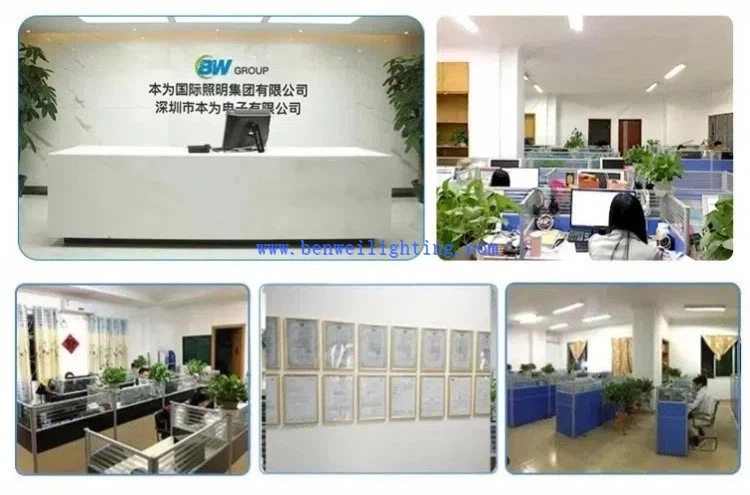
Our firm prides itself on owning its own factory, guaranteeing complete control over the production process and the quality of our goods. We are not only agents; we are manufacturers committed to offering our clients the most competitive rates available. We invite consumers to evaluate our samples first, as we are assured that the quality and pricing of our items are self-evident. Our dedication to excellence and client satisfaction compels us to consistently perform at our best and provide superior quality products.
Our address
3rd Floor, 5th Building, Hebei Industrial Park, Hualian Community, Longhua District, Shenzhen, China





