

In addition to being an operational need, adequate illumination is a crucial safety requirement in the dynamic, high-risk situations of construction sites. Sufficient lighting guarantees worker safety, boosts output, permits accurate job completion, and guarantees adherence to global occupational health and safety (OHS) laws. A range of lighting solutions, each suited to particular site conditions, task requirements, and power availability, are required due to the diverse nature of construction projects, which range from small residential renovations to large-scale infrastructure developments, and from indoor projects to remote outdoor sites. The most popular forms of construction site lighting are thoroughly examined in this article, along with their technical features, benefits, drawbacks, and best uses. This guide attempts to help construction managers, safety officers, and procurement specialists choose the best lighting option for their particular project demands by analysing the performance metrics, energy efficiency, and practicality of each kind of lighting.
Introduction: The Critical Role of Lighting in Construction Sites
Construction sites operate in a variety of settings, such as low light levels (e.g., nighttime, night shifts, indoor or subterranean projects), inclement weather (rain, snow, dust), and dynamic work zones that call for adaptable lighting. The three main goals of construction site lighting are to: (1) protect workers by removing dark areas, which lowers the risk of trips, falls, and equipment-related accidents; (2) enable precise task execution, since tasks like concrete pouring, electrical wiring, and structural assembly require clear visibility to prevent errors and rework; and (3) adhere to regulatory standards, which specify minimum illumination levels for various construction activities (e.g., 20 lux for general site areas, 50 lux for detailed tasks). The size and layout of the site, the type of construction work being done, the availability of power (grid-connected vs. remote), the environment (temperature, humidity, dust), and long-term cost considerations all have an impact on the choice of lighting for construction sites. To make wise choices, it is crucial to comprehend the technical details and real-world uses of each kind of lighting system, since each has unique benefits and drawbacks. The four most popular forms of lighting for construction sites-halogen lighting, LED lighting, solar-powered lighting, and portable lighting-are categorised and examined in this article, which also provides a thorough analysis of each type's performance and applicability for various construction situations.
Common Types of Construction Site Lighting: Technical Characteristics and Applications
There are many different types of lighting solutions for construction sites, each of which is intended to meet certain operating requirements. With the help of industry standards and real-world use cases, the next sections provide a thorough examination of each form of lighting, including its operation, technical details, benefits, drawbacks, and best uses.
Halogen Lighting: Traditional, Cost-Effective Targeted Illumination
One of the most conventional and popular lighting options in the construction industry is halogen lighting, especially for focused task illumination and small to medium-sized sites. Halogen lights work by heating a tungsten filament within a quartz bulb that is filled with halogen gas (such as iodine or bromine), which prolongs the filament's life and increases light output. Because of its simplicity, cheap initial cost, and ease of installation, this technique has been a mainstay in building for decades.
Technical Specifications and Performance
Halogen construction lights typically have a luminous efficacy of 15-25 lumens per watt (lm/W), which is significantly lower than modern LED alternatives. They produce a warm white light (2700K-3000K) with a color rendering index (CRI) of 90-100, ensuring that colors appear natural and true-to-life-an advantage for tasks that require color accuracy, such as material inspection or paint application. Most halogen construction lights are available in wattages ranging from 100W to 500W, with light output ranging from 1500 lumens to 12,500 lumens. They are typically designed with a rugged, metal housing to withstand impacts, dust, and minor moisture, making them suitable for outdoor use.
Halogen lights are available in both fixed and portable configurations, with portable models often featuring a handle or tripod mount for easy positioning. They require a direct power source (grid or generator) and have a relatively short lifespan of 1,000-2,000 hours, compared to 50,000+ hours for LED lights.
Advantages and Limitations
The main benefits of halogen lighting for construction sites are its low initial cost (much less expensive than LED lights), ease of installation (no complicated wiring or specialised knowledge needed), high CRI for precise colour rendering, and targeted illumination (perfect for workstations or particular equipment). Additionally, halogen lights have no warm-up period and may be quickly deployed in emergency circumstances or temporary work zones. However, halogen lighting has a number of significant drawbacks, including low energy efficiency (high power consumption raises operating costs), short lifespan (needing frequent bulb replacements raises maintenance costs and downtime), and high heat emission (halogen bulbs can reach temperatures of 300–500°C, posing a fire risk if placed near flammable materials like wood, paint, or insulation). Furthermore, halogen lights are less resilient than LED alternatives since the quartz bulb is more likely to shatter in the event of an accident or vibration.
Optimal Applications
Small construction sites, temporary work zones, and areas requiring targeted illumination-such as small residential renovations, workstation lighting (such as electrical panels and plumbing fixtures), equipment maintenance areas, and short-term projects where upfront cost is a major concern-are the best uses for halogen lighting. Because of their limited lifetime and excessive energy consumption, they are not advised for long-term projects or large-scale locations.
LED Lighting: Energy-Efficient, Long-Lasting Illumination for Large-Scale Projects
Because of its exceptional energy economy, extended lifetime, and adaptable functionality, light-emitting diode (LED) lighting has become the gold standard for contemporary building sites. LED lights eliminate the heat loss associated with conventional lighting technologies (such as halogen and incandescent) by directly turning electrical energy into light via a semiconductor. Construction site lighting has been transformed by this technology, which strikes a balance between sustainability, cost-effectiveness, and performance.
Technical Specifications and Performance
LED construction lights have a luminous efficacy of 100-150 lm/W, making them 4-10 times more energy-efficient than halogen lights. They produce a range of color temperatures, from warm white (2700K) for general site illumination to cool white (5000K-6500K) for detailed tasks that require high visibility. LED lights have a CRI of 80-90, ensuring good color accuracy, and are available in wattages ranging from 20W to 200W, with light output ranging from 2000 lumens to 30,000 lumens-suitable for both small work zones and large-scale construction sites.
Most LED construction lights feature a rugged, die-cast aluminum housing with an IP65 or higher waterproof rating, making them resistant to dust, rain, and extreme temperatures (-20°C to 60°C). They have a lifespan of 50,000-100,000 hours, which translates to 5-10 years of continuous use (based on 10 hours of daily operation), significantly reducing maintenance costs and bulb replacement frequency. LED lights also emit minimal heat (operating temperatures of 50-80°C), reducing the risk of fire hazards.
Advantages and Limitations
The main benefits of LED lighting for construction sites are as follows: outstanding energy efficiency (50–70% lower electricity costs than halogen lights), long lifespan (minimising maintenance and replacement costs), low heat emission (improving safety), weather resistance (suitable for harsh outdoor conditions), and versatile light output (some models have adjustable brightness and colour temperature). Additionally, LED lights switch on fast, don't flicker, and are vibration and impact resistant-all of which are essential in dynamic construction settings. The main drawback of LED lighting is that it might be two to five times more costly initially than halogen lighting. Nevertheless, throughout the course of a building project, LED lights are more economical due to long-term energy and maintenance cost benefits. Additionally, some low-quality LED lights may have variable light output or poor CRI, so choosing goods from reliable manufacturers that adhere to industry standards (such as IP65 rating and CE certification) is crucial.
Optimal Applications
Large-scale infrastructure projects (such as highways, bridges, and commercial buildings), long-term construction sites, indoor and underground projects (such as tunnels and basements), and locations where energy efficiency and low maintenance are priorities are just a few of the many construction projects that LED lighting is perfect for. They work especially well in places like concrete pouring zones, structural steel installation regions, and material storage areas that need a lot of light. LED lights are adaptable for both short-term and long-term lighting requirements since they come in both fixed and portable formats.
Solar-Powered Lighting: Eco-Friendly, Off-Grid Illumination for Remote Sites
For building sites without access to conventional grid electricity, such as isolated rural regions, highway construction zones, or temporary locations where grid connection is impractical, solar-powered illumination is becoming a more and more common choice. Photovoltaic (PV) panels are used in solar-powered lights to transform sunlight into electrical energy, which is then stored in rechargeable batteries for usage at night or in low light. For off-grid building sites, this technology provides an economical and sustainable option.
Technical Specifications and Performance
Solar-powered construction lights typically consist of three main components: a PV panel (10W-50W), a rechargeable battery (lithium-ion or lead-acid, 12V-24V), and an LED light source (10W-30W). The PV panel collects sunlight during the day, charging the battery, which then powers the LED light during the night. Most solar-powered lights feature a built-in light sensor that automatically turns the light on at dusk and off at dawn, reducing energy waste.
The luminous output of solar-powered lights ranges from 1000 lumens to 3000 lumens, making them suitable for general site illumination, pathways, and security lighting. They have a lifespan of 20,000-50,000 hours for the LED component and 5-10 years for the battery. Solar-powered lights are designed with weather-resistant housing (IP65 or higher) to withstand outdoor conditions, and some models feature adjustable brightness or motion sensors to optimize energy usage.
Advantages and Limitations
The primary advantages of solar-powered lighting for construction sites include: no reliance on grid power (ideal for remote sites), eco-friendliness (zero carbon emissions, no fuel consumption), low operational costs (no electricity bills), and easy installation (no wiring required). Solar-powered lights also require minimal maintenance, with only occasional cleaning of the PV panel to ensure maximum sunlight absorption.
The main limitations of solar-powered lighting are: lower light output compared to grid-connected LED or halogen lights (not suitable for detailed tasks requiring high illumination), dependence on sunlight (performance may be reduced on cloudy days or in shaded areas), and higher upfront cost (due to the PV panel and battery). Additionally, the battery lifespan is affected by temperature and charging cycles, requiring replacement every 3-5 years.
Optimal Applications
Distant construction sites, off-grid projects, and temporary work zones-such as rural road construction, distant building sites, pipeline development, and security lights for construction yards-are the greatest places for solar-powered illumination. They are not advised for intricate operations (such electrical work or concrete finishing) that need for great brightness, but they are perfect for general site lighting, paths, and perimeter security. Solar-powered lights may be used in conjunction with a backup generator in locations with little sunlight to guarantee reliable operation.
Portable Lighting: Flexible, Mobile Illumination for Dynamic Work Zones
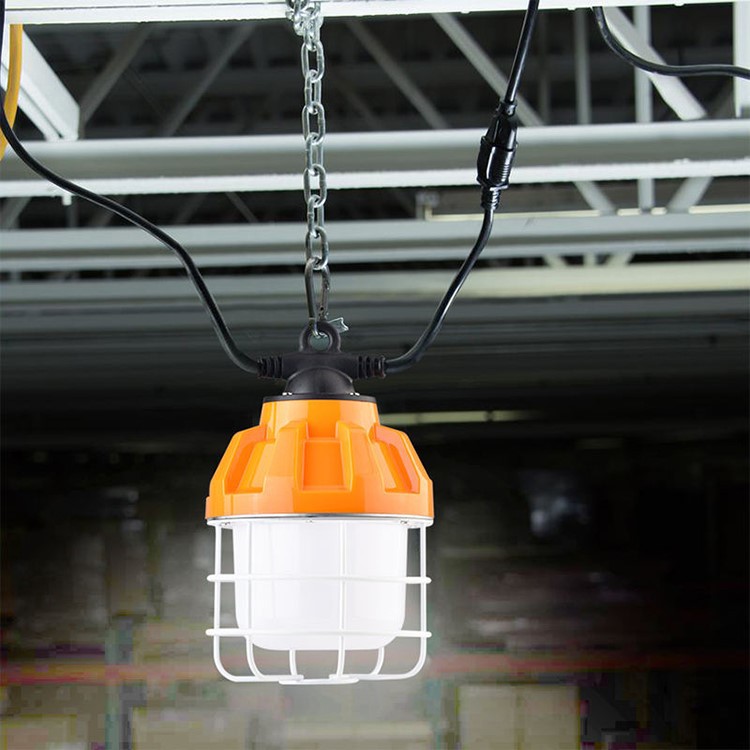
For building projects, portable lighting is a flexible option that can be readily relocated and rearranged as the project develops. These lights may be used to illuminate temporary work zones, emergency areas, or places that are not yet linked to a fixed lighting system since they are not permanently attached to the site. There are many types of portable illumination, such as rechargeable, generator-powered, and battery-operated devices.
Technical Specifications and Performance
There are halogen and LED versions of portable construction lights, with the latter being more robust and energy-efficient. Lithium-ion batteries (12V–24V) are often used in battery-operated portable lights, which may run for 4–12 hours, depending on the brightness and wattage settings. Generator-powered portable lights come in greater wattages (50W–200W) for brighter lighting and are linked to a portable generator for continuous power for prolonged usage. The majority of portable lights are small, light, and include a handle, hook, or tripod mount for convenient placement. Some types feature adjustable brightness or beam angles to customise the lighting for particular jobs, and their sturdy casing (IP54 or above) can resist impact, dust, and moisture. The luminous efficacy of portable halogen lights is 15–25 lm/W, but that of portable LED lights is 80–120 lm/W.
Advantages and Limitations
Flexibility (easily transported to different work zones), rapid deployment (no installation necessary), adaptability for temporary or emergency illumination, and compatibility with several power sources (battery, generator, grid) are the main benefits of portable lighting for construction sites. For construction sites like road construction, demolition projects, or interior renovations, where work zones change regularly, portable lights are crucial. Portable lighting has many drawbacks, such as lower brightness than permanent lighting systems (making it unsuitable for large-scale locations), battery duration restrictions (for models powered by batteries), and greater operating costs (for models powered by generators, because of fuel consumption). To guarantee reliable operation, portable lights also need regular maintenance, such as battery charging or generator refuelling.
Optimal Applications
For dynamic construction environments, such as temporary work zones (such as demolition sites, concrete pouring areas), emergency lighting (such as power outages), interior renovations (such as residential homes and commercial buildings), and spaces not yet connected to fixed lighting systems, portable lighting is perfect. They are especially helpful for jobs requiring mobility, such working in confined places, examining distant areas of the site, or supplying temporary security illumination for construction yards.
Factors to Consider When Selecting Construction Site Lighting
Selecting the right type of construction site lighting requires a careful assessment of project-specific factors, as no single lighting solution is suitable for all scenarios. The following key factors should be considered to ensure optimal performance, safety, and cost-effectiveness:
Site Size and Layout
Large-scale construction sites (e.g., highways, commercial buildings) require high-lumen lighting solutions (e.g., LED floodlights) to ensure uniform illumination across the entire site. Smaller sites or targeted work zones may only require low-lumen, targeted lighting (e.g., halogen work lights). The layout of the site-including obstacles such as buildings, equipment, or terrain-also influences lighting placement and type.
Power Availability
Grid-connected sites can use wired lighting solutions (e.g., fixed LED or halogen lights), while remote sites require off-grid options (e.g., solar-powered or generator-powered portable lights). The availability of power also affects energy costs, with solar-powered lights offering the lowest operational costs for off-grid sites.
Task Requirements
Detailed tasks (e.g., electrical wiring, material inspection) require high illumination levels (50-100 lux) and high CRI (≥80) to ensure accuracy. General site illumination (e.g., pathways, storage areas) requires lower illumination levels (20-30 lux). The type of task also influences the color temperature, with cool white light (5000K-6500K) being ideal for detailed tasks and warm white light (2700K-3000K) for general illumination.
Environmental Conditions
Outdoor construction sites require weather-resistant lighting (IP65 or higher) to withstand rain, snow, dust, and extreme temperatures. Indoor or underground sites may require moisture-resistant lighting and low heat emission to avoid fire hazards.
Cost Considerations
Upfront cost, operational costs (energy, maintenance), and lifespan should be balanced when selecting lighting. LED lights have higher upfront costs but lower long-term costs, while halogen lights have lower upfront costs but higher operational and maintenance costs. Solar-powered lights have higher upfront costs but zero operational costs for off-grid sites.
Conclusion
Construction site lighting is a critical component of safe, efficient, and compliant construction operations, with a variety of solutions available to meet the diverse needs of different projects. Halogen lighting offers a cost-effective, targeted solution for small sites and temporary work zones, while LED lighting provides superior energy efficiency, long lifespan, and versatility for large-scale, long-term projects. Solar-powered lighting is an eco-friendly, off-grid option for remote sites, and portable lighting offers flexibility for dynamic work zones.
The selection of the right lighting type depends on a range of factors, including site size, power availability, task requirements, environmental conditions, and cost considerations. By understanding the technical characteristics, advantages, and limitations of each lighting type, construction professionals can select a solution that ensures worker safety, enhances productivity, and complies with regulatory standards. As construction technology advances, LED and solar-powered lighting are expected to become even more prevalent, offering improved performance and sustainability for future construction projects.
About Our Company

Shenzhen Benwei Lighting Technology Co., Ltd is a well-known company that designs, develops, makes, and sells high-tech goods, including LED lighting products. The plant where we work opened in 2010 and is in Shenzhen.
Our address
3rd Floor, 5th Building, Hebei Industrial Park, Hualian Community, Longhua District, Shenzhen, China





