

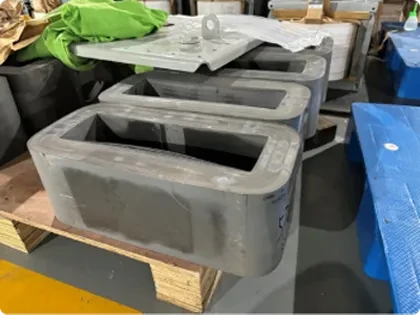
请替换当前内容 This 50kVA single phase pole mounted transformer is exported to Canada inJuly,2024.The rated power of the pole mounted transformer is 50 KVA, the primary voltage is 34.5 kV and secondary voltage is 0.48v/0.277 KV. Western developed countries and Southeast Asia. North and South America, a large number of single-phase pole mounted This 50kVA single phase pole mounted transformer is exported to Canada inJuly,2024.The rated power of the pole mounted transformer is 50 KVA, the is 50 KVA, the is 50 KVA, the is 50 KVA, the is 50 KVA, the is 50 KVA, the is 50 KVA.
Stadium lights represent a class of high‑intensity, wide‑area artificial lighting systems specifically engineered for outdoor venues requiring uniform vertical and horizontal illuminance over large surfaces. These luminaires are typically mounted on elevated structures-masts, truss towers, or cantilever arms-at heights ranging from 15 m to 50 m, delivering luminous fluxes that can exceed 150,000 lumens per fixture. Unlike general area lighting, stadium lighting must satisfy stringent performance metrics: glare control, color rendering index (CRI ≥ 65 for most sports, ≥ 80 for broadcasting), minimum maintained illuminance (200–2000 lux depending on competition level), and flicker‑free operation for high‑speed cameras. This article defines stadium lights in technical terms and systematically reviews their application domains across sports, public events, security, industrial sites, and architectural aesthetics.

Definition and Technical Specifications of Stadium Lights
Core Definition
A stadium light is a directional, high‑powered luminaire designed to project a controlled beam (narrow, medium, or wide distribution) over distances of 30 m or more while maintaining spatial uniformity. Key components include:
Light source: Historically metal halide or high‑pressure sodium; modern systems increasingly use LED arrays (300 W – 1500 W modules) with integrated optics.
Optical system: Faceted reflectors, total internal reflection (TIR) lenses, or multi‑chip‑on‑board (COB) configurations to shape the beam (e.g., 10° × 20° elliptical, 30° circular).
Housing: IP65 or higher ingress protection, corrosion‑resistant coatings (e.g., polyester powder or marine‑grade aluminum), and active or passive thermal management.
Mounting: Adjustable yoke or slip‑fitter for precise aiming; vibration‑damping brackets for pole or roof attachment.
Photometric Performance Criteria
| Parameter | Recreational Level | Semi‑Professional | Broadcast/Professional |
|---|---|---|---|
| Horizontal illuminance (lux) | 200–300 | 500–750 | 1000–2000 |
| Uniformity ratio (U1 = E_min / E_max) | ≥ 0.4 | ≥ 0.5 | ≥ 0.6 |
| Glare rating (GR) | ≤ 50 | ≤ 45 | ≤ 40 |
| Color temperature (K) | 4000–5000 | 4000–5700 | 5000–6500 (HDTV) |
| Flicker percentage | ≤ 5% | ≤ 3% | ≤ 0.5% |
Distinction from Other Outdoor Luminaires
Floodlights: Broader, less controlled beam; lower mounting height; used for construction or perimeter lighting.
Street lights: Cut‑off distribution, lower mounting (6–12 m), focused on roadway luminance.
High‑mast lighting: Used for large interchanges or ports; similar mounting height but symmetrical circular distribution, not sports‑oriented beam shaping.
Stadium lights are therefore a subset of floodlighting but with precise optical control and dynamic control capabilities (e.g., DMX dimming, zoning).
Application Domains of Stadium Lights
Sports and Athletic Venues
Stadium lights are indispensable for night‑time or twilight matches. Specific configurations include:
Football (soccer) / American football / rugby: Four‑mast or six‑mast perimeter lighting with asymmetric beam patterns directed inward to avoid spill into stands. Minimum vertical illuminance on the pitch: 1200 lux for FIFA Category 2 matches.
Baseball / softball: Lighting positioned behind outfield walls and along foul lines; high‑mast behind home plate to illuminate fly balls without glare for batters.
Tennis courts: Side‑mounted lights at 8–12 m height with symmetrical narrow beams to avoid shadowing at the net.
Track and field: Overhead lighting from 40 m masts covering the entire infield and running lanes; special attention to vertical illuminance at hurdle and high‑jump zones.
Some stadiums host both sports and concerts. Here stadium lights must be complemented by entertainment lighting, but the core high‑intensity white light remains essential for athletic visibility. Retractable or movable mast systems are used in domed stadiums.
Large‑Scale Public Events and Gatherings
While stage lighting provides focal effects, stadium lights serve as area wash for audience zones, emergency egress paths, and backstage areas. They are typically mounted on temporary truss towers (20–25 m) surrounding the festival ground. Requirements:
Uniform illuminance of 50–100 lux on crowd areas for safety.
Flicker‑free operation to avoid interference with video recording.
Remote dimming to transition from concert mode (low light) to evacuation mode (full brightness).
Municipal stadium lights (often repurposed older metal halide units) illuminate parking lots, vendor corridors, and children's play zones. The primary goal is safety and visibility for security personnel and attendees. Typical maintained illuminance: 20–40 lux.
Security and Public Safety Applications
Stadium lights are deployed at:
Prisons and detention centers: High‑mast towers (30 m) with overlapping beam patterns to eliminate shadows along perimeter walls. Lights operate from dusk to dawn with motion‑activated intensification.
Ports and harbors: Container handling areas require 50–100 lux for CCTV surveillance. Stadium lights with asymmetric forward‑throw optics minimize spill into adjacent water channels.
Airport aprons and cargo terminals: Illuminance of 100–200 lux for safe aircraft and ground vehicle movement; fixtures must be resistant to jet blast (vibration‑damped).
Portable stadium light towers (trailer‑mounted, 9 m mast, 4 × 500 W LED) are used at accident scenes, disaster recovery zones, and border surveillance points. They provide instant high‑intensity lighting over a 100‑m diameter.
Commercial and Industrial Worksites
Stadium lights on temporary scaffolding or telescopic masts deliver shadow‑reducing floodlighting for earthmoving, concrete pouring, and steel erection. Illuminance requirements per OSHA: 30 lux for general excavation, 100 lux for fine detail tasks.
Large distribution hubs (e.g., Amazon fulfillment centers) install stadium‑grade LED fixtures at 20 m ceiling height to achieve 200–300 lux on floor surfaces for forklift operations. The wide beam (120° × 120°) of some stadium lights allows fewer fixtures than traditional high‑bay lights.
Steel mills, automobile assembly plants, and shipyards use stadium lights for overhead bay lighting where dust, humidity, or vibration would destroy standard industrial lights. IP66‑rated stadium lights with tempered glass lenses and silicone gaskets are common.
Architectural and Decorative Lighting
Stadium lights with narrow‑beam optics (e.g., 6° spot) are aimed at landmarks (statues, bridges, cathedral spires) from ground level or adjacent buildings. Although not the primary application, their high output (30,000 lm+) can replicate daylight effects on large structures.
Decorative use of stadium lights involves:
Color‑changing LED versions (RGBW) mounted on rooftops to create dynamic light shows synchronized with city events.
Uplighting of tall buildings using stadium lights placed on neighboring low‑rise roofs, producing a dramatic skyline "wash".
Holiday light installations sometimes incorporate stadium lights (with colored gels or programmable LED) to bathe entire town squares or fairgrounds in a uniform hue. Because of their power, careful shielding is required to avoid light trespass into residential windows.
Comparative Advantages and Limitations per Application
| Application Domain | Key Advantage of Stadium Lights | Limitation / Consideration |
|---|---|---|
| Sports | High vertical illuminance, glare‑controlled optics | High initial cost; requires professional aiming |
| Public events | Large area coverage; rugged for temporary setup | Generators needed off‑grid; potential light spill |
| Security | Deterrence via bright white light; works with CCTV | May create dark shadows if poorly aimed |
| Industrial | Vibration‑resistant; high CRI for safety | Over‑illumination adds energy cost |
| Architectural | Dramatic effect; long‑throw capability | Light pollution regulations may restrict use |
Conclusion
Stadium lights are defined as high‑mast, high‑intensity luminaires with engineered beam distributions for long‑distance illumination. Their principal domain remains outdoor sports venues, where they enable night‑time competition and broadcast‑quality video. However, their utility extends broadly to public event lighting, perimeter security for critical infrastructure, night‑shift industrial operations, and even architectural accentuation. When selecting stadium lights for any application, practitioners must evaluate mounting height, required illuminance, uniformity, glare rating, and local light pollution ordinances. Modern LED stadium lights further expand applicability through instant on/off, dimming, and color‑tuning capabilities-making them a versatile tool for both functional and aesthetic outdoor lighting design.

How To Cooperate With Us?
Our firm prides itself on owning its own factory, guaranteeing complete control over the production process and the quality of our goods. We are not only agents; we are manufacturers committed to offering our clients the most competitive rates available. We invite consumers to evaluate our samples first, as we are assured that the quality and pricing of our items are self-evident. Our dedication to excellence and client satisfaction compels us to consistently perform at our best and provide superior quality products.
Our address
3rd Floor, 5th Building, Hebei Industrial Park, Hualian Community, Longhua District, Shenzhen, China





