

Figure 1: High-efficacy IP65 LED corn bulb with multi-fin aluminum heat sink and premium driver
Industrial Lighting Engineering Blog | Technical Buying Guide
Introduction: Why Luminous Efficacy Is the Number on the Label That Actually Pays You Back
When facility managers, electrical contractors and lighting specifiers compare LED corn bulbs, they are often tempted to lead with wattage or base type. Those are necessary parameters, but the number that determines whether a lighting upgrade pays for itself - and how fast - is luminous efficacy, measured in lumens per watt (lm/W). Among the crop of retrofit corn bulbs on the market today, units rated at 135 lm/W represent a meaningful step above the commodity 100–120 lm/W tier, and the difference shows up directly on the electricity bill, the maintenance schedule and the lumen-maintenance curve over years of continuous operation.
This article explains, from an engineering and procurement standpoint, what 135 lm/W actually means inside the lamp, why that figure cannot be read in isolation from the driver, the heat sink and the ingress rating, and how buyers can translate the specification into concrete energy savings, longer service life and lower total cost of ownership (TCO). The reference product throughout is a premium IP65-rated LED corn light built around 2835 SMD chips, a Rubycon-capacitor isolated driver and a 6063 extruded aluminum heat sink - a configuration engineered to hold its efficacy rating over a 50,000-hour rated life rather than merely deliver it on day one.
What 135 lm/W Actually Measures
Luminous efficacy is the ratio of visible light output (lumens) to electrical power input (watts), measured at the lamp under standardized conditions. A 135 lm/W corn bulb converting, for example, 60 W of input power delivers roughly 8,100 lm of visible light - the equivalent of a 250–400 W metal-halide (MH) or high-pressure sodium (HPS) lamp that itself only achieves 80–100 lm/W. That gap is the entire economic case for LED retrofitting: the same perceived brightness is produced with less than a quarter of the electricity.
But efficacy is not a single number pulled from a chip datasheet. It is the product of three cascaded efficiencies inside the finished lamp: how efficiently the LED die converts electricity to photons, how much of that light escapes the optic rather than being absorbed, and how little power the driver itself wastes while converting mains AC to the constant current the LEDs require. A genuine 135 lm/W rating is therefore evidence of a deliberate systems-level design, not just a label printed on a cheap bulb.
Who Should Care Most About Efficacy
The financial case for 135 lm/W grows with the hours the light burns. Warehouses, distribution centers, parking garages, loading docks, factory floors, street-lighting circuits and canopy fixtures that run 12 hours a day, seven days a week - and often 24/7 - magnify every extra lm/W into real money. A bulb that gains 15–20 lm/W over a competitor does not just look brighter on the spec sheet; it compounds into lower demand charges, fewer lamp replacements and a shorter payback period on the whole upgrade project.
The Engineering Behind a Genuine 135 lm/W Rating
Many corn bulbs advertise high efficacy numbers that evaporate once the lamp heats up, ages a few thousand hours, or is paired with a cheap driver. A durable 135 lm/W result depends on three interdependent building blocks: the LED chip platform, the power electronics and the thermal path. Each one is examined below.
Premium 2835 SMD LED Chip Architecture
The lamp uses high-grade 2835 surface-mount device (SMD) LEDs arranged on the aluminum PCB. The 2835 package is a workhorse of the LED lighting industry for good reason: its low thermal resistance from die to solder point, its small footprint that allows dense and even optical packing, and its binning consistency make it the preferred chip for high-efficacy, long-life corn bulbs rather than flashy but unreliable high-wattage COB modules.
The forward voltage of each 2835 die is tightly binned, which reduces current mismatch across the long strings of chips that a corn bulb requires. A well-binned string burns uniformly, avoids hot spots that accelerate lumen decay, and extracts more usable lumens from the same total drive current. The phosphor layer over the blue die determines both the correlated color temperature (CCT) and the color rendering index (CRI); a quality 2835 bin in the 4000K–6500K range delivers comfortable, neutral-to-cool white light with a CRI above 80, so warehouse shelving, signage and merchandise read naturally rather than under a sickly sodium-orange cast.
Because corn bulbs are designed for 320°–360° omnidirectional output, every chip faces a slightly different direction. The PC diffuser shell must scatter that light without absorbing it. A diffuser that over-filters to hide the chip pattern can eat 8–12 percent of total lumens - enough to drop a 135 lm/W lamp back toward 120 lm/W in practice. This lamp is engineered with a balanced diffuser: translucent enough to hide individual diodes, but transparent enough to preserve the full efficacy budget. The result is uniform, shadow-free illumination that reaches corners and upper walls, not just the floor directly below the fixture.
The Rubycon Driver: Efficiency at the Power Stage
A high-efficacy chip is only as good as the driver feeding it. Cheap drivers waste 10–15 percent of input power as heat, suffer poor power factor, and fail early when the electrolytic capacitor dries out. This lamp is built around an isolated driver using Rubycon-brand electrolytic capacitors with a Japanese JAE connector - a choice that directly protects both efficacy and lifespan.
An isolated driver provides electrical safety between the mains side and the LED side, which matters in commercial and industrial installations where maintenance crews touch the lamp holder. More importantly for the buyer, an active power factor correction (PFC) circuit holds power factor above 0.9 across the full dimming or load range. High power factor reduces apparent-power demand, avoids utility surcharges for low-power-factor installations, and ensures that the 135 lm/W figure is measured at the wall, not on a bench with an idealized supply. The lamp reaches full brightness instantly on switch-on - no 3–5 minute warm-up and restrike delay that MH and HPS owners know well.
Industrial grids are noisy: voltage sags, spikes and transients from nearby motors, welders and lightning events can destroy an unprotected driver in weeks. The driver here is designed with robust anti-surge circuitry and a wide input voltage range, so the lamp keeps running reliably even when the grid fluctuates. For contractors, this means fewer warranty call-backs. For facility owners, it means the efficacy investment is not thrown away by premature driver failure.
6063 Extruded Aluminum Heat Sink: The Thermal Backbone
Heat is the silent enemy of LED efficacy. Every 5–10°C rise in LED junction temperature cuts the rated lumen life and accelerates color shift. This lamp uses a large-format 6063-grade extruded aluminum radiator with multi-fin geometry surrounding the LED board. 6063 aluminum is prized in lighting engineering for its combination of thermal conductivity, corrosion resistance and extrudability into complex fin shapes - exactly the geometry needed to maximize natural convection without a fan.
The fins are designed to pull heat vertically away from the LED board and expose a large surface area to surrounding air. Because corn bulbs are often installed vertically in enclosed or semi-enclosed fixtures, the heat sink must work even when airflow is modest. The multi-fin structure creates chimneys for rising hot air while drawing cooler air in from the sides, keeping junction temperatures within the safe window where the LED maintains both its luminous flux and its chromatic stability for tens of thousands of hours.
A cooler junction does two jobs at once: it preserves today's efficacy and extends tomorrow's. The thermal design targets keep the LEDs running well below the critical temperature where lumen depreciation accelerates. This is why the lamp can honestly claim ≥85% lumen retention after 30,000 hours and a rated service life of 50,000 hours - numbers that cheap corn bulbs, with undersized heat sinks and generic capacitors, simply cannot deliver in the field.
Quantified Advantages: Translating 135 lm/W into Money and Reliability
Specifications only matter when they become numbers on a utility bill, a maintenance schedule or a procurement spreadsheet. This section converts the engineering into measurable buyer benefits.
Energy Cost Reduction Compared to Legacy HID Lamps
The most immediate advantage of a 135 lm/W corn bulb is how few watts it needs to replace a legacy MH or HPS lamp. A typical 250 W metal-halide lamp delivers roughly 20,000 lm at around 80 lm/W including ballast losses. A 135 lm/W LED corn bulb of the same lumen output needs only about 148 W - and in practice, because the omnidirectional distribution of a corn bulb reuses upward light that a reflector normally wastes, buyers often find they can step down to a 100–120 W corn bulb and still over-illuminate the same space.
Across a site with, say, 100 fixtures running 6,000 hours per year, replacing 250 W MH units with 120 W LED corn bulbs cuts consumption from 150,000 kWh to 72,000 kWh - a reduction of 78,000 kWh annually. At a representative commercial rate of $0.12/kWh, that is roughly $9,360 per year in avoided electricity cost, before accounting for demand-charge savings from the lower connected load. The higher the local electricity rate - and the longer the operating hours - the more attractive the 135 lm/W choice becomes, because every extra lm/W you left on the table would have been paid for in perpetuity.
Because corn bulbs are direct screw-in retrofits, there is no rewiring, no new fixture procurement and no ballast bypass labor beyond opening the fixture and swapping the lamp. In most installations, the simple payback period for a 135 lm/W IP65 corn bulb lands between 12 and 24 months, after which the fixture continues to generate savings for the remainder of its 50,000-hour rated life. That is a substantially better return than most capital projects a facility owner will approve in a given year.
Lumen Depreciation and Long-Term Performance
A buyer who only compares day-one lumens is making the same mistake as buying a car on horsepower alone. What matters is how much light remains after three, five or seven years of daily operation. This is the metric that separates a premium corn bulb from a disposable one.
Rated at 50,000 hours of operation, the lamp is engineered to keep working through multiple legacy-lamp replacement cycles. At 12 hours per day, that is more than 11 years of service. At 24/7 operation in a warehouse or parking garage, it still exceeds 5.7 years between replacements. Compare that with a typical MH lamp that needs replacement every 12–24 months: the labor cost of a bucket truck or lift, the downtime, and the lost illumination while a failed lamp waits in a maintenance queue are often larger line items than the electricity itself.
Lumen maintenance is the percentage of original output the lamp still emits after a defined operating period. This product is rated to retain at least 85% of initial lumens after 30,000 hours, which places it in the LM-80 / TM-21-aligned performance class expected of commercial-grade LEDs. In plain language: the fixture you install today will still look adequately bright long after a cheap corn bulb has dimmed to the point that occupants complain about dark aisles. Slow, predictable depreciation is far more valuable than a high day-one number followed by a steep cliff.
Reliability: Why the Driver and Heat Sink Decide the Warranty Conversation
LED chips themselves are remarkably durable; what usually fails first is the driver, and specifically the electrolytic capacitor inside it. Capacitors are rated by maximum temperature and by ripple-current endurance. A capacitor operating 20°C cooler lasts roughly twice as long. The generous 6063 heat sink on this lamp does not only cool the LEDs - it also keeps the driver chamber cooler, which directly extends capacitor life and protects the Rubycon internals from the thermal stress that kills commodity drivers. The result is a lamp that ages gracefully rather than failing catastrophically mid-warranty.
Ingress Protection and Environmental Durability
Efficacy and lifespan are meaningless if the lamp cannot survive the environment it is installed in. This corn bulb is rated IP65, a specification that buyers often under-read but that defines exactly where the lamp can - and cannot - be used.
What IP65 Actually Means
The IP code has two digits. The first, 6, is the dust rating: dust-tight, meaning no dust can enter the enclosure in sufficient quantity to interfere with operation. That is non-negotiable for warehouse, mill and sawmill environments where fine particulate hangs in the air. The second digit, 5, is the water rating: protection against low-pressure water jets from any direction, with no harmful ingress expected. In practice, that covers rain spray, wash-down splashes, dew and condensation inside a sealed fixture - the conditions you find under a parking canopy, on a covered walkway, or in a damp factory.
Figure 2: Sealed construction and multi-fin heat sink designed for IP65 dust-tight, water-jet protection
The rating qualifies the lamp for a broad set of semi-outdoor and damp locations: covered parking garages and canopies, loading docks under eaves, street-light arms and post-top lanterns, cold-storage and wash-down areas, tunnel and underpass fixtures, and greenhouse or livestock buildings where humidity and dust are persistent. It does not qualify the lamp for permanent submersion (that would require IP67 or higher) or for exposure to direct outdoor rain without a fixture canopy - an important specification to communicate to installers to avoid warranty disputes.
Mechanical and Optical Protection
Inside the IP65 shell, the lamp carries secondary protections that matter in industrial use. The transparent PC (polycarbonate) diffuser is significantly more impact-resistant than glass, tolerating vibration from overhead doors, fork trucks and nearby machinery without shattering. The 6063 aluminum body naturally resists atmospheric corrosion, and the sealed assembly prevents vermin, insects and dust webs from accumulating on the LED board - a common failure mode in unsealed retrofit lamps that silently reduces efficacy over time.
Application Scenarios and Retrofit Value
A corn bulb's design - 320° to 360° omnidirectional light, multi-base compatibility, IP65 sealing - is not generic. It is optimized for a specific set of retrofit situations where directional LED panels and high-bay UFOs simply do not fit the existing fixture.
Warehouses, Factories and High-Bay Areas
In a warehouse where legacy MH or HPS lamps hang from high ceilings inside enclosed industrial fixtures, the corn bulb drops straight in. Its omnidirectional emission fills the old reflector's designed light distribution far better than a directional panel, which would waste light toward the ceiling. The 135 lm/W output means fewer fixtures needed per bay, and the 50,000-hour life means a multi-year break from climbing ladders to change burned-out bulbs - a meaningful safety and labor cost reduction in itself.
Parking Lots, Canopies and Street-Light Fixtures
Covered parking garages, forecourt canopies and street lanterns are exactly the IP65 semi-outdoor environment this lamp is built for. The wide beam angle spreads light across drive lanes and pedestrian paths without hot spots, and the instant-on performance is essential for motion-sensor or dusk-to-dawn circuits where MH restrike delays would leave areas dark. The sealed housing also prevents the insect infestations that accumulate inside unsealed outdoor fixtures and degrade light output season after season.
Figure 3: 320°–360° omnidirectional emission fills existing reflector-based fixtures with no dark zones
Multi-Base Retrofit: E26, E27, E39, E40 Compatibility
One of the most underrated purchasing advantages is the range of screw bases available: E26, E27, E39 and E40. E26/E27 fit standard medium-base fixtures common in retail and garage downlights; E39/E40 (mogul base) are the historic standard for HID industrial and street fixtures. Because the lamp is built in every common base, a single SKU family can service North American, European, Asian and Middle Eastern projects without redesigning the fixture. For distributors and contractors, that simplifies inventory; for end-users, it means the upgrade works with whatever is already hanging from the ceiling.
Why This Product Stands Out: A Buyer's Decision Framework
Once buyers understand what 135 lm/W buys them, the next question is how to distinguish a genuine high-efficacy corn bulb from one that merely prints the number on the box. The checklist below is built directly from the engineering choices discussed above.
The Specification-Sheet Checklist
Chip platform: named SMD package (e.g., 2835) with stated binning, rather than a generic "high-brightness LED" line.
Driver brand and topology: named capacitor brand (e.g., Rubycon), isolated topology, stated power factor >0.9, anti-surge rating.
Heat sink material: 6063 or equivalent extruded aluminum, with visible fin area proportional to wattage - not a thin stamped shell painted black.
Lumen maintenance: explicit ≥85% at 30,000 hours, rather than a bare "50,000-hour life" claim with no retention figure.
Ingress rating: IP65 or higher, with the two digits both clearly stated, not just "waterproof."
Beam angle: 320°–360° for true corn-bulb replacement of HID, not a narrower directional angle masquerading as a corn bulb.
Base options: E26/E27/E39/E40 availability matched to the project's existing holders.
Total Cost of Ownership Beyond the Purchase Price
The cheapest corn bulb on a price list is rarely the cheapest over five years. The TCO equation has four lines: electricity (dominated by efficacy), labor for replacements (dominated by lifespan), downtime and safety incidents from failed lamps (also driven by lifespan), and the purchase price itself. A 135 lm/W, 50,000-hour, IP65 lamp shifts weight decisively onto the last line - the small upfront premium - while collapsing the first three. For any site operating more than a handful of fixtures for more than a few hours a day, the premium pays for itself many times over.
Environmental Compliance and Sustainability
LED corn bulbs are mercury-free and lead-free, contain no UV or IR radiation, and RoHS-compliant by design. The 60–75% energy reduction directly cuts the site's carbon footprint, which matters increasingly for ESG reporting, green-building certifications and tenant-facing sustainability claims. There is also no warm-up delay and no gradual color shift over life - both practical benefits that legacy HPS and MH systems cannot offer.
Conclusion: The Business Case for 135 lm/W Is Built on Three Numbers
The advantages of a 135 lm/W high-efficacy LED corn light are not marketing adjectives. They are three engineering numbers, each with a direct line to the buyer's bottom line:
135 lm/W means you buy 8,100 lumens from a 60 W lamp - roughly a quarter of the wattage a metal-halide lamp needs for the same output, cutting energy bills by 60–75% and shortening payback to well under two years in most retrofit projects.
50,000 hours with ≥85% lumen retention means the lamp keeps performing through multiple legacy-lamp replacement cycles, eliminating repeat visits, lift labor and dark-aisle complaints. The 6063 heat sink and Rubycon driver are not decorative - they are the reason the lumen curve stays flat instead of dropping off a cliff.
IP65 means the same fixture family can be trusted in covered outdoor, damp and dusty industrial environments where unsealed commodity bulbs would fail prematurely. Combined with E26/E27/E39/E40 base compatibility, it turns the upgrade into a true screw-in retrofit with no rewiring and no fixture replacement.
Figure 4: Complete IP65 LED corn bulb - engineered for 135 lm/W, 50,000 hours and dependable semi-outdoor service
For warehouse operators, facility managers, electrical contractors and wholesale distributors, the message is straightforward: the next time you spec a corn-bulb retrofit, do not shop by wattage or by price alone. Shop by efficacy, by the named components behind it, and by the lumen-maintenance curve those components make credible. A genuinely engineered 135 lm/W IP65 LED corn light is not a slightly better bulb - it is a multi-year energy-saving, labor-saving, risk-reducing asset installed in one twist of the wrist.
Ready to upgrade? Contact our engineering team for project-specific lumen and base selection, or request a sample to verify the 135 lm/W performance on your own test bench.
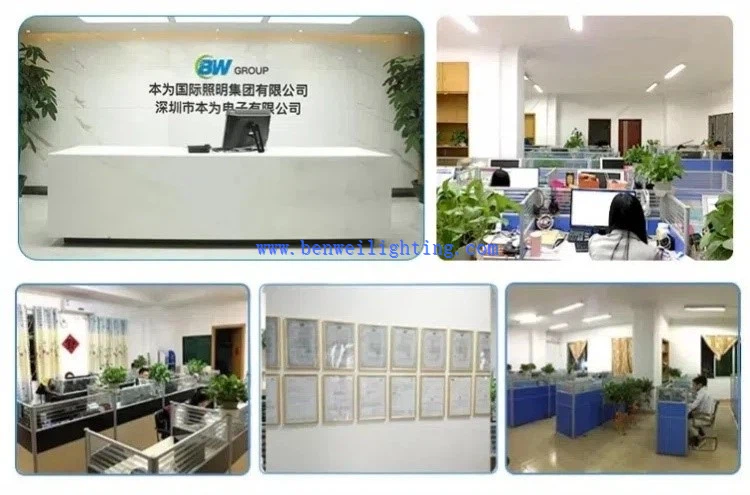
How To Cooperate With Us?
We are happy to have total control over the manufacturing process and the calibre of our products since we have our own facilities. Since we are producers rather than just brokers, we are dedicated to providing our customers with the best pricing. Since we are certain that the price and quality of our products are clear, we invite customers to see our samples first. Our commitment to quality and customer satisfaction drives us to continuously provide top-notch goods.
Our address
3rd Floor, 5th Building, Hebei Industrial Park, Hualian Community, Longhua District, Shenzhen, China





