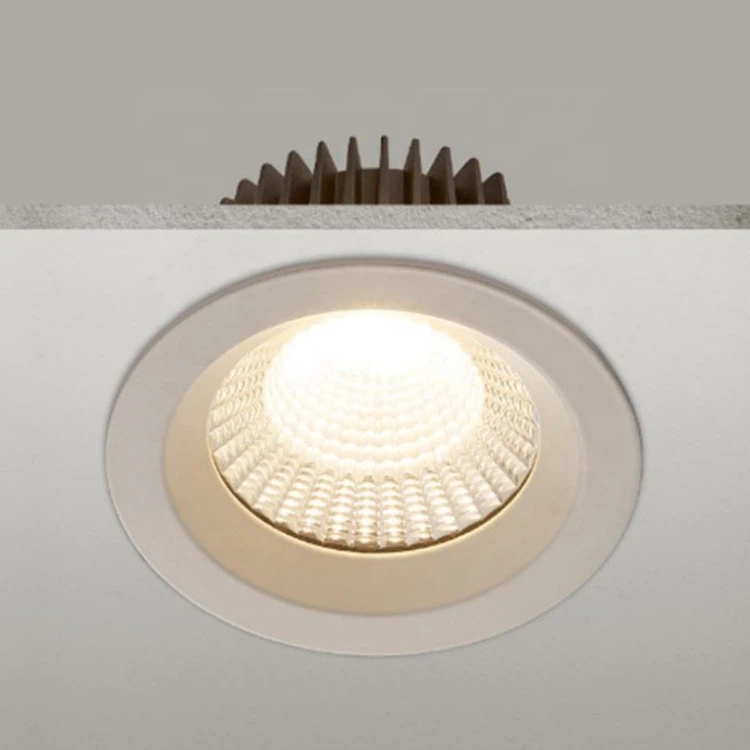
The elegant design and concentrated lighting capabilities of downlights have made them a popular option for both residential and commercial areas. But like every other lighting choice, downlights have its drawbacks as well. We'll talk about these drawbacks in this post and how to minimize them so that utilizing downlights has as many advantages as possible.
1. Limited ability to change direction
The restricted directional flexibility of downlights is one of their biggest drawbacks. Their tilt and rotation angles are preset since they are meant to be recessed into the ceiling. This implies that it may be difficult to change their orientation so they concentrate on certain locations after they are placed. Nevertheless, this may be prevented with careful planning and a thoughtful lighting scheme that considers the intended usage of every space in the room.
2. Sharp brightness and glare
The propensity of downlights to produce glare and harsh illumination, especially in spaces with highly reflecting surfaces, might be another drawback. Users may find the room unpleasant if downlights are set incorrectly or are too strong since they may cast shadows or provide intense illumination. Lower wattage LED lights or dimmer switches may help alleviate this problem and provide a more cozy lighting ambiance.
3. Increased expenses for upkeep and installation
Installing downlights is more difficult than installing other kinds of lighting. To make room for them, the electrical wiring must be modernized and incorporated into the ceiling. When compared to other lighting alternatives, this may result in greater installation and maintenance expenses. But in the end, LED downlights' longevity and long-term energy efficiency may contribute to cost savings over time.
4. The generation of heat
Downlights emit heat, much like any other kind of illumination. This may lead to worries about heat accumulation in the ceiling and could result in problems with insulation and wiring, depending on how the downlights are placed and designed. This problem may be lessened by installing LED downlights, which generate very little heat, and making sure there is enough airflow.
5. Electrical and wiring problems
Because downlights need to have electrical wiring connected correctly, improper installation runs the danger of creating electrical problems. Breakers that trip and short circuits may result from this. It is advised that a professional electrician participate in the installation procedure in order to prevent this.
In conclusion, even though downlights have some drawbacks, they may be reduced or eliminated with careful design and installation. We may optimize downlights' energy efficiency, style, and usefulness by putting an emphasis on good design and integration, using LED bulbs of the right wattage, and making sure regular maintenance is carried out. Downlights may be a useful addition to any area when used properly.
https://www.benweilighting.com/professional-lighting/led-ceiling-lighting/led-downlight-4000k.html