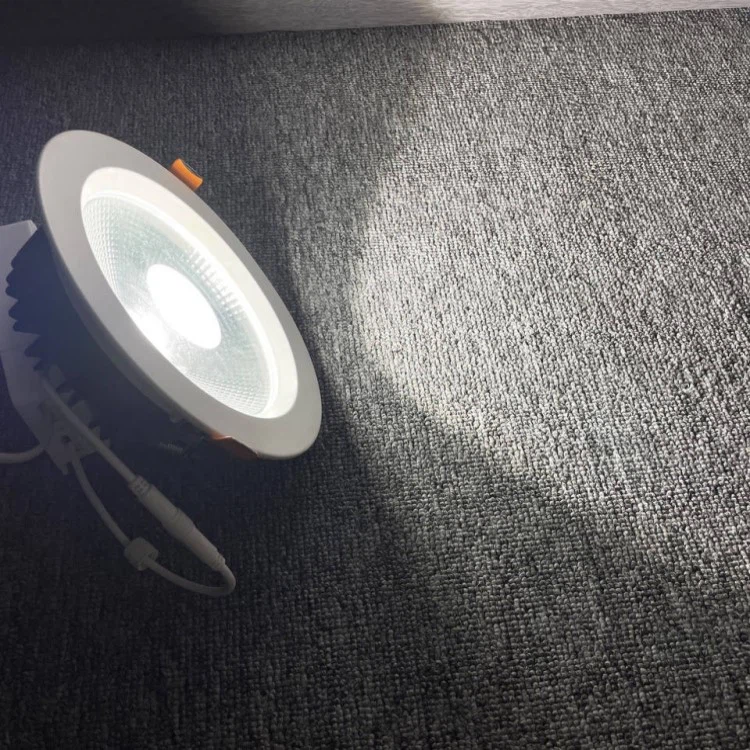
For many years, houses and other structures have favored downlights. Often more energy efficient than conventional lighting choices, they provide a sleek and contemporary appearance. Downlights do, however, have some drawbacks, much like any technology, which should be taken into account before a purchase. This post will investigate the negative aspects of downlights in an objective and positive sense so that you may decide with knowledge.
1. Limited Directional Control
The absence of directional control of downlights is one of its most major drawbacks. Downlights restrict their range of illumination as they beam light straight downward unlike other lighting choices like floor lamps or table lamps. In cases where you want more light focused on a particular region or object-such as a book or a painting-this might be troublesome. Furthermore difficult to situate for best illumination is their permanent nature to the ceiling and inability for simple adjustment.
There are, nevertheless, solutions for this problem. Increasing control over the direction of light is made possible by many downlights now including movable heads or pivot mounts. To provide a larger spectrum of lighting, there are also specialist downlights accessible that are meant to cast light at an angle.
2. Installation Complications
One more drawback of downlights is their difficult installation technique. Downlights need expert installation and wiring unlike table lamps or other plug-in and play lighting choices. This can take time and money and call for rewiring your electrical system or making holes in your ceiling. Furthermore, should you not know about electrical work, doing installation yourself may be hazardous.
Many manufacturers now provide downlights that are self-contained and require no cabling or installation to solve this problem. Usually charged via USB or battery-powered, they are readily attached on any surface. For tiny areas or temporary lighting requirements, these choices might be very good even if they might not be as brilliant or robust as conventional downlights.
3. Price
Furthermore more costly than other lighting sources are downlights, especially if you choose high-end versions with cutting-edge technology and features. Moreover, because they are attached to the ceiling, changing or improving your downlights may be difficult and expensive.
Downlights may, however, also eventually save money depending on the situation. Often more energy-efficient than other lighting choices, they may help to reduce carbon footprints and minimize power costs. Downlights also may not need to be changed as often as they are meant to live longer than conventional bulbs.
4. Glare Possibility
Downlights might also be prone to glare at last. If placed incorrectly, they may produce strong shadows and brilliant spots as they beam light straight downward. In places like toilets or kitchens where you may have to concentrate on certain chores, this can especially be troublesome.
Selecting downlights with diffused or frosted lenses can assist to soften the light and lower glare, therefore addressing this problem. Furthermore helping to disperse light more fairly and stop glare is the installation of many downlights spaced apart.
Ultimately, downlights are a common option for many builders and homeowners as they provide many advantages. Like any technology, they do, however, also have some drawbacks that must to be taken into account before purchasing. Understanding the possible restrictions of downlights and investigating other possibilities will help you to decide which one best suits your requirements and tastes.
https://www.benweilighting.com/professional-lighting/led-ceiling-lighting/downlight-5-watt.html