

Whether for diving exploration, underwater photography, pool lighting, or underwater engineering inspections, choosing the right light color not only improves visibility but also maximizes the core value of underwater lighting products, preventing visual blurring, equipment damage, or poor scene adaptation caused by incorrect light color selection. Many users fall into the misconception that "the brighter the better" when purchasing underwater lighting products, neglecting the fact that light color is the key to underwater lighting effects-different colors of light have vastly different penetration and color rendering in water, and are suitable for completely different scenarios. Today, we'll break down the most suitable light colors for underwater applications, helping you accurately choose the right products and avoid purchasing pitfalls.
Key Factors Influencing Underwater Lighting Effects
The core effects of underwater lighting depend on two key factors: light penetration and color rendering. These are the core criteria for choosing light color and are closely related to the design of the underwater lighting product. Water selectively absorbs light of different wavelengths; the longer the wavelength, the stronger the penetration, and vice versa. Color rendering index (CRI) determines whether light can accurately reproduce the true colors of underwater objects, avoiding color distortion. This is a core requirement for underwater photography, biological observation, and other similar scenarios.
It's important to note that while the waterproof rating (e.g., IP68) and beam design (focused/floodlight) of underwater lighting products can help improve light color, the choice of light color is fundamental-even high-performance underwater lights will not perform optimally if the light color doesn't match the environment.
Detailed Explanation of Mainstream Underwater Light Colors
Currently, the mainstream light colors for underwater lighting products on the market are white, yellow (amber), and red. Each color has its advantages and is suitable for different scenarios. There is no "universal light color," and the choice must be based on specific needs. Specifically:
White Light: The First Choice for General Purposes, Suitable for Most Basic Scenarios
White light is the most common light color in underwater lighting products. It has a comprehensive spectrum and the best color rendering index (CRI close to 100), maximizing the reproduction of the true colors of underwater objects. It also has the highest brightness, making it suitable for most basic underwater scenarios.
Suitable Products and Scenarios: Underwater flashlights, basic pool lighting, shallow water diving lighting, basic underwater engineering inspections; especially suitable for underwater photography enthusiasts, accurately capturing the true colors of underwater life and corals. The effect is even better when used with professional underwater supplemental lighting.
Points to Note: White light has weak penetration in murky or deep water areas and is easily scattered by suspended objects, creating a "light curtain effect" and blurring the field of vision. Therefore, it is not suitable for deep or murky water scenarios.
Yellow (Amber) Light: The Top Choice for Penetration, Suitable for Complex Waters
Yellow light has a longer wavelength, second only to red in penetrating power. Its soft light is less likely to irritate underwater life, and it effectively reduces interference from blue and green light in the water, improving visual contrast. It is the optimal choice for complex waters and has been a popular color for underwater lighting products in recent years.
Suitable Products and Scenarios: Underwater searchlights, beachcombing lights, diving lights for murky waters, aquarium display lights; especially suitable for beachcombing, deep-water inspection, and freshwater lake exploration. It can penetrate sediment and plankton, clearly revealing underwater obstacles or life. Some underwater light strips also use yellow light for pool and water feature lighting, balancing aesthetics and practicality.
Note: Yellow light has a slightly lower color rendering index than white. If used for underwater photography, supplemental lighting equipment is required to reproduce the true colors of objects.
Red Light: Dedicated for Special Scenarios, Protecting Organisms + Night Vision Adaptation
Red light has the longest wavelength and strongest penetration, but its color rendering is the worst, failing to reproduce the true colors of objects. It is primarily used in special scenarios, serving as a supplementary light color for professional underwater lighting products.
Suitable Products and Scenarios: Night diving lights, underwater life observation lights, deep-sea detection lights; Red light does not stimulate nocturnal underwater creatures, enabling close-range observation without interfering with their activities, while protecting the diver's night vision. Suitable for professional scenarios such as night diving and deep-sea biological research. Some high-end underwater flashlights are equipped with a red light mode to meet multi-functional needs.
Notes: Red light is not suitable for basic lighting, photography, or other scenarios; it should only be used as a supplement for special needs. When purchasing, ensure the product supports multi-color switching.
Optimal Light Color Selection Guide for Different Scenarios
Based on the actual application scenarios of underwater lighting products, we have compiled precise light color selection solutions to avoid blind purchasing:
- Scenario 1: Underwater photography, shallow water diving (clear waters) – White light is preferred, paired with professional underwater supplemental lighting to restore true colors and meet the lighting needs of underwater cameras.
- Scenario 2: Beachcombing, murky waters, deep-water inspection (above 5 meters) – Yellow light is preferred, choosing a high-penetration underwater searchlight to address the blurred vision caused by silt and plankton.
- Scenario 3: Night diving, underwater life observation, deep-sea exploration – Red light is preferred, paired with multi-mode underwater lights to balance observation needs and wildlife protection.
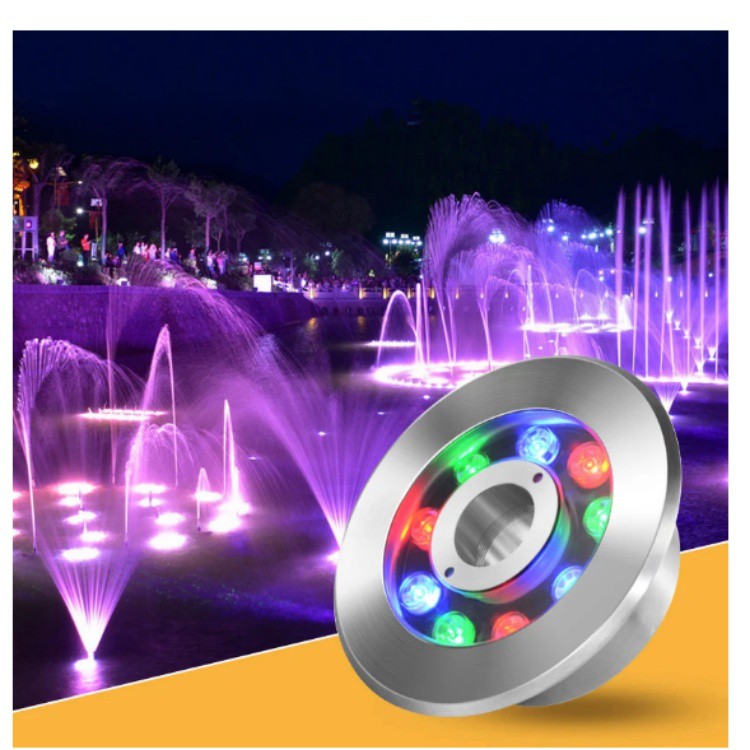
- Scenario 4: Swimming pools, aquariums, water feature lighting – Both white and yellow are suitable. White is suitable for achieving brightness and transparency, while yellow is suitable for creating a soft atmosphere. Underwater light strips or underwater lights that support color switching can be selected.
Considerations for Underwater Lighting Selection
Besides the choice of light color, the inherent characteristics of underwater lighting products also affect their effectiveness. When purchasing, pay attention to the following two points to avoid pitfalls:
1. Prioritize products that support multi-color switching: Products that can switch between white, yellow, and red light colors are more cost-effective and adaptable to various scenarios. Examples include multi-mode underwater flashlights and underwater light strips with adjustable light colors, eliminating the need to purchase multiple lights separately.
2. Combine waterproof rating and wattage: Even with excellent light color, if the product's waterproof performance is insufficient (below IP68), prolonged immersion can lead to short circuits and damage. The wattage must match the scenario. 10-20W is sufficient for shallow water areas, while 30W or more is needed for deep water and large-area lighting to ensure optimal light color performance.
Summary
The core of underwater lighting selection is "scenario adaptation": There is no best light color, only the most suitable light color. White light is suitable for general scenarios, balancing color rendering and brightness; yellow light is suitable for complex waters, emphasizing high penetration; red light is suitable for special professional scenarios, focusing on biological protection and night vision. When choosing underwater lighting products, first clarify your intended use case (water clarity, depth, purpose), then select the corresponding light color. Prioritize products with multi-color switching and high waterproof ratings, as this will enhance the user experience and extend the product's lifespan. Whether it's diving, beachcombing, pool lighting, or underwater engineering, choosing the right light color is crucial to maximizing the value of underwater lighting products.
After reading this guide, you should now understand which underwater light color to choose for different scenarios. If you're unsure which light color matches your needs, or would like to learn more about suitable underwater lighting products (such as multi-color underwater flashlights, IP68 waterproof light strips, and underwater searchlights), please feel free to contact us!
Our address
No. 5-3 Niujiao Road, Yanchuan Community, Yanluo Subdistrict, Bao'an District, Shenzhen
bwzm18@ledbenweilighting.com






