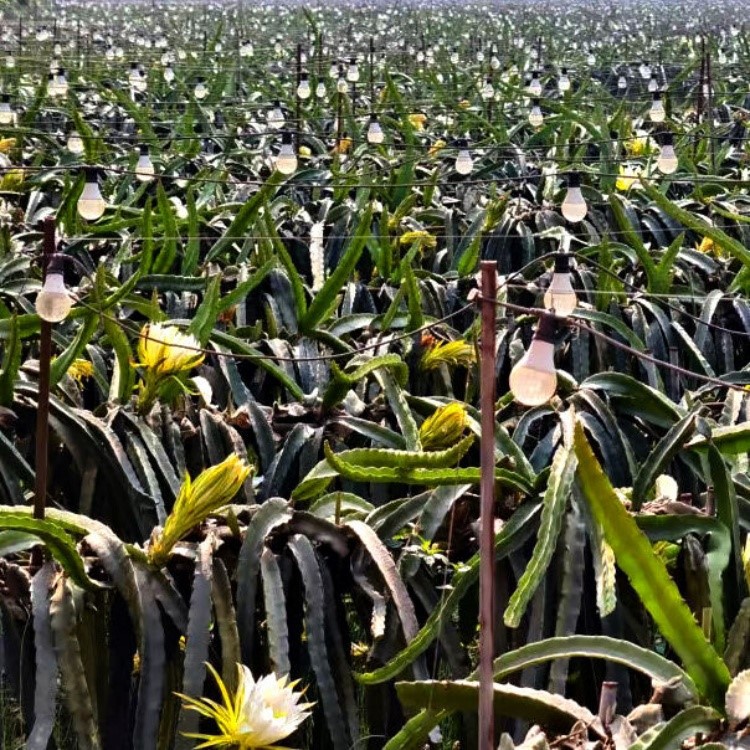
Due to their capacity to emit particular wavelength ranges that can significantly enhance plant growth, LED lights are becoming a more and more popular option for indoor gardening as technology develops. The red (620-750 nm) and blue (400-520 nm) light ranges are frequently used to support various growth phases.
The Blue Light
Blue light aids in controlling excessive stem elongation and stretching in plants by controlling a hormone called auxin. Plants can grow taller because auxin encourages cell division and elongation. On the other hand, weak and spindly plants might result from an excess of auxin. This is where blue light enters the picture, causing cytokinin to be produced. This hormone slows down cell elongation and promotes cell differentiation in contrast to auxin. In doing so, cytokinin promotes stronger, bushier development by balancing the plant's growth and preventing excessive stretching.
Not only that, but blue light also encourages phototropism-the development of a plant in the direction of or away from light. This natural reaction encourages a more symmetrical structure and helps to prevent leggy growth. Furthermore, plants produce more antioxidants when exposed to blue light. These substances shield plants against harm brought on by environmental stresses like pollution, extreme temperatures, and UV radiation.
Blue light is very helpful during the vegetative stage of growth because of all these advantages. It is perfect for seedlings and young plants because it helps to encourage robust stem and leaf growth. Therefore, think about adding a little blue light to your plants if you want to give them a boost.
The Red Light
The most effective wavelength for photosynthesis is red light, specifically in the 660–730 nm range. By encouraging the synthesis of the hormone phytochrome, which controls the plant's reproductive development, red light has a significant role in encouraging flowering and fruiting in plants. Phytochrome regulates the growth of stems and leaves as well as the time of flowering and fruit formation. When cultivating some plants, you can be tempted as a grower to use just red light because it can encourage leafy development.
But it's crucial to realise that relying solely on red light can cause a plant to lose excessive amounts of water and develop incorrectly. Stretching, excessive height, or leaf blisters-a common problem in tomatoes produced under red light alone-can result from this. Plants that are solely exposed to red light may try to blossom too soon in an attempt to procreate before eventually withering away. To ensure the best possible growth, health, and development of your beloved plants, it is crucial to provide a well-balanced spectrum of light.
Are green lights necessary for plants?
Many grow lights used to completely block off green light, which frequently resulted in a purple hue. This is because green light is least useful for photosynthesis and is weakly absorbed.
Green light is equally essential to photosynthesis, even though blue and red light are frequently the main focus for plant growth and are the most effective wavelengths. Compared to red and blue light, green light (500–570 nm) enters the plant canopy more deeply and can improve photosynthesis in the lower leaves. By ensuring that every region of the plant receives enough light, this deeper penetration maximises photosynthetic efficiency and encourages more consistent growth.
Additionally, green light is crucial for controlling specific plant functions. It helps to maximise light utilisation and contributes to the plant's overall energy balance. Additionally, stomatal opening and closure, which are crucial for gas exchange and water management, are impacted by green light, which also affects the plant's circadian rhythms.
Consequently, adding green light to your grow light spectrum might enhance the general well-being and yield of your plants.
All-Spectrum Lighting
Because they produce a variety of colours within the PAR (photosynthetically active radiation) range and have a more realistic appearance, full spectrum grow lights are a popular option for growers and indoor gardeners.
Based on the balance of colours they generate, these lights can be categorised as either warm (less than 4,500 Kelvin) or cool (more than 4,500 Kelvin). Cool full-spectrum lamps produce more blue and green light and less red and yellow light, whereas warm full-spectrum lamps produce more blue and green light and less red and yellow light.
No matter what kind of lamp you use, it is crucial to make sure it offers a sufficient range of PAR and light intensity for the kind and amount of plants you plan to cultivate.
Important Takeaway
For your indoor plants to develop and stay healthy, you must choose the proper grow light spectrum. Green light guarantees deeper penetration and total energy balance, red light encourages flowering and fruiting, and blue light is necessary for vegetative development and robust stems. By giving your plants the whole spectrum of light they require to flourish, full spectrum lights can offer the most extensive advantages. To choose the ideal lighting for a thriving indoor garden, take into account the particular requirements of your plants and their current growth stage.
https://www.benweilighting.com/agricultural-lighting/plant-lighting/led-plant-grow-light-string.html
Our address
No. 5-3 Niujiao Road, Yanchuan Community, Yanluo Subdistrict, Bao'an District, Shenzhen
Phone Number
+86 15558971035
benwei10@benweilighting.com