

To comprehend a light bulb's brightness, you could encounter two potentially confusing metrics: lux and lumens. Both pertain to luminosity, although assess distinct aspects.
This page elucidates the distinctions between the two and how to interpret the measurements.
The distinction between lux and lumens as defined terms
The fundamental distinction may be encapsulated as follows:
Lux quantifies illuminance, representing the total quantity of light incident on a surface.
Lumens quantify luminous flux, representing the total light emitted omnidirectionally.
Lux refers to the quantity of light dots that illuminate a specific surface, whereas lumens denote the aggregate number of light dots emitted from the light source.
The proximity to the light source correlates positively with the lux measurement. This phenomenon occurs because of the dispersion of light as one distances from the light source.
Consequently, when assessing a lux rating for a light bulb, it is imperative to ensure that a corresponding distance is specified. For instance, the phrase "1000 lux at 4 feet" indicates a specific measurement; without the distance context, a mere lux rating lacks the necessary information for a proper comparison.
For the majority of directed light sources, such as LED spotlights, the apex of the beam often exhibits the greatest lux measurement. As one distances oneself from the centre, lux will diminish.

When to utilise lux versus when to employ lumens
Lux is essential for determining the brightness of a specific surface. This is the essential measure for determining the brightness of a surface, such as a tabletop, reading material, or photographic subjects.
Insufficient light levels might hinder reading and impede the quality of images. The following are standard lux levels:
Overcast day: 1,000 lux, or 20 micromoles per second per square metre
Indirect daylight: 10,000 lux or 200 micromoles per second per square metre
Direct sunlight: 100,000 lux, or 2,000 micromoles per second per square metre
Lux quantifies the intensity of light incident on a certain surface, resulting from various light sources, including numerous bulbs and natural sunshine.
Conversely, lumens are essential for determining the light output of an individual light source. This is beneficial for assessing the total light output of a bulb; however, the adequacy for a specific place or task cannot be definitively ascertained due to variations in light distribution and spatial dimensions.
Differences in measurement methods between lux and lumens
Given that lux quantifies the intensity of light incident on a surface, even a compact, portable light meter or spectrometer is capable of measuring the light that strikes a surface. These are often more economical and may be linked to cellphones for field usage.
Lumens, conversely, quantify the total light output by an individual light source in all directions. Consequently, more advanced instruments are necessary. A goniosphere or integrating sphere is typically required. These gadgets capture light produced from all angles and subsequently measure the total light output.
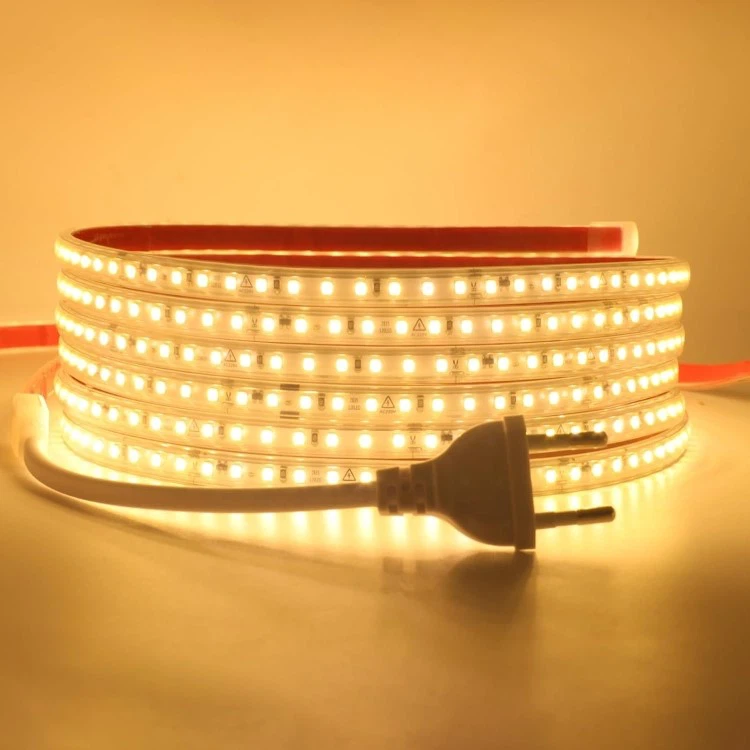
Shenzhen Benwei Lighting Technology Co., Ltd was established in 2010. It is a national high-tech enterprise integrating design, R&D, production and sales of indoor and outdoor lighting products and also can do OEM ,ODM .For more details about our offerings, please contact us at bwzm18@ledbenweilighting.com





