Fountains can add an element of beauty to any outdoor space, but just like any other lighting fixture, they can require some troubleshooting. Outdoor fountains serve as the focal point of gardens, patios, courtyards, and landscape designs, bringing dynamic visual appeal and soothing ambient sounds to residential and commercial outdoor areas alike. The soft glow of fountain lights after dusk elevates the entire aesthetic of the space, turning a simple water feature into a stunning nighttime landscape centerpiece. However, just like any other lighting fixture that operates in outdoor, moisture-prone environments, fountain lights are prone to brightness issues and minor malfunctions that require targeted troubleshooting and routine care. If you find that your fountain light is either too dim or too bright, ruining the balanced visual effect of your outdoor fountain and disrupting your landscape lighting layout, there are a few things that you can do to rectify the issue easily with basic tools and simple operation methods, no complex professional skills required.
If your fountain light is too dim, one possible cause could be that the wattage of the bulb is not high enough for the size of the fountain. Many fountain owners choose bulbs casually during installation or replacement, ignoring the matching relationship between bulb wattage and the fountain's volume, water depth, and structural size. Small desktop fountains or compact courtyard fountains with shallow water layers only need low-wattage bulbs to present uniform brightness, while large outdoor landscape fountains, deep pool fountains, and multi-tiered fountains require higher-power bulbs to penetrate the water layer and illuminate the entire water feature. If the bulb wattage is too low for the fountain's overall scale, the light will be completely absorbed and blocked by water and fountain structures, resulting in a dim, lifeless lighting effect. In this case, you can try replacing the bulb with one that has a higher wattage. Before replacement, it is essential to confirm the bulb's voltage interface and fixture compatibility to avoid mismatched specifications that may cause circuit damage. Additionally, it's possible that the bulbs or the connections are dirty or corroded. Fountains work in humid outdoor environments all year round, and water vapor, splashing water, outdoor dust, and air moisture will continuously adhere to the bulb surface and wiring connections. Over time, these attachments will form dirt layers, water stains, and even rust and corrosion on metal connection parts. Corroded wire contacts will cause poor electrical conduction, reducing the current received by the bulb and directly leading to insufficient light brightness. To remedy this, turn off the power and clean the bulbs and connections with a soft cloth. It is best to use a dry microfiber cloth to wipe off surface dust and water stains; for stubborn dirt and slight corrosion marks, you can slightly dampen the cloth with a small amount of neutral cleaning solution, wipe gently, and dry completely to ensure no residual moisture remains before powering the device back on.
Another possible cause of dim fountain lights is a dirty or cloudy fountain. This is one of the most easily overlooked reasons for dim fountain lighting, as most people only focus on the bulb itself while ignoring the impact of water quality and water surface conditions on light transmission. Outdoor fountains are exposed to open air all day long, making them susceptible to external environmental interference. Algae, minerals, and other debris can build up on the surface of the water and obscure the light's visibility. Tap water used for fountains contains calcium, magnesium, and other mineral components. With continuous water circulation and evaporation, these minerals will precipitate and form fine scale suspended in the water or attached to the fountain inner wall. Meanwhile, sunlight exposure and humid water environments will accelerate the growth of green algae and microorganisms in the water, and fallen leaves, dust, flying insects, and other outdoor debris will also fall into the fountain and accumulate gradually. These pollutants will make the fountain water turbid and cloudy, forming a dense barrier that blocks the light emitted by the underwater bulb. The light cannot penetrate the water layer smoothly, resulting in a significantly dim lighting effect, and even makes the entire fountain look dull and unappealing at night. To solve this, clean the surface of the water regularly and use an algaecide if necessary. Develop a fixed cleaning routine: skim off floating debris on the water surface every 2 to 3 days, replace the fountain water completely every 1 to 2 weeks according to the usage environment, and scrub the fountain inner wall to remove attached scale and algae. When algae growth is excessive, choose a special, mild fountain-safe algaecide that will not damage the fountain circuit and water quality, follow the product instructions for quantitative use, and maintain clean and transparent water to ensure unobstructed light transmission.
On the other hand, if your fountain light is too bright, it's likely that the wattage of the bulb is too high for the fountain. Excessively bright fountain lights are as problematic as dim ones, and even more likely to destroy the soft atmospheric sense of outdoor landscape lighting. Landscape fountain lighting focuses on creating a gentle, layered, and immersive visual effect, rather than strong, dazzling high-brightness illumination. When owners pursue excessive brightness blindly and install high-wattage bulbs for small and medium-sized fountains, the light will be too intense for the limited water volume and structural range of the fountain. The strong light will reflect violently through the water surface, produce dazzling glare, cause visual fatigue, and even make the fountain lose its hierarchical beauty, presenting a rigid, overexposed lighting effect that conflicts with the quiet and elegant temperament of outdoor water features. Try replacing the bulb with one that has a lower wattage. It is recommended to select low-power LED bulbs dedicated to landscape fountains, which have the advantages of soft light, energy saving, long service life, and stable brightness. You can match the bulb wattage according to the fountain size: small fountains below 1 square meter are suitable for 1-3W bulbs, medium-sized courtyard fountains for 3-5W bulbs, and only large landscape fountains need 5-10W high-brightness bulbs to ensure coordinated and natural light brightness.
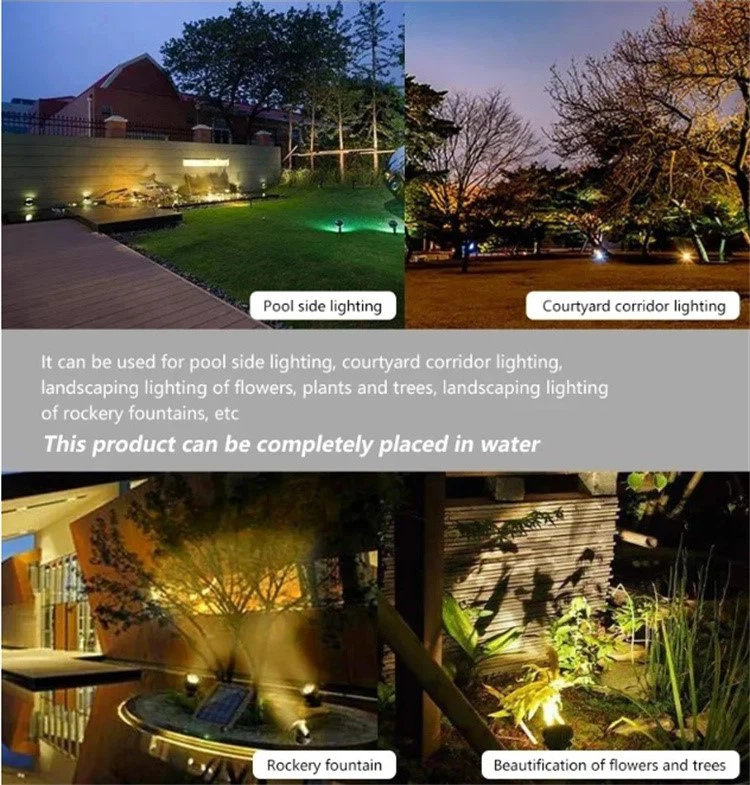
You can also use accessories such as a dimmer switch or a lens cap to control the brightness of the light. These two auxiliary accessories are practical and cost-effective solutions for adjusting fountain light brightness, suitable for scenarios where bulb replacement is inconvenient or you need flexible brightness adjustment. A lens cap can help to reduce the amount of light that shines out of the fountain. Made of high-transmission frosted plastic or waterproof shading material, the professional fountain light lens cap can cover the bulb evenly, scatter and weaken partial strong light, eliminate glare, and make the light emitted through the water softer and more uniform, effectively solving the problem of overly bright and harsh lighting. Meanwhile, a dimmer switch allows you to adjust the brightness of the light so that it's not overpowering. The waterproof dimmer switch specially designed for outdoor fountain lights can be installed in the fountain circuit. It supports stepless brightness adjustment, allowing you to freely switch the light brightness according to different scenes and needs. You can turn down the brightness for daily night landscape decoration to create a warm and quiet atmosphere, and appropriately increase the brightness for parties and outdoor activities to meet viewing needs, realizing flexible and intelligent control of fountain lighting.
It's important to note that safety is paramount when dealing with electrical fixtures. Fountain lights belong to underwater electrical equipment, which is in a humid and water-contact working environment for a long time, so there are potential electrical safety hazards during inspection, maintenance, and troubleshooting. All operations involving circuit inspection, bulb replacement, accessory installation, and equipment cleaning must be carried out under the condition of completely cutting off the power supply to avoid electric shock accidents and circuit short-circuit damage caused by water and electricity contact. Do not disassemble the light fixture privately without basic electrical knowledge, and do not use non-waterproof bulbs, wires, and accessories to replace original parts, so as to prevent water penetration and circuit failure. If you are unsure about any aspects of troubleshooting your fountain lights, such as circuit aging judgment, internal wiring failure, and professional accessory matching, it's recommended that you seek the advice of a professional electrician. Professional electricians have standardized operation processes and professional testing tools, which can accurately find potential faults, ensure the safety and normality of the fountain electrical system, and avoid secondary damage caused by incorrect operation.
To prevent future issues with your fountain lights, be sure to schedule regular maintenance and cleaning of your fountain, including the light fixtures. Most fountain light brightness problems are caused by daily neglect of maintenance and accumulated minor faults. Regular scientific maintenance can effectively avoid dimness, excessive brightness, light flickering, and other common problems, greatly extending the service life of fountain lights and the entire water feature equipment. You can formulate a detailed maintenance plan: conduct a comprehensive cleaning of bulbs, wiring interfaces, and fountain water quality every month, check whether the wires are aging, loose, or corroded, and replace severely worn bulbs and accessories in a timely manner; do a thorough deep maintenance every quarter, clean the fountain pipeline and inner wall scale, test the circuit stability and dimmer switch sensitivity, and adjust the bulb brightness state according to seasonal environmental changes. This will help to ensure that your fountain continues to look beautiful and function properly for years to come. A well-maintained fountain with stable and soft lighting can always add unique charm to your outdoor space, become a beautiful landscape in the garden night scene, and bring lasting visual enjoyment and comfortable leisure experience.

How To Cooperate With Us?
Because of our own facilities, we have complete control over the production process and the quality of our goods, which makes us very pleased. We are committed to giving our clients the greatest price since we are manufacturers rather than just brokers. We encourage clients to evaluate our samples first since we are certain that the cost and quality of our items are transparent. Our dedication to excellence and client happiness motivates us to consistently provide superior products.
Our address
3rd Floor, 5th Building, Hebei Industrial Park, Hualian Community, Longhua District, Shenzhen, China