

When you walk into the fresh produce section of a supermarket chain or push open the heavy, insulated door of a cold storage unit, you likely pay little attention to the light fixtures overhead. Yet, industry insiders know all too well that lighting is often the aspect of a project most prone to costly pitfalls.
Humidity, condensation, low temperatures, high-pressure washdowns, and grease-each of these factors quietly erodes the lifespan of standard light fixtures. Many procurement managers who save on the initial budget often find those savings wiped out by the second year due to mounting repair and replacement costs.
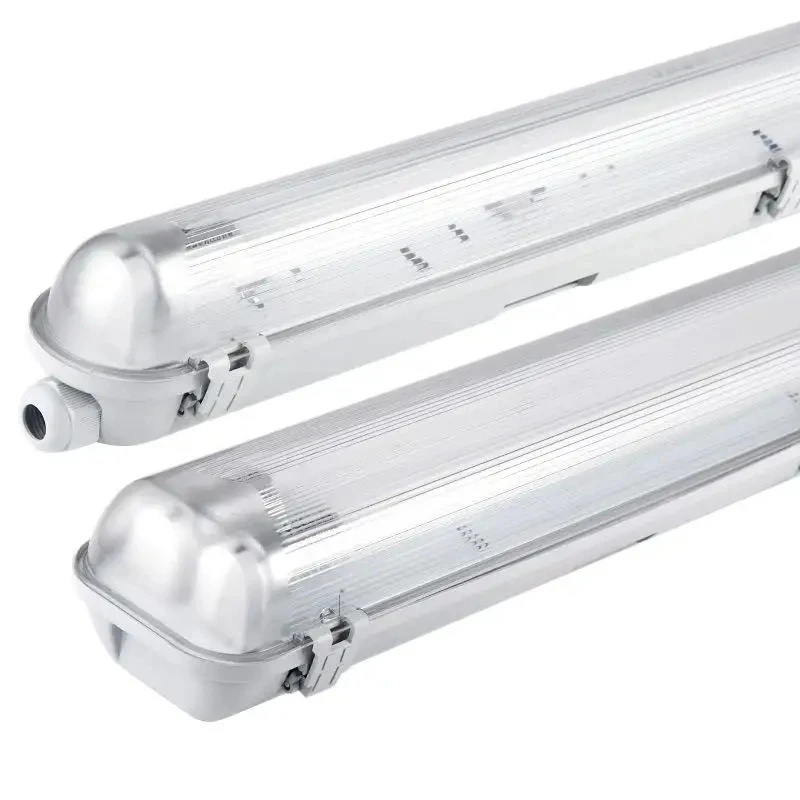
"Tri-proof" lights (designed to be waterproof, dustproof, and corrosion-resistant) have become the industry standard for these environments-not simply because they "look" more robust, but because they provide practical solutions to specific, real-world challenges. Let's break down the expertise behind these fixtures.
What exactly do "tri-proof" lights protect against?
Many people assume "tri-proof" refers only to waterproofing, but it encompasses much more:
Waterproofing: Blocks condensation, washdown water, rain, and high-pressure water jets, preventing moisture from entering the fixture housing and causing short circuits.
Dustproofing: Keeps out dust, flour, and fibrous particles, ensuring that heat dissipation vents remain clear and light output stays consistent.
Corrosion Resistance: Protects against cleaning agents, disinfectants, refrigerant leaks, and the salts, acids, or alkalis present in humid air.
If any one of these protective capabilities is missing, a light fixture in such an environment will age prematurely. This is precisely why standard fluorescent fixtures or conventional ceiling lights often fail to survive even a single winter in supermarket back-of-house areas or cold storage facilities.
How Harsh Are the Conditions in Supermarket Fresh-Food Sections and Cold Storage?
While areas like supermarket fresh-food sections, the spaces above refrigerated display cases, quick-freeze zones, and the interiors of cold storage units are technically "indoors," the actual operating conditions are quite extreme:
Consistently high humidity, sometimes approaching saturation.
Frequent temperature fluctuations caused by the alternating flow of cold and warm air whenever doors are opened or closed.
Regular floor washdowns, often leaving light fixtures covered in condensation or water vapor.
An atmosphere containing volatile cleaning agents, as well as corrosive odors from meat and seafood.
The greatest threat in such environments is not a "one-off" major spill, but rather the long-term, recurring infiltration of moisture. The structural design of "tri-proof" (dustproof, waterproof, and corrosion-proof) lights is specifically engineered to combat this type of gradual degradation.
Challenges: Starting at Low Temperatures and Light Degradation
Cold storage units typically operate below 0°C, while quick-freeze facilities can reach -25°C or even lower. This poses a significant challenge for lighting equipment:
Standard fluorescent lamps struggle to start in low temperatures and experience a noticeable drop in brightness.
While LEDs themselves generally perform well in the cold, their driver power supplies may not; specifically, the electrolytic capacitors within these drivers are prone to performance degradation at low temperatures.
It is essential to select tri-proof lights with a clearly specified operating temperature range (e.g., -30°C to +45°C).
When procuring, do not simply ask, "Can this be used in a cold storage unit?" Instead, check the product's specified operating temperature range and ask the supplier to confirm that the driver power supply is specifically selected for low-temperature operation.
Understanding Ingress Protection (IP) Ratings: The Differences Between IP65, IP66, and IP69K
IP ratings are the most straightforward indicator for tri-proof lights, yet they are frequently misunderstood:
IP65: Completely dust-tight and protected against low-pressure water jets. Suitable for general supermarket and warehouse areas.
IP66: Completely dust-tight and protected against powerful water jets. Suitable for fresh-food processing areas that require frequent washdowns.
IP69K: Withstands high-temperature, high-pressure water jets; typically used in environments requiring intensive cleaning, such as food processing plants or slaughterhouses.
A higher rating is not necessarily "better"-the key is to ensure the rating aligns with your actual cleaning methods. For areas that only require routine wiping, there is no need to pay a premium for an IP69K rating; conversely, choosing an IP65-rated fixture for a facility that undergoes daily high-pressure washdowns is simply inviting future trouble.
Materials and Sealing: The Details That Determine Lifespan
Even among products with the same IP65 rating, actual durability can vary significantly. Key factors include:
Fixture Body Material: Polycarbonate (PC) is impact-resistant, corrosion-resistant, and rust-proof-a common choice for cold storage and food-handling facilities. Stainless steel is preferred for environments with more intensive cleaning requirements.
Gasket Quality: Silicone seals offer better low-temperature resistance than standard rubber, remaining flexible and less prone to hardening or cracking.
Clips and Fastening Mechanisms: Stainless steel clips are more durable than plastic ones, as plastic components tend to become brittle in cold environments.
Lens/Cover Light Transmission: High-quality covers resist yellowing over long-term use and experience slower degradation in light output efficiency.
These details can be evaluated during the sampling phase; when you receive a sample, check the elasticity of the sealing gaskets and the tactile feel of the clips.
Special Requirements for Food-Related Environments
In supermarkets and cold storage facilities, food safety considerations impose additional requirements on lighting fixtures:
Shatter-Resistance: Fixture covers should feature shatter-proof or explosion-proof designs to ensure that, in the event of breakage, fragments do not fall into food-handling or display areas.
Smooth, Easy-to-Clean Surfaces: Designs with clean lines and no "dead zones" where dust can accumulate make cleaning much more efficient.
Color Rendering Index (CRI): Fresh food sections require high color accuracy-a CRI (Ra) of 80 or above is the baseline. For meat and produce displays, a higher CRI is recommended to ensure the products appear fresh and natural.
Color Temperature: Cold storage work areas typically utilize 5000K–6500K (cool white) light, while fresh food display areas may use warmer tones or specific spectral ranges tailored to the type of product.
Conclusion
The logic behind selecting "tri-proof" (dust-proof, moisture-proof, and corrosion-proof) lighting for supermarkets and cold storage is straightforward: the harsher the environment, the less you should leave to chance when it comes to your lighting equipment. Key takeaways:
"Tri-proof" refers to protection against water, dust, and corrosion-all three are essential.
Low-temperature operational capability depends on specific technical parameters, particularly those of the LED driver.
Ingress Protection (IP) ratings-such as IP65, IP66, and IP69K-should be selected based on the cleaning methods used in your facility.
The materials used and the quality of the sealing determine the actual service life of the fixture.
For food-processing environments, additional factors such as shatter resistance, color rendering, and ease of cleaning must be considered.
Evaluate the total cost of ownership rather than focusing solely on the unit price.
When you consider these factors, a "tri-proof" light is no longer just a "more expensive fixture," but a smart investment that helps you avoid future headaches.
Looking for the right tri-proof lighting for your supermarket or cold storage facility?
We specialize in the R&D and manufacturing of tri-proof lights. We can provide expert selection advice tailored to your specific environment-including cold storage temperatures, cleaning protocols, installation heights, and project scale-and we offer both sample testing and customized solutions. Please leave a message or send us an email to discuss your project requirements.
Our address
No. 5-3 Niujiao Road, Yanchuan Community, Yanluo Subdistrict, Bao'an District, Shenzhen
bwzm18@ledbenweilighting.com






