

Introduction: The Hidden Killer of Solar Floodlight Lifespan
The Misunderstanding of Solar Floodlight Lifespan Evaluation
Most merchants mark the theoretical lifespan of solar floodlights as 50,000 hours or even longer in product parameters, but many users find that the actual brightness of the lamp decreases significantly after 1–2 years of outdoor use, and problems such as dim light, intermittent lighting, and circuit burnout frequently occur. This huge gap between theoretical data and actual service effect is not caused by false parameter marking, but by the harsh outdoor operating environment and insufficient thermal management capacity of the lamp body. Traditional purchasing logic usually takes high brightness, large‑capacity battery, and IP66 waterproof grade as the core evaluation standards, but ignores that heat accumulation is the primary hidden danger of lamp aging. Even with top‑grade LED chips and high‑efficiency solar power supply systems, unoptimized heat sink design will lead to continuous heat accumulation inside the lamp body, completely offsetting the hardware advantages and shortening the service life by more than 50%.
The Essential Connection Between Heat and LED Lifespan
LED lighting chips belong to semiconductor light‑emitting components, and their light‑emitting efficiency and service life strictly follow the Arrhenius equation of semiconductor degradation. Unlike traditional light sources such as halogen lamps and incandescent lamps, LED chips are extremely sensitive to operating temperature. Professional thermal management experiments prove that every 10°C increase in the LED junction temperature will lead to a 30%–50% sharp drop in the theoretical lifespan of the chip, and the aging rate shows an exponential growth trend rather than linear change. For outdoor solar floodlights working continuously for a long time, high‑intensity light emission will generate continuous heat, and the outdoor high‑temperature environment in summer will further increase the internal temperature of the lamp body. If the heat cannot be exported and dissipated in time, the long‑term high‑temperature operation will cause irreversible damage to the LED chip, constant‑current drive circuit, and battery module, resulting in accelerated light decay, circuit aging, and battery capacity attenuation.
The Unique Thermal Challenge of Outdoor Solar Floodlights
Different from indoor fixed lighting lamps, outdoor solar floodlights face more complex thermal dissipation challenges. First, most solar floodlights work in unattended outdoor environments, bearing long‑term sun exposure, high temperature baking, and alternating hot and cold temperature changes throughout the year, with the external ambient temperature ranging from ‑20°C to 60°C. Second, the integrated design of solar panels, batteries, and LED light sources makes the internal heat source of the lamp body more concentrated, and the closed waterproof structure easily forms a heat accumulation cavity. Third, high‑power solar floodlights (50W–400W) have higher luminous power, resulting in greater instantaneous heat generation, which puts forward higher requirements for the rapid heat conduction and diffusion capacity of the heat sink. Only professional targeted heat sink design can solve the thermal management pain points of outdoor solar floodlights and realize long‑term stable operation of the lamps.
Working Principle and Heat Generation Mechanism of Solar Floodlights
Core Working Structure of Solar Floodlights
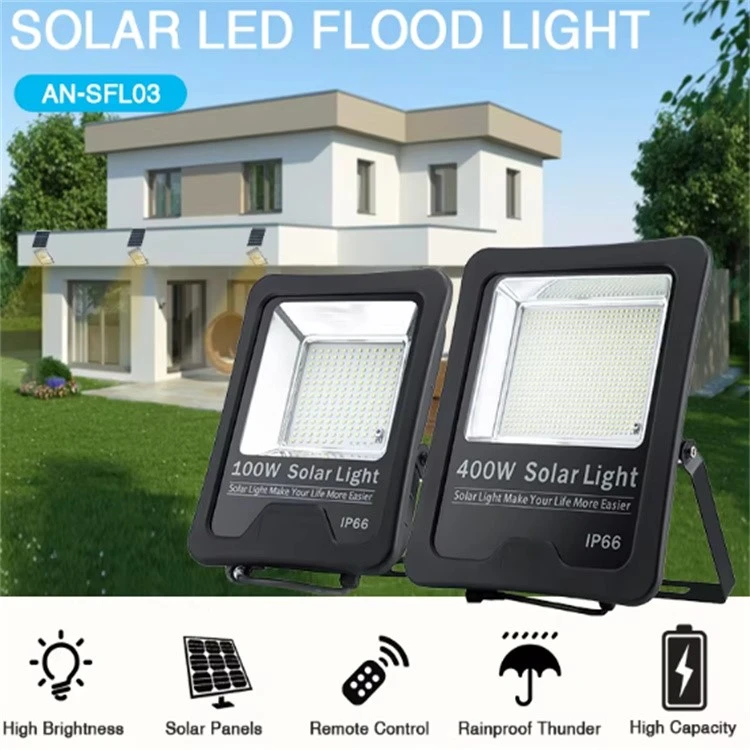
A complete outdoor solar LED floodlight system consists of four core modules: high‑efficiency solar power generation module, large‑capacity lithium battery energy storage module, constant‑current drive control module, and high‑density LED light‑emitting module. During the daytime, the solar panel converts light energy into electrical energy and stores it in the built‑in lithium battery through the intelligent charging management system. At night, the light sensor automatically activates the discharge system, and the constant‑current drive circuit stabilizes the current and voltage to supply power to the LED chips, realizing automatic lighting. All electronic components inside the lamp body will generate heat during operation, and the LED light‑emitting array and drive circuit are the main heat sources.
Main Heat Sources and Aging Hazards of Lamps
The LED chip is the largest heat source of the solar floodlight. During the light‑emitting process, only 20%–30% of the electrical energy is converted into visible light energy, and the remaining 70%–80% of the electrical energy is converted into heat energy and accumulated at the chip junction. Long‑term heat accumulation will increase the chip junction temperature, destroy the internal semiconductor crystal structure, reduce luminous efficiency, and form permanent light decay. Secondly, the constant‑current drive circuit will generate heat during voltage stabilization and current regulation. High temperature will accelerate the aging of electronic components such as resistors and capacitors, leading to unstable drive output and frequent lamp failure. In addition, the lithium battery module is extremely sensitive to temperature. High temperature heat radiation will reduce battery cycle times and storage capacity, resulting in shortened standby time and reduced overall power supply efficiency of the solar system.
Light Decay Logic Caused by Poor Heat Dissipation
Light decay is the core index that determines the lighting performance and service life of solar floodlights. Inferior solar floodlights without professional heat sink design will experience obvious brightness attenuation after 6–12 months of use. The fundamental reason is that the accumulated high temperature causes the thermal aging of LED chips, making the light output efficiency continuously decline. With the extension of use time, the aging degree of the chip intensifies, and the light decay speed will further accelerate, eventually leading to the lamp being dim and scrapped. Professional heat sink design can keep the LED junction temperature within the safe working range (below 75°C) for a long time, effectively inhibit light decay, ensure that the lamp maintains high brightness output for many years, and extend the overall service life to more than 50,000 hours.
Core Heat Sink Design Parameters That Determine Lamp Lifespan
Heat Sink Material Thermal Conductivity
Material performance is the foundation of heat sink thermal dissipation capacity, and thermal conductivity is the core parameter to measure heat conduction efficiency. At present, the mainstream heat sink materials on the market include plastic, ordinary thin iron sheet, and industrial aluminum alloy. Plastic heat sinks have extremely low thermal conductivity and basically have no heat dissipation effect, which are only suitable for low‑power indoor decorative lamps and will rapidly age and deform in outdoor high‑temperature environments. Ordinary iron sheet heat sinks have low thermal conductivity, slow heat conduction speed, and poor heat dissipation uniformity, which cannot meet the long‑term heat dissipation needs of high‑power solar floodlights.
High‑quality outdoor solar floodlights adopt thickened industrial aluminum alloy heat sinks, which have excellent thermal conductivity (96–200 W/(m·K)), far exceeding iron and plastic materials. Aluminum alloy has the characteristics of fast heat conduction, uniform heat diffusion, and stable high‑temperature resistance. It can quickly conduct the concentrated heat generated by LED chips to the entire heat sink surface, and realize rapid heat exchange with the external air. In addition, industrial aluminum alloy has strong oxidation resistance and corrosion resistance, will not rust or deform after long‑term outdoor wind and sun exposure, and maintains stable heat dissipation performance throughout the service cycle, which is an essential material guarantee for long‑term lamp operation.
Ribbed Fin Structure and Heat Dissipation Area Design
The core logic of heat sink heat dissipation is to expand the contact area between the heat sink and the air through structural design, so as to maximize natural convection heat exchange efficiency. Many inferior floodlight heat sinks on the market adopt flat single‑layer design with small heat dissipation area and poor air fluidity, resulting in a large amount of heat staying inside the lamp body and failing to diffuse. Professional high‑quality solar floodlights adopt optimized ribbed thickened fin structure, which greatly increases the effective heat dissipation area of the heat sink on the premise of not increasing the overall volume of the lamp body.
The fin spacing, height and density of the ribbed structure are designed through precise thermal simulation calculation. The optimal fin spacing is controlled at 4–8 mm, which avoids the problem of blocked air convection caused by too dense fins and wasted heat dissipation space caused by too sparse fins. The vertical arrangement of fins makes full use of the hot air rising principle to form automatic air convection channels, accelerate air circulation inside and outside the heat sink, and realize rapid heat discharge. The thickened fin design improves the thermal mass of the heat sink, which can absorb instantaneous high heat generated by high‑power LED operation, avoid instantaneous temperature surge of the chip, and ensure the stability of lamp operation.
Integrated Sealed Heat Conduction Structure
Outdoor solar floodlights need to meet IP66 waterproof and dustproof grade, so the heat sink design must balance heat dissipation efficiency and sealing protection performance. Inferior products adopt split assembly structure, which is prone to gaps and poor fitting degree between the heat sink and the lamp board. The thermal resistance is large, the heat conduction is not smooth, and external rainwater and dust are easy to penetrate, resulting in circuit short circuit and heat dissipation failure. Professional solar floodlights adopt integrated die‑casting molding process to realize the integrated connection of heat sink, lamp body and mounting base.
The integrated structure eliminates assembly gaps, minimizes thermal resistance between the LED substrate and the heat sink, realizes zero‑distance rapid heat conduction, and greatly improves overall heat dissipation efficiency. At the same time, the fully enclosed integrated sealing design matches the IP66 industrial protection grade, which can effectively block fine dust, rainwater, dew and humid air from entering the lamp body. It not only ensures efficient and stable heat dissipation in high‑temperature environments, but also avoids heat sink corrosion and circuit damage caused by damp and dust accumulation, realizing dual protection of thermal management and environmental resistance.
Low Thermal Resistance Overall Matching Design
Excellent heat sink design is not only the optimization of a single structure, but the overall matching of the entire thermal conduction chain. The professional solar floodlight heat dissipation system forms a complete heat conduction path of "LED chip - thermal conductive pad - aluminum substrate - ribbed heat sink - external air". The thermal conductive pad with thermal conductivity higher than 2 W/(m·K) is used between the substrate and the heat sink to fill the tiny assembly gaps, eliminate air thermal resistance, and ensure efficient heat transfer link by link.
After overall optimization, the total thermal resistance of the lamp body is controlled below 1.1°C/W, which can stably control the LED chip junction temperature below 75°C even under long‑term high‑power operation and summer high‑temperature sun exposure. Low thermal resistance design avoids heat accumulation at each heat conduction node, prevents local overheating of the lamp body, effectively inhibits chip aging and light decay, and ensures that the lamp maintains ultra‑low loss lighting performance for a long time.
Comparative Analysis of Excellent and Inferior Heat Sink Design
Service Life Difference Caused by Heat Dissipation Performance
Inferior solar floodlights with simple flat heat sinks or thin iron sheet heat sinks have poor heat dissipation efficiency. The internal temperature of the lamp body is often as high as 90°C–110°C during operation, and the LED junction temperature seriously exceeds the safe range. Under this high‑temperature working condition, the chip aging speed is greatly accelerated, the light decay rate exceeds 30% within two years, and the lamp basically loses practical lighting value. At the same time, long‑term high temperature will cause the battery capacity to attenuate rapidly, the standby time to be shortened sharply, and the drive circuit to age and fail frequently, resulting in an overall service life of only 1–2 years.
The professional ribbed thickened aluminum heat sink adopted by high‑quality solar floodlights can stably control the internal operating temperature of the lamp body below 75°C. The ultra‑low temperature operating environment inhibits semiconductor aging, makes the light decay rate less than 8% within five years, and the luminous efficiency remains stable for a long time. The overall theoretical service life is up to 50,000 hours, and the actual outdoor service life can reach more than 5 years. It completely avoids frequent lamp replacement and maintenance, and greatly reduces the long‑term use cost for users.
Adaptability Difference in Harsh Outdoor Environments
Outdoor lighting equipment needs to cope with extreme weather such as high temperature, heavy rain, snow, and strong wind all year round. Inferior heat sinks have thin materials and simple structures, which are prone to thermal deformation, rust and corrosion after long‑term sun exposure and rain erosion. The deformed heat sink will lead to poor fitting of the lamp body, reduced waterproof and dustproof performance, further aggravate heat accumulation, and form a vicious cycle of "heat dissipation failure - accelerated aging - equipment damage".
The thickened ribbed aluminum heat sink has high structural strength and strong weather resistance. It will not deform or rust in long‑term high‑temperature, humid and rainy environments. The integrated sealing structure maintains stable IP66 protection performance all the year round. It can resist extreme weather such as summer high temperature baking, winter low temperature freezing, heavy rain impact and sand dust erosion, ensuring continuous and stable heat dissipation performance in various harsh environments, and realizing true all‑weather durable lighting.
Long‑term Cost and Performance Gap
Although inferior solar floodlights with simple heat sink design have low purchase cost, they have extremely high later‑stage use cost. Frequent brightness attenuation, lamp failure and equipment damage require repeated replacement and maintenance, which consumes a lot of time and labor costs. The unstable lighting performance also brings potential safety hazards to yard security, warehouse monitoring and farm lighting.
High‑quality solar floodlights equipped with professional optimized heat sinks have a slightly higher initial purchase cost, but they have ultra‑low light decay, ultra‑long service life and maintenance‑free performance. In the long run, they can save a lot of replacement costs and maintenance labor costs, and the stable high‑brightness lighting effect can always meet the user's lighting needs. For commercial users and family users pursuing long‑term cost‑effectiveness, the professional heat sink design is the core value guarantee of solar floodlights.
Purchasing Guidance: How to Identify High‑Quality Heat Sink Solar Floodlights
Observe Heat Sink Material and Thickness
When purchasing outdoor solar floodlights, first distinguish the heat sink material. Prioritize products with thickened industrial aluminum alloy heat sinks, and avoid plastic and thin iron sheet heat sinks. The heat sink with sufficient thickness has higher thermal mass, stronger instantaneous heat absorption capacity, and more stable high‑temperature resistance. It can effectively cope with the heat impact of long‑term high‑power operation and avoid rapid temperature rise of the lamp body.
Check Fin Structure and Heat Dissipation Area
Carefully observe the heat sink structure of the lamp body, and select the ribbed dense fin design with uniform arrangement and reasonable spacing. This structure has a larger effective heat dissipation area and smoother air convection channels, which can maximize heat dissipation efficiency. Avoid flat smooth heat sinks with no fin structure and single heat dissipation mode, so as to prevent hidden dangers of heat accumulation and rapid light decay in later use.
Verify Integrated Sealed Structural Design
High‑quality solar floodlights must adopt integrated die‑casting heat sink and integrated sealing design. The seamless fitting structure can ensure low thermal resistance heat conduction and stable IP66 waterproof and dustproof performance. It is necessary to avoid split assembly heat sinks with obvious gaps, which are not only poor in heat dissipation effect, but also easy to enter water and dust, leading to equipment failure.
Focus on Actual Light Decay and Lifespan Parameters
Don't only focus on the theoretical lifespan marked by the merchant, but pay attention to the actual light decay data of the product. Professional products with excellent heat sink design can achieve less than 10% light decay after 5 years of use, and the brightness remains stable. Inferior products often have exaggerated theoretical parameters, but the actual light decay is serious, which cannot meet long‑term lighting needs.
Conclusion
Heat sink design is the core determinant of the actual service life and long‑term performance stability of outdoor solar floodlights, and it is also the most easily overlooked core advantage in product selection. The unreasonable thermal management system will make high‑quality LED chips, high‑efficiency solar panels and large‑capacity batteries lose their value, and cause problems such as rapid light decay, frequent failure and shortened service life of solar floodlights. The professional ribbed thickened aluminum alloy heat sink, optimized fin convection structure, low thermal resistance overall matching and integrated sealed design can perfectly solve the thermal management pain points of outdoor solar floodlights, stably control the operating temperature of the lamp body within the safe range, and effectively inhibit chip aging and light attenuation.
For users, a high‑quality heat sink design is equivalent to adding a "permanent lifespan guarantee" to the solar floodlight. It not only ensures long‑term high‑brightness, low‑loss and stable lighting effects, but also greatly reduces later‑stage maintenance and replacement costs, realizing real energy saving, environmental protection and cost savings. When purchasing outdoor solar floodlights, users should take heat sink design as the core evaluation index, prioritize products with professional thermal management systems, and fundamentally avoid the trouble of frequent lamp replacement and performance attenuation, so as to maximize the long‑term use value of lighting equipment.

How To Cooperate With Us?
Since we have our own facilities, we are pleased to have complete control over the production process and the quality of our goods. We are committed to giving our clients the finest prices since we are manufacturers rather than just brokers. We encourage buyers to see our samples first since we are certain that the cost and calibre of our items are transparent. Our dedication to excellence and client happiness motivates us to consistently provide superior products.
Our address
3rd Floor, 5th Building, Hebei Industrial Park, Hualian Community, Longhua District, Shenzhen, China





