Introduction: Defining the Batten Light
Historical Context and Evolution
The term "batten light" originally referred to a simple linear luminaire mounted directly onto a wooden batten (strip) on ceilings or walls. Over time, the design has evolved from bulky fluorescent battens to slim, low-profile LED fixtures. Today, batten lights are recognised as a staple in both residential and commercial lighting due to their elongated, rectangular form factor and surface‑mount capability.
Core Definition
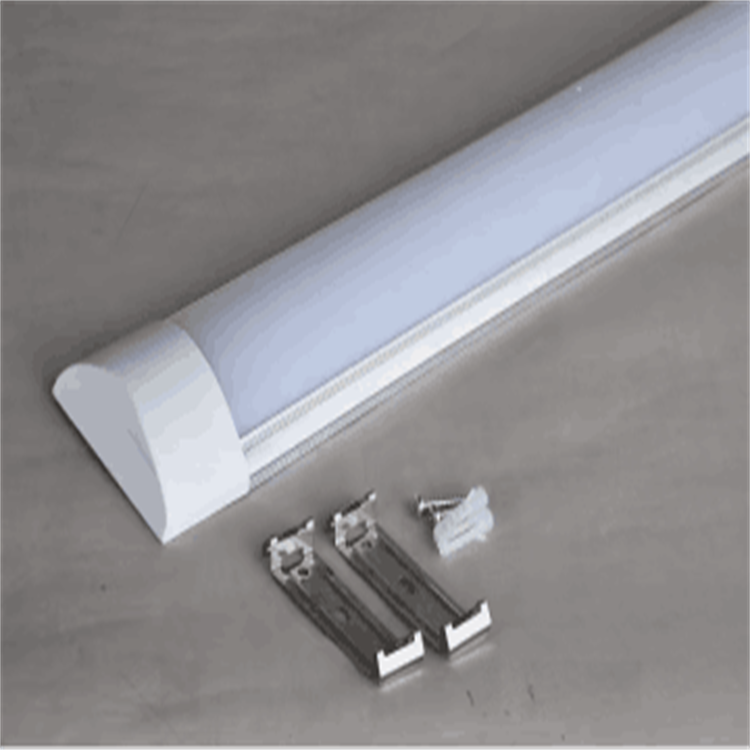
A batten light is a linear lighting fixture characterised by a narrow, flush‑mount housing that sits close to the mounting surface (ceiling or wall). Unlike recessed or pendant luminaires, batten lights project minimal intrusion into the space while delivering uniform, widespread illumination. Modern batten lights predominantly use LED or fluorescent lamps as the light source, housed within a robust metal or polycarbonate enclosure.
Technical Characteristics and Performance Metrics
Light Source and Energy Efficiency
Contemporary batten lights favour LED chips over fluorescent tubes due to superior luminous efficacy (typically 120–150 lm/W compared to 70–100 lm/W for T5/T8 fluorescents). LEDs also offer instant start, no flicker, and a lifespan exceeding 50,000 hours – reducing replacement frequency by up to five times relative to fluorescent battens.
By converting over 80% of input energy into light (vs. 20–30% for incandescent bulbs), batten lights drastically cut operational electricity costs. For a typical office corridor, replacing 40 W fluorescent tubes with 18 W LED battens yields a 55% reduction in energy use. Lower power demand translates directly to lower CO₂ emissions per lumen‑hour, making batten lights compliant with green building standards such as LEED and BREEAM.
Durability and Maintenance
Batten lights are engineered for high‑traffic environments. Enclosures often carry an IK rating (e.g., IK08 for impact resistance) and an IP rating (IP44 to IP65 for dust/water ingress). The absence of moving parts (fans, gears) and the use of corrosion‑resistant materials (powder‑coated steel, aluminium, or UV‑stabilised polycarbonate) ensure reliable operation in warehouses, schools, hospitals, and parking garages.
Maintenance is straightforward: in fluorescent battens, failed tubes are replaced by twisting out the old T5/T8 lamp; in LED battens, the entire module or a replaceable LED strip is swapped. Many designs incorporate tool‑free end caps or quick‑connect wiring to minimise downtime. The long lifespan of LEDs further reduces the need for scheduled maintenance, lowering total cost of ownership (TCO).
Application Domains and Customisation Options
Versatile Use Cases
Offices & schools: Ceiling‑mounted battens provide glare‑free, uniform illumination for open‑plan areas and corridors.
Hospitals & clinics: High‑CRI (>80) battens with anti‑bacterial coatings are available for sterile environments.
Warehouses & workshops: High‑output battens (up to 5000+ lumens per metre) illuminate large vertical surfaces and assembly lines.
In homes, batten lights are ideal for garages, laundry rooms, stairwells, and under‑cabinet kitchen lighting. Their slim profile allows installation in low‑clearance attics or above door frames.
Customisation Parameters
Dimmability: 0–10 V, DALI, or phase‑cut dimming for adjustable brightness.
Colour temperature: Ranges from 2700 K (warm white) to 6500 K (cool daylight), selectable via DIP switches or tunable‑white drivers.
Colour rendering index (CRI): Standard CRI ≥80; premium options reach CRI ≥90 for retail or art studios.
Emergency backup: Integral battery packs provide maintained or non‑maintained emergency operation (3 h duration).
Lengths: Common sizes are 600 mm, 1200 mm, 1500 mm, and 2400 mm.
Mounting: Direct surface mount, suspended (with wire or chain kits), or linkable (daisy‑chain) for continuous runs.
Colour finishes: White, black, silver, or custom RAL colours to match interior design.
Diffuser types: Opal polycarbonate for soft, even light; clear lens for maximum output; micro‑prismatic for reduced glare.
Selection Criteria for Batten Lights
Room‑Specific Considerations
Room dimensions: For a 10 m × 3 m corridor, three 1200 mm battens spaced 3 m apart achieve an average of 300 lx (typical for circulation areas). Use lumen calculation methods (e.g., utilisation factor, maintenance factor) rather than guessing.
Task illuminance: Workshops requiring 500 lx need higher‑lumen battens (≈3000 lm per metre) or closer spacing.
Mounting height: Ceiling heights above 4 m may require battens with symmetrical or asymmetric beam angles to avoid dark spots.
Aesthetic and Compliance Factors
Style matching: In minimalist interiors, choose recessed‑mount or ultra‑slim (≤20 mm thickness) battens. For industrial/retrofit spaces, exposed fluorescent‑style LED battens are acceptable.
Regulatory compliance: Verify that the batten light carries appropriate certifications (CE, UL, ETL, CCC) for the installation region. Check for compliance with local building codes (e.g., Title 24 in California, Part L in the UK).
Conclusion: Advantages Over Traditional Alternatives
Batten lights outperform conventional incandescent or compact fluorescent fixtures in three decisive areas:
Energy efficiency: Up to 85% less power consumption for equivalent light output.
Lifetime value: 50,000 h LED lifetime eliminates frequent lamp changes, reducing labour and material costs.
Adaptability: A single batten light design can serve as a primary light source, emergency luminaire, or task light through simple accessory changes (sensors, reflectors, louvers).
For specifiers seeking a long‑lasting, low‑maintenance, and environmentally responsible linear lighting solution, batten lights represent a mature, well‑documented choice. With continuous improvements in LED efficacy and smart controls (integrated occupancy sensors, daylight harvesting), the batten light remains a relevant and highly customisable workhorse for twenty‑first‑century illumination.

How To Cooperate With Us?
Our firm prides itself on owning its own factory, guaranteeing complete control over the production process and the quality of our goods. We are not only agents; we are manufacturers committed to offering our clients the most competitive rates available. We invite consumers to evaluate our samples first, as we are assured that the quality and pricing of our items are self-evident. Our dedication to excellence and client satisfaction compels us to consistently perform at our best and provide superior quality products.
Our address
3rd Floor, 5th Building, Hebei Industrial Park, Hualian Community, Longhua District, Shenzhen, China