

What is a COB Light? When Should I Use One?
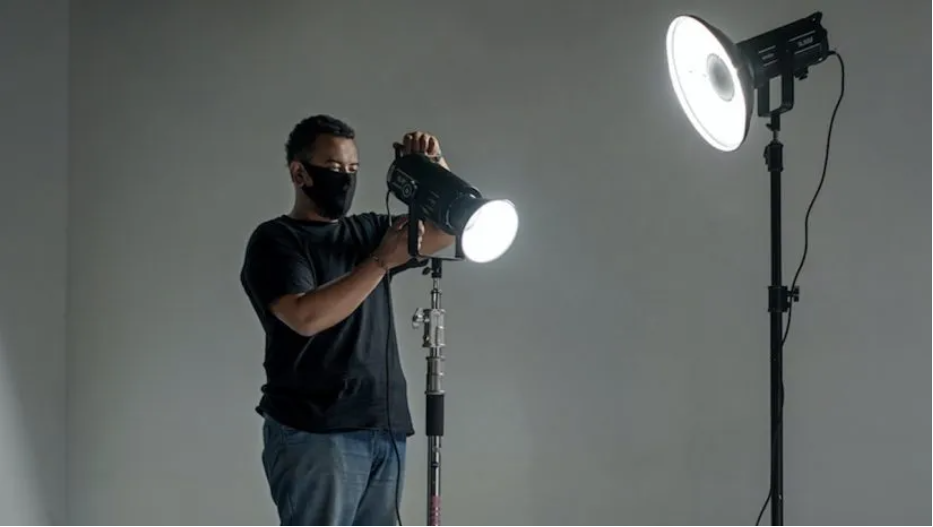
Natural light is a given, but you may also add artificial light to your picture set-up. Managing light is an element of your workflow in any scenario. For instance, whereas landscape photographers prefer natural light, studio photographers rely mainly on artificial light. However, there isn't really a right or wrong answer. Even photographers who just use natural light outdoors eventually need to use an artificial light source. So, don't discount the importance of more illumination, particularly COB lighting.
Additionally, you want to be able to combine both continuous and flash lighting. Each has a distinct function. Despite the fact that many photographers continue to use the built-in flash, you never know when a COB light can come in handy and rescue your picture shoot. You must first investigate every possibility in order to give oneself permission to be creative and make outstanding stuff. Everything you need to know about COB lights and how they enhance your photos is provided here.
Describe a COB light.
Continuous light is provided by a COB light. It is a particular kind of LED light that you can set up anyplace to illuminate the object for hours. You may keep it in the studio or install it on a light pole, or you can carry it with you. You may adjust the light's direction and intensity with a COB light, and the arrangement will last for a very long period.
In a practical sense, a COB light is a panel of tightly packed LED chips. Because LED chips are small, there is no visible gap between them. As a consequence, a COB lamp emits a consistent, intense beam of light. Don't worry; you may utilise accessories to soften the light and reduce its intensity.
Exactly what does COB mean?
Chip On Board is the meaning of the abbreviation COB. Referring to the packed LED chips put in direct contact with silicon carbide or sapphire substrate, it represents the technology behind COB lights. With the help of COB technology, a lot of LEDs can be packed onto a compact surface—for instance, 342 LEDs can fit into a 10mm by 10mm area.
What Differs COB and LED, Specifically?
An example of an LED light is a COB light. As a result, the true distinction between a COB light and another sort of LED light, such LED panels, is between them. Most often, an SMD (Surface Mounted Device) LED light is what is used in an LED panel.
A COB light has a simpler circuit architecture and more diodes, which results in a smaller light. A LED panel, on the other hand, resembles a jumble of tiny lights and has fewer diodes and a more intricate circuit architecture. Additionally, it could be heavier and bigger than a COB light.
There are more changes outside only the design and look. Compared to an SMD light, a COB light is more energy and heat efficient. When compared to COB lights, which start at 80 lumens per watt, SMD lights generate between 50 and 100 lumens per watt, resulting in a brighter light with reduced energy consumption. But unlike LED panels, it cannot produce coloured light or color-changing effects. In terms of colour temperature, SMD lights are more adaptable.
An SMD lamp may be used as a point light since it glows uniformly from all angles. However, a COB lamp works better as a top light to illuminate a subject or surface from above since it provides a consistent beam of light.





