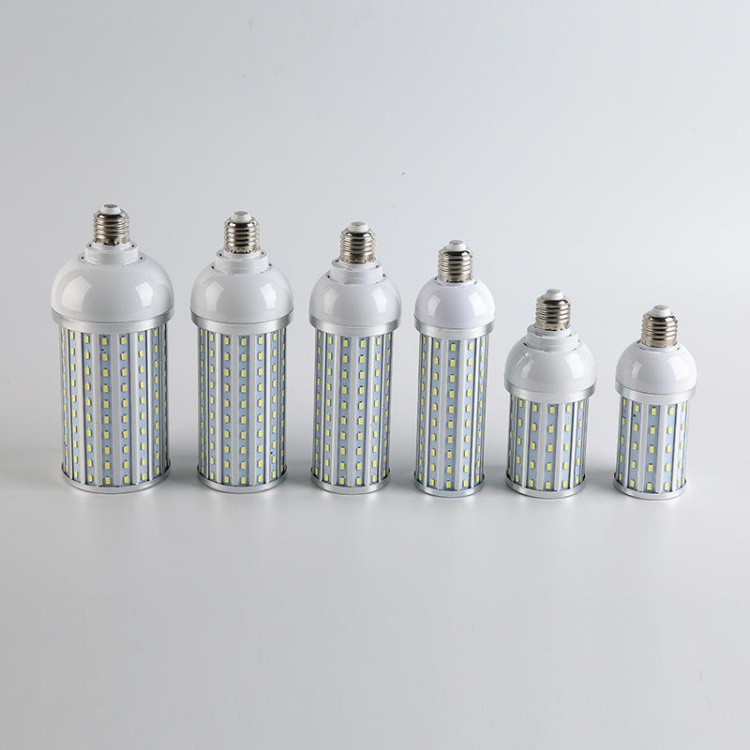
A never-ending stream of specialised lighting fixtures is emerging in the current era of fast iteration in LED lighting technology. Among them, the "Corn Light" has steadily carved out a sizable niche in commercial, industrial, outdoor, and residential lighting applications because to its distinctive structural design and all-encompassing performance advantages. Many people are fascinated by this fixture's cylindrical body and closely spaced LED beads when they first see it. They frequently wonder how the name "Corn Light" came to be, how it varies from regular LED bulbs or spotlights, and whether it's a worthy purchase. To help you fully comprehend the Corn Light, the following article provides a thorough overview.
A Corn Light: What Is It?
One important subset of LED lighting fixtures is the Corn Light. Known in English as a "Corn Light" or "Corn Bulb," it gets its name mostly from the way its lamp body is constructed, which consists of a cylindrical housing covered with a thick arrangement of tiny LED beads. The name comes from the arrangement's striking visual resemblance to the kernels on an ear of corn. As a general-purpose LED fixture, it is compatible with the sockets of the majority of conventional lighting fixtures, doesn't require complicated installation or commissioning, and is one of the most commonly used replacement fixtures in contemporary energy-saving retrofit projects.
The lamp base (socket), housing, LED beads, and power driver are the four main structural parts of a corn light. The lamp base usually uses universal specifications like E27 or E40; the E40 is intended for high-ceiling and industrial settings, while the E27 is appropriate for domestic and small-scale commercial applications. These fixtures offer unmatched ease of installation by directly replacing conventional incandescent bulbs, compact fluorescent lamps (CFLs), and high-pressure sodium lamps without requiring the replacement of the original fixture base. The housing is primarily made of aluminium alloy, which has two functions: it provides both physical protection and efficient heat dissipation, extending the life of the LED beads and enabling the fixture to adapt to a range of climatic conditions. The primary light-emitting element is made up of LED beads; the most popular variants nowadays use Surface Mount Device (SMD) beads, which have low light decay and high luminous efficiency. Last but not least, the power driver is in charge of transforming the mains electricity into the direct current (DC) power needed by the LED beads; a good driver guarantees steady light output, avoiding problems like flickering or fast light degradation.
The Corn Light stands out from conventional LED lights primarily due to its "360-degree omnidirectional illumination." This feature overcomes the drawbacks of conventional LEDs, which usually only emit light in one direction, enabling the light to disperse uniformly throughout the room without leaving any "dead zones" or unlit areas. One of the main causes of the Corn Light's adaptability to such a broad range of application settings is its thorough coverage.
A Comprehensive Examination of Corn Lights' Main Benefits
Corn Lights' ability to combine four key benefits-energy economy, longevity, practicality, and eco-friendliness-makes them stand out among the wide range of LED lighting fixtures. They significantly outperform conventional lighting fixtures and even outperform many common LED types when measured in terms of operating expenses or the actual illumination experience.
Power Savings and Energy Efficiency: Considerably Reduced Long-Term Operating Costs
All LED lighting fixtures have the benefit of conserving energy, but Corn Lights do especially well in this area. Corn bulbs only use a fraction of the electricity used by conventional incandescent bulbs. For example, a 100W incandescent bulb requires 100 kWh of electricity to operate for 1,000 hours, but a 10W corn bulb provides the same brightness. Long-term use thus leads to substantial electricity cost reductions. Additionally, maize bulbs can cut electricity use by more than 50% when compared to compact fluorescent lights (CFLs). They are especially well-suited for large-scale, long-term lighting applications, such those found in factories, supermarkets, and warehouses, where they can significantly reduce enterprises' annual energy costs.
Ultra-Long Lifespan: Lowering Maintenance Expenses and Stress
The quality of a corn bulb's power driver and LED chips largely determines how long it lasts. Superior maize bulbs have a lifespan of 25,000 to 50,000 hours thanks to solid power drivers and imported or high-specification LED chips. These bulbs can live anywhere from 8 to 14 years if they are used for 8 hours a day on average. This is 25 to 50 times longer than incandescent bulbs, which last about 1,000 hours, and 3 to 6 times longer than CFLs, which last about 8,000 hours. Replacing light fixtures in high-ceiling spaces or hard-to-maintain areas (like high-bay factory floors, outdoor streetlights, or large warehouses) usually necessitates erecting scaffolding and hiring qualified workers, which is not only inconvenient but also adds to labour costs. Because maize bulbs have a very long lifespan, they require fewer replacements, which lowers labour and maintenance costs.
Uniform and Soft Lighting: 360° Omnidirectional Illumination
One of the main things that sets corn bulbs apart is this characteristic. Reflectors must be used to increase the coverage area because standard LED bulbs and spotlights usually emit light unidirectionally, focussing the beam in a particular direction. This sometimes results in "dead zones" or unlit areas. Corn bulbs, on the other hand, have a full 360° beam angle thanks to a circular arrangement of LED chips. By distributing light evenly around the room, this design removes glare and dark areas. Additionally, superior corn lights have a high Colour Rendering Index (CRI), which faithfully captures the actual hues of objects. Whether utilised in household areas like living rooms and corridors or commercial settings like supermarkets and shopping centres, their gentle, non-glaring light successfully prevents visual fatigue brought on by uneven illumination or glare.
Safe, dependable, environmentally friendly, and flexible in a variety of settings
Corn lights are a "green" lighting source that completely conforms with RoHS environmental regulations in a world where eco-consciousness is becoming more and more common. They don't endanger human health or contaminate the environment when disposed of because they are free of dangerous materials like lead and mercury. Furthermore, maize lights are safe and dependable to use because their light spectrum is devoid of UV and infrared radiation and they produce very little heat while in use, staying cool to the touch. Additionally, some corn light types have an IP protection certification of IP65 or higher and are resistant to dust and water. This greatly expands their range of use by making them appropriate for complicated situations, such as parking lots, courtyards, and outdoor warehouses, as well as moist locations.
Typical Use Cases for Corn Lights: What Are the Ideal Locations?
Corn lights are used in a variety of environments, including commercial, industrial, outdoor, and residential spaces, because of their great brightness, energy efficiency, 360-degree illumination, ease of installation, and high adjustability. They work incredibly well, whether they are utilised in energy-saving retrofits for conventional lighting fixtures or in the lighting design of new building projects. The following lists certain application scenarios:
Industrial Environments (Primary Use Case)
Mostly utilised in big, high-ceilinged spaces like factory floors, factories, warehouses, and high-bay workshops. These settings usually call for constant, long-duration lighting and high brightness levels. The main benefits of maize lights-high brightness, energy efficiency, and longevity-are fully realised under these situations. They considerably lower a business's electricity bills and maintenance expenses in addition to guaranteeing sufficient lighting across workshops and warehouses, protecting production safety and operational effectiveness. Large-scale logistics warehouses, for example, frequently need 24-hour lighting. By switching from conventional high-pressure sodium lamps to corn lights, these establishments can save a significant amount of money on energy bills all year long.
Business Environments
Ideal for places like convenience stores, supermarkets, shopping centres, office buildings, hotel lobbies, and petrol stations. These settings call for consistent, gentle lighting that accomplishes two goals: it highlights the texture and aesthetic appeal of goods (such those on grocery store shelves) while also fostering a welcoming environment for patrons and staff. Corn lights' 360-degree illumination feature successfully removes problems like dark corners and shelf shadows. They are especially well-suited for widespread deployment in locations like chain supermarkets and huge shopping malls because of their energy-saving benefits, which also lower operating costs for commercial organisations.
Outdoor Environments
Parking lots, streetlights, courtyards, gardens, residential pathways, parks, outdoor plazas, and comparable spaces fall under this category. Lighting fixtures must meet strict requirements for durability, water resistance, and dust protection in outdoor settings. Certain waterproof corn lights (marked IP65 or higher) are made especially to resist the harsh outdoor conditions, such as dust, wind, and rain. Additionally, they may effectively replace conventional outdoor lamps due to their high brightness and energy efficiency, which lowers energy costs for residential communities and municipalities. Their extended operational life also reduces the requirement for regular maintenance. For example, corn lights planted in courtyards or along residential paths not only provide safe nighttime illumination but also contribute to a cosy and welcoming ambience.
Housing and Other Environments
Corn lights can be used in living rooms, patios, corridors, and garages in residential settings. Their 360-degree light distribution makes them excellent substitutes for conventional ceiling fixtures, providing a more comfortable lighting experience. They are especially useful in spaces that need wide, consistent illumination, such living rooms and balconies. The usage of corn lights lowers the frequency of bulb replacements in common spaces like garages and corridors, which lowers the cost of property upkeep. Additionally, because corn lights effectively balance the needs for brightness, energy efficiency, and visual comfort, they are a great option for other institutional settings, such as big conference rooms, classrooms, and hospital hallways.
Useful Advice for Purchasing Corn Lights: Steer clear of typical pitfalls
There are many different brands of maize lights on the market right now, with prices ranging from a few tens to several hundred yuan and a wide range of quality. Many consumers make the mistake of concentrating just on price, which frequently results in the purchase of goods with short lifespans, flickering (strobe effects), and quick lumen depreciation. To assist you avoid these mistakes and choose high-quality, reasonably priced corn lights, we've included five useful buying advice below:
Assess Heat Dissipation: Give aluminium alloy bodies top priority; stay away from plastic casings.
One important issue affecting a maize light's lifespan is heat dissipation. During operation, LED chips produce heat. If this heat is not quickly dissipated, the product's service life is drastically shortened and the LED chips' deterioration (lumen depreciation) is accelerated. The bodies of high-quality corn lights are usually made of aluminium alloy, which has good thermal conductivity, allowing heat to disperse quickly and guaranteeing the lamp body maintains a constant temperature. Low-cost maize lights, on the other hand, frequently use plastic casings with inadequate heat dissipation capabilities, which makes them vulnerable to problems after some use, such dimming or chip damage. Try feeling the lamp body when you're buying to evaluate the material of the casing; also, look for heat dissipation vents. The efficiency of heat dissipation increases with the number of vents and their even distribution.
Choose the Correct Base: To prevent buying the incorrect specs, match the base type to your particular application.
E27 and E40 are the two main varieties of corn light bases. To guarantee compatibility and prevent installation problems, you must choose the base type that matches the specifications of your current light fixture's socket and your planned use when making a purchase. Prioritise the E27 base for domestic and small-scale commercial spaces (like living rooms or convenience stores), as it is compatible with the majority of common ceiling fixtures and desk lamp outlets. Give priority to the E40 base, which provides greater brightness and is more appropriate for high-wattage applications, in industrial and high-ceiling settings (such as factories, warehouses, or outdoor lighting). Additionally, take note of the base's material: low-cost bases are frequently made of iron, which is prone to oxidation and poor electrical contact, while high-quality bases are usually constructed of copper, which ensures excellent electrical contact and rust resistance.
Concentrate on Core Parameters: Pay particular attention to Lumen Depreciation, Flicker Rate, and Colour Rendering Index (CRI).
Prioritise important technical factors over wattage when choosing a lamp to prevent being duped by "inflated wattage claims." Products with a Colour Rendering Index (Ra) of more than 80 should be given priority. The fixture is perfect for environments with high colour fidelity needs, such supermarkets, shopping centres, and houses, because the higher the Ra value, the more faithfully it can replicate the genuine colours of objects. The second is Luminous Decay: after 10,000 hours of use, premium corn lights show a luminous decay of no more than 30%; the longer the product's service life, the lower the decay rate. The third factor is flicker: corn lights that don't flicker assist avoid visual strain, which makes them especially appropriate for spaces that need to be illuminated for extended periods of time (such classes and workshops). When making a purchase, you can check for flicker by aiming your smartphone's camera directly at the light source. If the image on your screen doesn't flicker, the light is flicker-free; if it does, the product has a flicker problem.
Examine the Driver Power Supply: Stable Illumination Requires a High-Quality Driver
The "heart" of the maize light is the driver power supply, which keeps the energy flowing steadily. A high-quality driver prolongs the fixture's life, ensures steady light output, and guards against damage from voltage swings or flickering. On the other hand, inexpensive drivers are frequently unstable, prone to malfunction, and may even be dangerous. Examine the driver's labelling when making a purchase to confirm that certifications like 3C and RoHS are there, and ask the vendor about the driver's anticipated lifespan. Give priority to goods with longer warranties.
Take Brand and Warranty into Account: Select Reputable Brands and Steer Clear of Uncertified Products
Uncertified "triple-no" corn lights, which lack a brand name, official certification, or warranty coverage, are widely available on the market. Although they are inexpensive, their quality is completely unreliable; after a brief period of usage, these goods frequently experience quick luminous fading or premature failure, and buyers are left without any post-purchase assistance. Prioritise well-known and reputable brands when choosing a product. These producers provide more assurance of quality since they follow strict production guidelines. Additionally, keep a close eye on warranty coverage; premium corn lights usually have a 2–5 year warranty. A extended warranty period gives you piece of mind about future use and shows the manufacturer's confidence in the product's longevity.
In conclusion, the corn light is a unique LED fixture that skilfully blends energy economy, high brightness, longevity, eco-friendliness, and wide adaptability. It is a very affordable option for household lighting upgrades, commercial space illumination, or corporate energy-saving retrofits. It not only drastically lowers lighting-related costs, but it also provides a more uniform and comfortable lighting experience, successfully addressing the typical drawbacks of conventional lighting fixtures, such as high energy consumption, short lifespans, and onerous maintenance requirements. Please don't hesitate to get in touch with us if you need advice on energy-saving retrofit solutions, need to buy corn bulbs, or have questions about specific product details, costs, or sample requests. We will help you choose the best fixtures and save money by offering you a personalised lighting solution and one-on-one support to answer your questions!