

Light sensors are photodetector devices that are able to sense light. Numerous kinds of light sensors may be used to measure illumination, respond to changes in the quantity of light received, or convert light into electrical power.
One kind of motion sensor light is an occupancy sensor, which turns off the lights in areas and rooms that are vacant. When motion is detected, the sensor activates the light; when motion is no longer detected, the light is turned off.
What Does Sensor Light Do?
The main goal of motion sensor lights is to increase your sense of security and safety in your house. When the amount of daylight drops below a certain threshold, these lights turn on automatically. A lot of power is saved when there is enough daylight since the lights don't constantly turn on and off. Additionally, there are items that allow you to adjust the time span, range, and sensitivity of your light. The extra advantage of having motion sensors built into your interior lighting is that you won't have to worry about your power expenses if you forget to turn off your lights. After a certain period of time in which no motion is detected, the lights automatically turn off.
How Does Sensor Light Work?
Infrared sensors are often used both inside and outdoors. In reaction to any changes, they capture a thermal picture and activate the light. Ceiling lights with motion sensors activate when daylight levels fall below a certain threshold
What are the Usage Areas of Sensor Ceiling Lights?
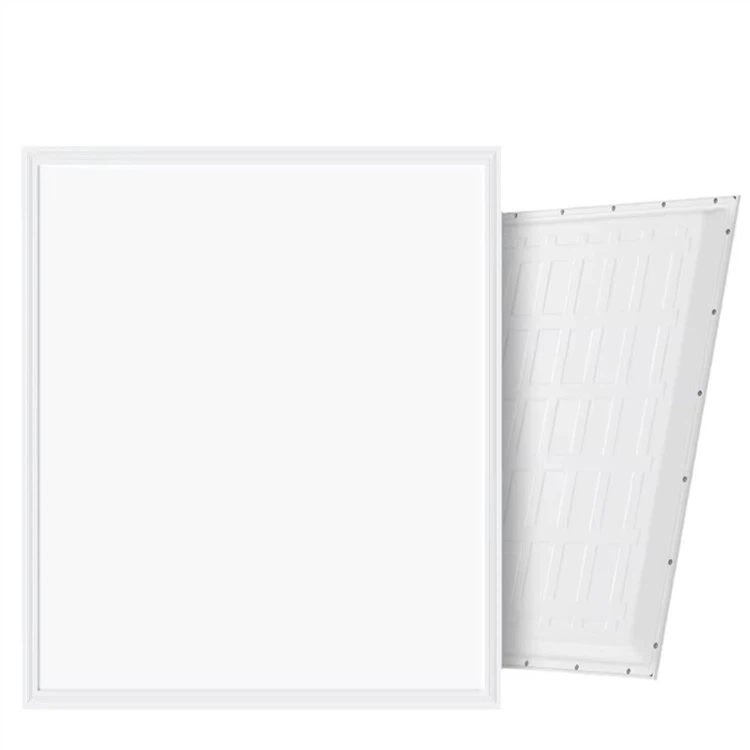
Motion-activated LED ceiling lights are often needed in restrooms, corridors, and aisles.
What are the Advantages of Sensor Light?
By adding motion sensors to switch on and off the lights, you may avoid certain annoyances for visitors or employees who are not acquainted with the area. For example, you will eliminate the often challenging task of having to locate the light switch in a dimly lit area, much alone while they are outside the space. Add to this the situation when a person walks into a dark area holding something in both hands. These inconveniences are eliminated with motion-activated LEDs.
Motion sensors increase security by averting mishaps. Individuals may monitor their steps as needed. Energy expenses will be reduced since there won't be a need to keep the lights on all the time.
Furthermore, turning off light bulbs when not in use extends their lives, even though many of them have a 20,000-hour lifespan. In the end, this saves money on manpower costs for installation and LED replacements.
What are the Disadvantages of Sensor Light?
Lights that switch on with every movement at night may seem intrusive and distracting, particularly if they are bright and impair eyesight. Furthermore, it's possible that the lights may go out unexpectedly, such during an activity. To keep the lights on, you will thus need to walk about a little.
Given that motion sensors employ their infrared beams to detect high temperatures, it is advisable to keep them out of non-climate-controlled spaces such as sunrooms, garages, attics, and patios.
What are some Points to Consider When Choosing a Sensor Light?
It is necessary to consider all application requirements before choosing a sensor illumination.
It is essential that you check the brightness of the sensor since every sensor has a different set of brightness characteristics. Dim LED sensor lights, like those in your bathroom, can be necessary if you don't want to be welcomed by a bright light when you wake up in the middle of the night. You may want a sensor that can provide brightness if you want to see clearly outdoors in the dark. Buying LED sensor lights with 10–50 watts of brightness is recommended.
Your first concern should be the light's coverage range. Since it would be wasteful to spend more money on a high-range sensor if you do not need a high range, you should choose the LED sensor light range that best meets your needs and wants.
The next consideration is the coverage area width of the LED bulb installation for the motion sensor. About 40 feet is the ideal range for an LED sensor. Nonetheless, a large range of motion sensors are available on the market, such as:
To brighten corners, a 90-degree angle of the range is sufficient.
A 270-degree angle may be used to cover the improved detection.
If you want to utilise a single sensor to cover the whole space, from the walls to the ceiling, you may use 360-degree range sensors.
What are the types of Sensors?
The following are a few of the sensors that LED lights most often use:
Motion Sensors (PIR Sensors): For convenience and security, LED sensor lights often employ Passive Infrared (PIR) sensors. When they sense motion, they activate the lights by detecting the infrared radiation that warm things, such as people and animals, produce. They are thus perfect for bathroom lights, indoor night lights and outside security lights.
LED lights are automatically turned on at nightfall and off at dawn using photocell sensors, also known as dusk-to-dawn sensors, which measure the amount of ambient light. In order to save energy and only illuminate when necessary, they are often used in outdoor lighting for porches, gardens, and roadways.
In order to identify the presence of a moving item, ultrasonic sensors-which are less prevalent than PIR sensors-emit ultrasonic waves and measure the reflection off of them. They may be used with PIR sensors to decrease false triggers and increase accuracy. Spaces with intricate layouts where more accurate motion detection is required might benefit from ultrasonic sensors.
Microwave Sensors: These sensors, which emit microwaves and pick up their reflection from moving objects, work similarly to ultrasonic sensors. They are excellent for automated doors and more secure places since they can detect motion through barriers like glass and thin walls and have a greater range than PIR sensors.
Sound Sensors: Although they are less frequent in LED lights, sound-activated sensors do exist in certain applications. They respond to sound by turning on the lights, which might be useful in scenarios when a PIR sensor would not be able to detect physical movement, such when someone is sitting still yet clapping their hands to switch on a light.
Touch Sensors: Touch sensors provide convenience and usability for interior LED lights, particularly desk lamps and under-cabinet illumination. They are popular for personal lighting solutions since they can be turned on or off, have their brightness or colour changed with a single touch
Does Sensor Light Save Money?
Motion-activated light switches may help homes save money in rooms with moderate to low use or when lights are accidentally left on, but they might not work in areas with heavy consumption
Why Does a Ceiling Light with Sensor Light Up Constantly?
Many things, including as ageing, storm damage, a power surge, poor installation, and wrong settings, might cause your motion detector to remain on. Some issues may be resolved easily without the help of professionals.
High Sensitivity Setting: If your light's sensitivity is set too high, it might activate in reaction to even the smallest triggers, such a dust particle landing on your motion sensor or a leaf blowing in the wind.
Long Duration Settings: Generally speaking, your motion detector light should not be on for more than 20 to 30 seconds after it is activated. However, if you want it to run for longer, you may adjust the settings. Many lights, for example, have settings ranging from a few seconds to an hour or more. If your duration setting is set too lengthy, it may seem as if your motion light never goes off.
There are several lights that may be set to turn on and off automatically. It's possible that you unknowingly turned on this mode. Additionally, problems may cause lights to get stuck in this mode.

Shenzhen Benwei Lighting Technology Co., Ltd
Telephone: +86 755 27186329
Email: bwzm04@benweilighting.com





