

Introduction
Definition and Core Function
A wall washer light is a lighting fixture designed to produce a smooth, even wash of illumination across a target surface-typically a wall, ceiling, or large architectural element. Unlike spotlights that create concentrated highlights, wall washers distribute light uniformly over wide areas, eliminating hot spots and shadows. This effect is achieved through specialized optics, reflector geometries, or LED array layouts.
Historical Context and Evolution
Traditional wall washers used halogen or metal halide lamps, which suffered from high heat output, short lifespan, and uneven beam distribution. The advent of LED technology has revolutionized the category: modern LED wall washers offer superior color consistency, dimmability, energy efficiency (>90 lm/W), and lifetimes exceeding 50,000 hours. Today, they are indispensable tools for architectural lighting, retail displays, art galleries, and hospitality environments.
Purpose and Scope of This Article
This guide provides a technical yet actionable overview of wall washer lights. Readers will understand:
How wall washers differ from other lighting types (e.g., grazers, floodlights)
Key performance metrics (beam angle, uniformity, color rendering)
Mounting styles and their application fit
Selection criteria to maximize visual impact and return on investment
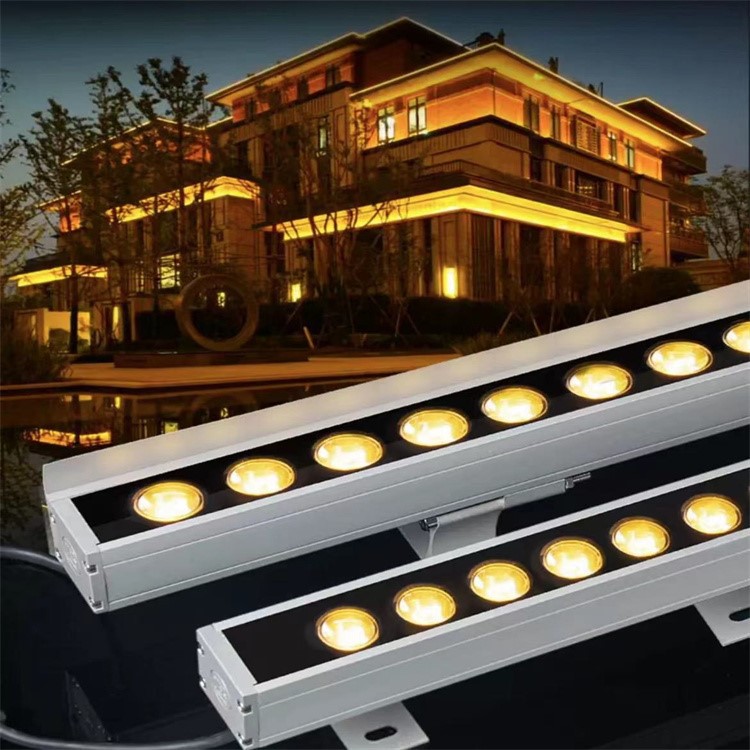
Technical Principles and Performance Metrics
Light Distribution Mechanism
Wall washers employ asymmetric light distribution. The fixture emits light at an oblique angle (typically 10°–30° from the wall surface), spreading it vertically and horizontally. Internal optics-such as TIR (Total Internal Reflection) lenses, textured reflectors, or micro-lens arrays-break up the LED point source into a continuous wash. The result: illuminance at the top and bottom of a wall differs by less than 20% when properly specified.
Key Performance Indicators
Narrow wash (20°–40°) : For accenting textured walls or columns with moderate spread.
Medium wash (40°–60°) : Standard for most interior walls (ceiling height 2.5–3.5 m).
Wide wash (60°–90°+) : For high ceilings (>4 m) or large surface areas (e.g., museum exhibition halls).
Professional wall washers achieve a uniformity ratio of ≥0.7 (max illuminance divided by min illuminance) across the target surface. A ratio below 0.5 indicates visible banding or scalloping-unacceptable for gallery-grade applications.
CRI ≥80 : Suitable for general commercial spaces.
CRI ≥90 : Required for art galleries, retail fashion, and premium hospitality.
CRI ≥95 : Museum-grade, revealing true pigment colors.
2700K–3000K (Warm white) : Creates intimate, cozy atmospheres (hotel lobbies, lounges, residential living rooms).
3500K–4000K (Neutral white) : Balanced, modern look (offices, conference halls, retail).
5000K–6500K (Cool white) : Enhances alertness and contrast (showrooms, commercial kitchens, galleries with modern art).
Wall Washer vs. Wall Grazer vs. Floodlight
| Feature | Wall Washer | Wall Grazer | Floodlight |
|---|---|---|---|
| Beam direction | Horizontal/oblique, uniform | Vertical, close to wall, accentuating texture | Wide-angle, often symmetrical |
| Effect | Smooth, even surface illumination | Dramatic shadows on rough surfaces (brick, stone) | General area lighting |
| Typical application | Painted walls, artwork, panels | Textured walls, facades | Sports fields, parking lots |
Product Types and Mounting Configurations
Recessed Wall Washers
Recessed fixtures are installed flush within ceilings or walls, with only the aperture visible. They are ideal for minimalist architectural styles where the light source should disappear into the structure. Installation requires a cutout and housing (new construction or retrofit).
Clean, uncluttered aesthetic – no visible hardware
Prevents glare because the light source is recessed
Suitable for low-ceiling environments (2.4–3.0 m)
Corridors in high-end hotels
Residential living rooms with cove details
Museum display cases (small recessed units)
Surface-Mounted Wall Washers
These fixtures attach directly to the wall surface (or ceiling), often as linear bars or circular heads. They are more conspicuous but offer easier installation-no ceiling cavity required.
Quick retrofitting without structural changes
Can be positioned at any height to adjust wash effect
Some models rotate/tilt for aiming flexibility
Retail stores highlighting seasonal displays
Restaurant accent walls (exposed brick or wood)
Home theaters (sconce-style wall washers)
Track-Mounted Wall Washers
Heads attach to a low-voltage or line-voltage track system, allowing free repositioning along the track. Many track heads also feature 360° rotation and adjustable tilt.
Maximum flexibility – reconfigure lighting layout without rewiring
Ideal for changing exhibits or multi-purpose rooms
Supports mixing with spotlights or other track heads
Art galleries (change lighting angles for new exhibitions)
Museum temporary exhibit halls
Large retail showrooms (adjust to seasonal merchandise layouts)
Linear (Continuous) Wall Washers
Long, narrow LED bars (from 0.3 m to 2.4 m or linkable) mounted close to the ceiling or floor, washing the entire wall uniformly from end to end.
Seamless, continuous light line – no dark bands between fixtures
Very high uniformity (≥0.8 ratio achievable)
Often used with indirect lighting for cove or cornice installations
Corporate lobbies with feature walls
Large-scale retail (clothing stores with full-height mirrors)
Modern residential open-plan areas
Key Benefits That Drive Purchase Decisions
Aesthetic Transformation
Wall washer lights turn ordinary surfaces into design statements. A plain gypsum wall becomes a glowing canvas; a textured stone facade gains depth; a mural appears museum-lit. The soft, even illumination eliminates harsh shadows, making spaces feel larger, calmer, and more refined. For architects and interior designers, wall washers are the easiest way to add perceived value to a project.
Highlighting Architectural Features and Artwork
Columns, arches, niches, and ceiling coves-these elements often go unnoticed under general lighting. Wall washers direct attention precisely where intended. For artwork, a well-washed wall ensures even luminance across the entire piece, preventing the "spotlight hot spot" that distorts visual appreciation. Museums and galleries universally specify wall washers for 2D works.
Energy Efficiency and Long Lifespan
Modern LED wall washers consume 80% less energy than halogen equivalents while delivering the same lumen output. With driver efficiency >90% and luminaire efficacy up to 120 lm/W, a typical 20W LED wall washer replaces a 100W halogen unit. Lifetime ratings of 50,000–70,000 hours mean no lamp changes for 15–20 years (based on 10 hours/day operation). This dramatically reduces maintenance costs – a critical advantage for hotels and commercial buildings.
Versatile Color and Dimming Options
Some wall washers allow adjustable CCT from 2700K to 6500K, enabling circadian lighting or scene presets (warm for dinner, cool for cleaning).
Colored wall washers create immersive environments: corporate brand colors on lobby walls, dynamic mood lighting in bars, or theatrical effects in event spaces. RGBW adds a dedicated white channel for pastel tones and true white when needed.
0–10V, DALI, or PWM dimming allows smooth transition from full brightness to 1% without flicker. Dimmable wall washers give users control over ambiance intensity – bright for task-oriented gatherings, low for relaxed evenings.
Low Glare and Visual Comfort
Unlike downlights that can cause direct glare, wall washers indirect their light through reflection off the target surface. Properly specified fixtures have shielded optics (deep regress, baffles, or louvers) so the LED source is never directly visible from normal viewing angles. This reduces eye strain and complies with WELL Building Standard requirements for glare control.
Application Case Studies (To Inspire Your Purchase)
Hospitality – Hotel Lobby
Challenge: A boutique hotel wanted to impress guests with a dramatic yet welcoming entry.
Solution: Recessed LED wall washers (3000K, CRI 90) installed 300 mm from the feature stone wall, spaced 1.2 m apart.
Result: The textured travertine glowed warmly, and guest satisfaction surveys noted "luxurious atmosphere." Energy savings of $1,200 annually compared to previous halogen track lights.
Retail – High-End Fashion Store
Challenge: Garments on perimeter walls appeared dull under general downlights.
Solution: Track-mounted tunable white wall washers set to 3500K, aimed at clothing displays. Added RGBW units for seasonal window displays.
Result: Increased dwell time by 25% and sales of featured items by 18% (store manager report). The ability to change color temperature between spring/summer (cool) and fall/winter (warm) collections proved invaluable.
Residential – Art Collector's Home
Challenge: A private owner with a large painting collection needed even illumination without damaging UV exposure.
Solution: Linear LED wall washers with CRI 95, 3000K, and UV-free output, recessed into the ceiling cove.
Result: Paintings appeared true-to-life; no fading after 3 years. The homeowner added similar fixtures in the hallway to highlight family photos.
Corporate – Headquarters Reception
Challenge: A monolithic white wall looked sterile and uninviting.
Solution: Surface-mounted linear wall washers with color-changing capability, programmed to shift from blue (morning) to white (afternoon) to warm amber (evening).
Result: Employees and visitors reported a "dynamic, energizing" environment. The system won a regional lighting design award.
Selection Guide: How to Choose the Right Wall Washer Light
Step 1 – Define the Target Surface and Effect
Smooth, painted drywall: Any wall washer works; focus on uniformity.
Rough texture (brick, stone, wood grain) : Use a grazing angle (closer fixture placement) or select a wall grazer instead. Standard washers may create uneven shadows.
Artwork: Require high CRI (≥90) and even vertical illuminance – measure distance from ceiling to artwork center.
Step 2 – Measure Room Geometry
| Parameter | Recommended Fixture Choice |
|---|---|
| Ceiling height < 2.7 m | Recessed or surface-mounted, narrow beam (20°–30°) |
| Ceiling height 2.7–4 m | Track or linear, medium beam (40°–60°) |
| Ceiling height > 4 m | High-output linear washers, wide beam (60°+), possibly multiple rows |
Step 3 – Select Mounting Style Based on Installation Constraints
New construction / access to ceiling plenum → Recessed or linear cove washers.
Retrofit / no ceiling cavity → Surface-mounted or track-mounted.
Frequent layout changes → Track-mounted (most flexible).
Step 4 – Choose Color Temperature and Rendering
CRI 80 : Warehouses, back-of-house, cost-driven projects.
CRI 90 : Standard for most commercial and residential (best value).
CRI 95+ : Art galleries, luxury retail, healthcare (skin tones).
CCT recommendation by application:
Bedroom / living room: 2700K–3000K
Kitchen / bathroom: 3000K–4000K
Office / retail: 3500K–4000K
Gallery / showroom: 4000K–5000K (true neutral)
Step 5 – Verify Dimmability and Control Compatibility
If the space uses a building automation system (DALI, KNX, Zigbee), ensure the wall washer driver supports the same protocol. For residential, 0–10V or TRIAC dimming is common. Smart wall washers with app control are available – they allow preset scenes and scheduling.
Step 6 – Compare Total Cost of Ownership (TCO)
Do not base purchase solely on initial price. Calculate:
Initial cost (fixtures + installation)
Energy cost (Watts × operating hours × electricity rate)
Maintenance cost (replacement labor + lamp/ driver replacement frequency)
A premium LED wall washer may cost 2× a budget unit but last 5× longer and use 30% less energy – TCO breakeven often occurs within 2–3 years. Request photometric reports (IES files) from manufacturers to verify performance claims.
Installation and Maintenance Best Practices
Optimal Positioning Guidelines
| Mounting Type | Distance from wall | Spacing between fixtures | Tilt angle |
|---|---|---|---|
| Ceiling recessed (vertical wall) | 0.3–0.6 m | 0.8–1.2 m | 30°–45° from vertical |
| Surface-mounted on wall (horizontal wash) | N/A (on wall) | 1.0–1.5 m | 0° (aimed across wall) |
| Track-mounted | 0.5–1.0 m (adjustable) | According to track slots | 20°–40° |
| Linear (cove) | 0.1–0.3 m below ceiling | Continuous (no gap) | 0° (horizontal) or angled down |
Always perform a mock-up on-site – wall color, texture, and ambient light significantly affect results.
Electrical and Safety Considerations
Use only UL/ETL/CE listed fixtures for compliance with local codes.
Ensure drivers are accessible for service (e.g., in a junction box, not buried in insulation).
For outdoor or damp locations (e.g., bathroom walls), specify IP65 or higher rating.
Cleaning and Long-Term Performance
Dust accumulation on optics reduces light output by up to 30% in one year. Clean lenses every 6–12 months with a soft, lint-free cloth.
Check for driver overheating – wall washers in tight ceilings require adequate ventilation.
LED lifetime is temperature-dependent: keeping junction temperature below 85°C ensures 50,000+ hours.
Frequently Asked Questions (Purchase-Related)
"Can I install wall washers myself?"
Simple surface-mounted or track units can be DIY if you have basic electrical knowledge. However, recessed installation requires cutting ceiling holes and handling junction boxes – professional electricians are recommended. For commercial projects, hire a lighting designer to create a layout plan.
"How many wall washers do I need for a 5‑meter wall?"
A rule of thumb: spacing between fixtures should be 1.0–1.5 times the distance from the wall. Example: If recessed units are placed 0.5 m from the wall, space them 0.5–0.75 m apart. For a 5 m wall, that means 7–10 fixtures. Always verify with a photometric calculation.
"Are wall washers expensive to run?"
No. A typical 15‑watt LED wall washer operating 8 hours/day consumes 43.8 kWh per year. At 0.12/kWh,thatis0.12/kWh,thatis5.26 per year per fixture. Ten fixtures cost about $52 annually – far less than a single dinner out.
"Do wall washers work with smart home systems?"
Yes. Many brands offer Zigbee, Z-Wave, or Wi‑Fi models compatible with Alexa, Google Home, or HomeKit. For professional systems, look for DALI or DMX compatibility.
Conclusion and Call to Action
Wall washer lights are not merely decorative accents; they are strategic tools for enhancing spatial perception, emphasizing architecture, and creating emotional connections through light. From the seamless integration of recessed units to the adaptability of track-mounted systems, there is a wall washer solution for every project – residential, commercial, or institutional.
Key takeaways for buyers:
Prioritize CRI ≥90 and uniformity ≥0.7 for professional results.
Choose mounting style based on renovation scope (recessed for new builds, track for flexibility).
Calculate TCO – a higher upfront investment in quality LED wall washers pays back through lower energy and maintenance costs.
Always test a sample fixture on your actual wall surface before committing to large quantities.
If you are ready to transform your space – to make walls glow, artwork sing, and guests remember – invest in professionally specified wall washer lights. Contact a reputable lighting supplier or a certified lighting designer today. Request photometric data, warranty terms (look for 5–10 years), and ask about demo units. Your walls are a canvas; wall washers are the brush. Create a masterpiece.

How To Cooperate With Us?
Our firm prides itself on owning its own factory, guaranteeing complete control over the production process and the quality of our goods. We are not only agents; we are manufacturers committed to offering our clients the most competitive rates available. We invite consumers to evaluate our samples first, as we are assured that the quality and pricing of our items are self-evident. Our dedication to excellence and client satisfaction compels us to consistently perform at our best and provide superior quality products.
Our address
3rd Floor, 5th Building, Hebei Industrial Park, Hualian Community, Longhua District, Shenzhen, China





