At construction sites, ports, and roadwork zones, you have surely seen those small, constantly flashing yellow lights. Though compact, they serve as the "first line of defense" for site safety. When sourcing these devices, buyers often notice that while they are all labeled "yellow strobe lights," there are significant differences in their specifications, appearance, and price. This article examines the products themselves-explaining what LED yellow strobe lights are, how they function, where they are used, and what factors to consider when making a purchase-to help you navigate the selection process more effectively.
What is an LED yellow strobe light?
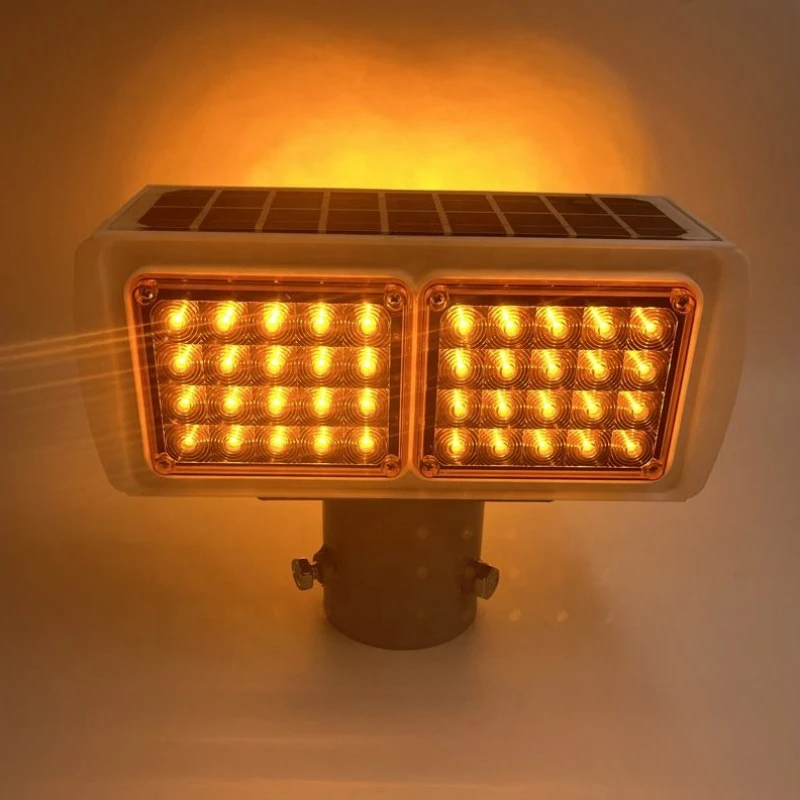
Simply put, an LED yellow strobe light is a warning device that uses an LED light source to emit a yellow (amber) light, flashing at a specific frequency. Its primary purpose is not illumination, but rather to quickly capture attention, alerting nearby personnel or drivers that "something is happening here-please take note."
In the hierarchy of warning signals, the color yellow signifies "caution" or "attention." It carries a less urgent tone than red, yet it is more easily distinguished in complex environments than white light. Consequently, it is frequently used in situations that require ongoing awareness, rather than those involving emergency rescue operations.
Working Principle and Basic Structure
LED Light Source: Typically utilizes high-brightness LED chips, producing an amber hue either through the chips themselves or via a yellow-colored lens/cover.
Driver and Control Circuitry: Regulates the electrical current and manages the flashing frequency and patterns.
Lens (Cover): Usually made of polycarbonate (PC), offering a balance of light transmission, impact resistance, and weather durability. Some designs incorporate light-focusing or diffusing elements to adjust the viewing angle.
Housing and Base: Available in various mounting configurations-such as bolt-on, magnetic, suction-cup, or pole-mounted-to suit different installation environments.
Power Interface: Most models operate on 12V or 24V DC, though versions compatible with AC voltage are also available.
Advantages Over Traditional Lighting
Long Lifespan: LEDs lack fragile filaments, ensuring they do not degrade rapidly even during continuous flashing operation.
Low Power Consumption: They provide the same level of warning brightness while consuming less power, making them more efficient for use with vehicle batteries. Fast Response: LEDs illuminate with virtually no delay, providing crisp, distinct flashes that are highly recognizable.
Vibration Resistance: Lacking fragile glass bulbs, these lights are durable and resistant to damage from the jolts and vibrations common in construction vehicles and heavy machinery.
Low Heat Emission: The unit remains relatively cool even during extended use, preventing the lens cover from aging or deforming.
Common Application Scenarios
Road Construction and Maintenance: Used on road barriers, traffic cones, and construction vehicles to alert approaching traffic to slow down or navigate around the area.
Construction Machinery: Employed on equipment such as excavators, loaders, and forklifts to warn nearby personnel to maintain a safe distance.
Ports, Warehousing, and Logistics Parks: In areas with frequent vehicle movement, flashing lights help distinguish between active work zones and designated traffic lanes.
Mining and Industrial Sites: In environments characterized by high dust levels or complex lighting conditions, yellow flashing lights offer superior visibility and penetration.
Sanitation, Municipal, and Road Maintenance Vehicles: Used on service vehicles traveling at low speeds to alert following traffic to exercise caution and steer clear.
Trucks and Trailers: Utilized on oversized, extra-long, or specialized transport vehicles to outline the vehicle's dimensions and indicate its operational status.
Parking Lots and Entrances/Exits: Used as warnings at access gates, rising barriers, ramps, and similar locations.
Installation and Usage Precautions
Ideally, mount the light at the highest point on the vehicle or equipment to ensure it remains unobstructed by other components.
Observe correct polarity when wiring, and it is recommended to install an appropriately rated fuse in the circuit.
When using magnetic or suction-cup mounts, clean the contact surface first and ensure the unit is securely fastened before the vehicle begins moving.
If using multiple lights, ensure their flash patterns are synchronized; otherwise, unsynchronized flashing may cause confusion and reduce visibility.
Regularly inspect the lens cover for cracks, water ingress, or yellowing; replace it promptly to maintain effective warning performance.
Summary
An LED yellow flashing (strobe) light is a warning device that utilizes an LED light source to provide alerts through yellow flashes. Characterized by a long lifespan, low power consumption, and high vibration resistance, these lights are widely used in road construction, heavy machinery operation, port logistics, municipal sanitation, and various industrial or factory settings. When selecting a unit, focus on factors such as voltage, flash patterns, brightness, ingress protection (IP) rating, and mounting method, while also ensuring compliance with local regulations. Choosing the right model and installing it in the correct location are essential for it to effectively serve its purpose as a warning device.
If you are looking for amber LED flashing/strobe lights for a project, a vehicle fleet, or for resale, please get in touch with us. Based on your specific application, voltage requirements, mounting preferences, and order quantity, we can recommend the most suitable models. We also offer product samples for testing and can accommodate customization requests. Let us know your specific requirements, and we will respond to you promptly.
Our address
No. 5-3 Niujiao Road, Yanchuan Community, Yanluo Subdistrict, Bao'an District, Shenzhen
bwzm18@ledbenweilighting.com