

Lighting is more than simply brightness; it's also about the sensation of that light. The color tone, which is determined by CCT (Correlated Color Temperature), may make a space with the same amount of light feel either clinical or comfortable. CCT determines whether light seems warm, neutral, or cold and is measured in Kelvin (K).
Lighting with the proper CCT has been shown to elevate mood, lessen eye strain, and even increase productivity. Cooler tones (5000K–6500K) have been associated with increased alertness and attention, and the U.S. Department of Energy claims that proper lighting may improve job performance by up to 16%.
Knowing CCT enables you to make better decisions for comfort, effectiveness, and visual clarity whether you're updating workplace lighting, designing a shop display, or illuminating a living space. The definition of CCT, its measurement, and the appropriate applications for each color temperature are all covered in this handbook.
What is CCT in Lighting?
The color appearance of white light output by a light source is measured in Kelvin (K) and is referred to as CCT (Correlated Color Temperature). It affects how a place feels and appears by indicating whether the light is cold (blue tones), neutral, or warm (yellow/red tones).
Let's dissect it into its most important components to comprehend how CCT affects lighting design and human perception:
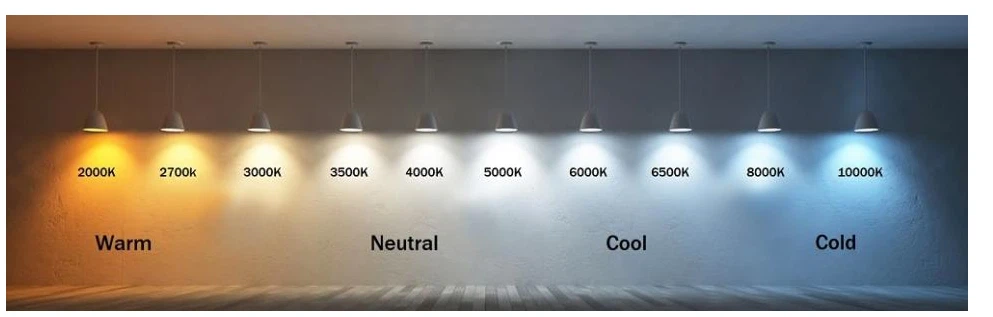
Measured in Kelvin (K): The scale ranges from 1000K to 10,000K, though most practical lighting uses fall between 2200K and 6500K.
Warm Light (2200K–3000K): Produces a soft, yellowish glow ideal for cozy, relaxing spaces like bedrooms or restaurants.
Neutral White (3500K–4000K): Balanced tone used in offices, retail, and kitchens for a clean, natural look.
Cool Light (5000K–6500K): Bright and bluish, used in hospitals, studios, and task-heavy environments for clarity and focus.
Not related to brightness: CCT affects color tone, not how bright the light feels (which is measured in lumens).
The History and Science Behind Color Temperature
The study of blackbody radiation in 19th-century physics is where the idea of color temperature first emerged. Gustav Kirchhoff, a physicist, first proposed the concept of a perfect blackbody in 1860. The blackbody radiation law, which Max Planck established in 1900, describes how heated materials release light that changes hue from red to white to blue as the temperature rises.
The Kelvin scale, named for Lord Kelvin (William Thomson), was developed as a result of this finding and became the accepted method for determining color temperature. The lighting industry started utilizing Correlated Color Temperature (CCT) to specify the visual tone of white light as electric lighting changed from incandescent bulbs in the 1870s to fluorescent lamps in the 1930s and LEDs in the 1960s.
CCT is now a crucial characteristic for lighting design and selection in commercial, industrial, and residential settings.
How is CCT Measured?
By comparing the color of a light source to the light produced by an ideal blackbody radiator at a certain temperature, CCT is expressed in Kelvin (K). The outcome shows whether the light is perceived by the human eye as warm, neutral, or chilly.
Lighting experts utilize photometric equipment in controlled settings to ascertain this. A spectroradiometer, which examines a light source's spectrum power distribution (SPD), is the most often used instrument. The Planckian locus, a curve on the chromaticity diagram that depicts the colors of light emitted by a real blackbody at different temperatures, is then shown against this data.
The light source's Correlated Color Temperature is determined by how closely its color matches a point on this curve. A match close to 2700K, for instance, implies warm white light, but one close to 6500K indicates cold white light or daylight. The majority of commercial lighting products in use lie between the 2200K to 6500K range.
Applications of CCT in Lighting Design
1. Lighting in Homes
Warm white light (2700K–3000K) is usually recommended in houses. It creates a warm and inviting atmosphere in places. Perfect for:
-Bedrooms
-Rooms for Living
-Areas for Dining
-3500K to 4000K lighting may be used in kitchens and bathrooms to improve visibility without making them seem excessively chilly.
2. Lighting for Commercial Use
3500K to 4500K is frequently used in retail establishments and offices because it provides a more realistic appearance and enhances color visibility, both of which are critical for displays and items. Neutral white light is particularly beneficial in offices since it encourages attentiveness without glare.
3. Medical and Industrial Environments
The typical lighting requirements for factories, labs, and hospitals are cool white to daylight (5000K–6500K). These tones improve productivity, clarity, and detail, particularly for activities that call for accuracy.
4. Lighting Outside
Landscape lighting, parking lots, and streetlights employ a range of 3000K to 5000K, depending on whether brightness or warmth is more important. Outdoor security uses daylight LEDs because of their strong contrast and brightness.
How CCT Affects Daily Life
CCT has an impact on your mood, productivity, and ability to unwind. Your comfort, energy, and mood may all be influenced by the hue of your lighting.
-Cool white light (5000K–6500K) helps you stay alert and focused. It works best in the morning or in places like offices and kitchens.
-Warm white light (2700K–3000K) helps you relax. It's perfect for evenings, bedrooms, and living rooms.
-The right CCT also reduces eye strain and makes everyday tasks more comfortable.
-Warm light feels calm and cozy. Cool light feels clean and sharp but can feel too harsh at night.
Selecting the appropriate light hue at the appropriate moment enhances your daily life.
FAQ
Q: What is the best CCT for lighting?
A: The best CCT depends on the setting. For cozy spaces like bedrooms, 2700K–3000K works well. For work areas, 4000K–5000K is ideal. Choose warmer tones for comfort and cooler tones for focus and visibility.
Q: Is CCT the same as lumens?
A: No, CCT measures the color of the light (warm or cool), while lumens measure brightness. You can have a warm 2700K light and a cool 5000K light with the same lumen output. Both terms help describe how a light will look and perform.
Q: Which is better, RGB or CCT?
A: RGB lighting is best for colorful, decorative effects. CCT lighting is better for general, task, and ambient use, offering white light tones from warm to cool. If you want practical lighting with natural tones, CCT is the better choice.
Q: What is the best CCT for a flashlight?
A: A CCT between 5000K and 6500K is ideal for flashlights. It offers bright, cool white light that improves visibility, color contrast, and clarity, especially outdoors or in emergency situations. Lower CCTs may feel too dim or warm for detailed tasks.
Q: What is the best CCT for photography?
A: The best CCT for photography is typically around 5000K–5500K, which closely mimics natural daylight. It helps capture true-to-life colors and reduces the need for heavy white balance correction. Studio lights and softboxes often fall within this range.
Final Thoughts
Choosing lights that feel correct and look nice is made easier when you understand CCT in lighting. Color temperature is crucial whether you're trying to create a bright shop space, a comfortable home, or a productive office. It has never been simpler to choose and modify the ideal CCT thanks to the development of LED technology and smart lighting solutions. Simply selecting the appropriate color temperature may improve the usability, aesthetics, and human-friendliness of your places.





