

Flood lighting is the process of illuminating vast areas with light from strong projectors, with the light sources being focused into precise light streams by means of reflectors. A high-intensity, wide-beam artificial light is called flood lighting.
Why Use Flood Lighting?
The following uses for the deluge illumination are possible:
to make the old monuments' nighttime splendor even more stunning.
to illuminate places like parking lots, sports arenas, and building locations.
to light the display cases and advertising displays, etc.
Placement and Projection Attachment
There are actually only two places where projections for flood illumination could be installed:
Flood lighting that is uniform is used for tiny structures. So, at a maximum distance of about 60 meters, the floodlights can be mounted on another structure or at an appropriate location. The structure should receive light that is almost vertical to it.
Flood lighting that is not uniform is used for big or towering structures. Therefore, the flood lights should be positioned so that the building's features and outlines are clearly visible, and they should highlight the structure's or monument's attractiveness.
Determine Flood Illumination
Let's look at how to determine how many projections are needed to achieve the desired degree of flood lighting illumination.
Step 1: Minimum Light Level
This stage involves calculating the necessary illumination intensity. The style of structure, the use of flood lighting, the quantity of competing light in the area, etc. all affect the necessary degree of illumination.
Step 2: Projection Model
The choice of projector for the flood illumination is made in this stage. The choosing of a projector is influenced by the following two factors:
The region that the beam will encompass is determined by the beam size.
The amount of light produced controls the amount of lighting.
Additionally, the projector's discharge orientation is determined by how close it is to the surface.
Step 3 – Calculate the Number of Projectors
The algorithm below can be used to determine the number of projectors needed for any desired light level over a specific area.
$$\mathrm{\mathit{N}\: =\: \frac{\mathit{A}\times \mathit{E}\times Depreciation\: factor \times Waste\: light\: factor}{Utilisation\: factor \times Wattage \: of\: lamp \times Luminous\: effciency\: of\: lamp}}$$
Where,
'A' is the surface area to be illuminated in m2.
'E' is the level of illumination required in lumens/m2.
The ratio of light under optimal conditions to illumination under typical conditions is known as the depreciation factor.
The waste light factor is the proportion of total lumens released by the source to the total lumens left over after light has been wasted. For rectangular spaces, it is roughly 1.2, and for irregular areas and things like sculptures and memorials, etc., it is 1.5.
The percentage of lamp lumens to beam lumens is known as the coefficient of usage. It also goes by the name "Beam Factor," and it has a number between 0.3 and 0.5.
Applications of Flood Lighting
Flood lighting is widely used in the following fields −
Architectural building and monuments
Ports
Frontage lighting of buildings
Manufacturing plants
Construction sites, etc
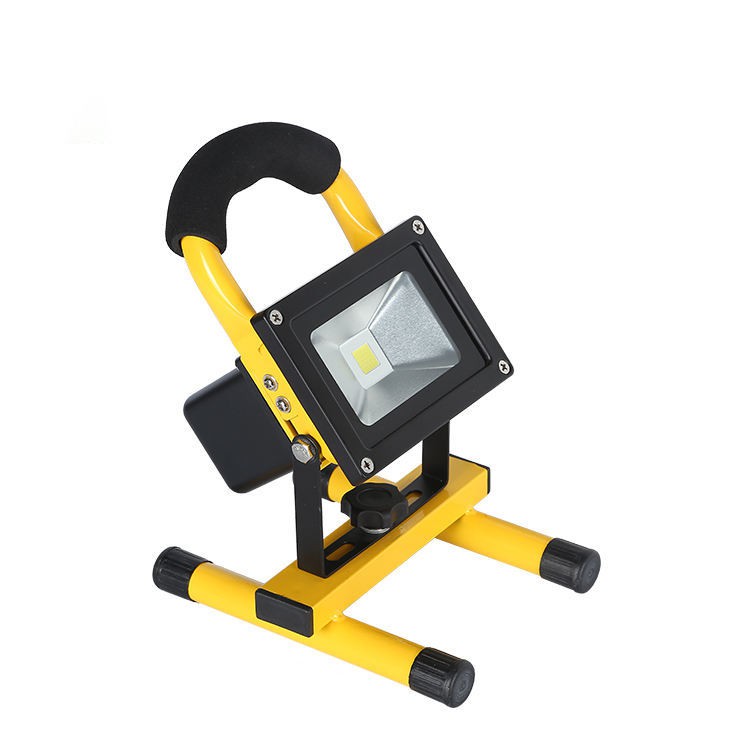
|
Product name |
Benwei Led Flood Light |
|
LED power |
100W/200W/300W |
|
CCT |
3000K-6000K |
|
CRI |
>60 |
|
Housing material |
Aluminum |
|
Adaptor |
Wall charger and Car charger |
|
Working Temperature |
-25 ℃ to 50 ℃ |
|
Beam Angle |
120 ℃ |





