

You may have come across this word more than once when looking for the best lighting for your house or company. Or you may have already came into touch with it unintentionally when you recently attended an art show where one piece of art was appropriately exposed.
Wall washing, of course, is not about cleaning your walls, but about the impact of indirect lighting on them. We quickly describe what wall washing entails and when to use this lighting approach.
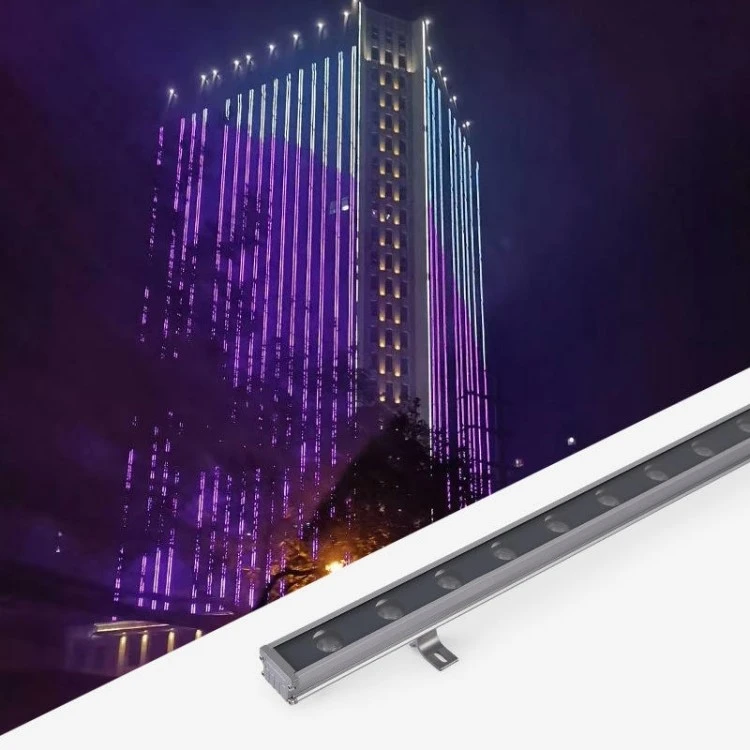
Wall washing explained
Wall washing is a lighting method in which vertical, indirect lighting is installed on the ceiling or floor at a greater distance from the wall. This ensures that the light falls evenly and uniformly on the wall. This creates a "washed" look on the wall, removing shadows and imperfections. The distance to take into consideration is always determined by the wall cleaning profile and the unique scenario.
Benwei provides a variety of wall washing profiles, including the Benwei rei wall washer profile, which is placed approximately 900 mm from the wall, and the Benwei wall washer uplighters, which are placed up and down in-line, with the distance determined by the type of uplighter and the height to be illuminated. The same is true for the Benwei wall washer downlights aplis, in-line, down, and down in-line.
Another crucial feature to consider while wall cleaning is that the fittings are fastened to the ceiling or floor at regular intervals. This distance influences the surface's brightness.
However, wall washing should not be confused with wall grazing. The latter is a lighting method in which indirect lighting is placed on the floor or ceiling at a closer distance from the wall, highlighting the wall's intricacies. Consider walls constructed of stone or brick.
Focus on the wall and the development of space
When you utilise wall washing, the emphasis is always on the exposed wall. With this lighting approach, the light is reflected vertically on the matte walls. This causes a room to seem bright and gently illuminated. In other words, wall washing may make a short hallway look bigger. That, incidentally, is the major benefit of indirect lighting: by reflecting light on certain elements of the surroundings, you may significantly increase the size of a place. With wall washing, it is less about the lighting itself and more about how vertical lighting affects the space and design of a structure.
When appropriately planned, an illuminated wall may have a significant and noticeable influence on the space. Wall washing may also guarantee that a certain item, such as a painting, is highlighted on an empty wall and therefore attracts the attention. Furthermore, it is often employed in modern architecture to emphasise the immensity of a structure. Wall cleaning may thus be used both inside and outside the structure.
Key features of wall cleaning
To maximise the impact of wall washing, there are a few factors to consider:
For the best light reflection, paint the walls white or light matte. Dark surfaces reflect far less light.
Pay attention to the spacing between the fixtures and the walls. Lighting placed too near to the wall is more likely to produce a wall-grazing effect. This implies that the emphasis will be on the intricacies of the walls rather than the wall as a big spatial surface.
When using this approach, consider the power of your lighting as well as the number of matte walls you have. Glare may be caused by excessive lighting and smooth walls.
The appropriate lighting approach is inherently determined by the desired impact. If you want to make your house or business more spacious, wall cleaning is an excellent alternative.





