

Introduction: Why Parameter Standards Determine Commercial Lighting Value
The Pain Points of Inferior Commercial LED Panel Lights
Most buyers tend to focus only on initial purchase prices when selecting commercial LED panel lights, ignoring the long-term hidden costs caused by substandard product parameters. In actual commercial operation scenarios, inferior LED panel lights usually expose multiple defects within 1–2 years of use: obvious brightness attenuation leads to dim indoor lighting, uneven light distribution causes local dark areas and hot spots, severe glare induces long-term visual fatigue for staff, low-quality drivers produce high-frequency stroboscopic flicker that harms eye health, and fragile structural materials cause dust accumulation, water ingress, and lamp body deformation. For large-scale commercial spaces with 24-hour long-term lighting demands such as hospital corridors, laboratory workshops, and shopping mall aisles, these defects will greatly reduce space usability, increase daily maintenance and replacement costs, and even damage the overall grade of commercial spaces.
The Core Value of Standardized High-Quality LED Panel Lights
High-quality commercial LED panel lights are industrial products manufactured in strict accordance with international commercial lighting standards, with precise control of every core parameter from chip configuration, optical design, and drive performance to heat dissipation structure and protection grade. Their core value lies in breaking the limitation of short-term use of ordinary lamps, realizing long-term stable lighting output, zero visual interference, ultra-low energy consumption, and zero maintenance risk. For commercial projects, qualified parameter indicators mean longer service life, lower comprehensive operating costs, higher lighting comfort, and safer operational performance, which is the fundamental standard for measuring the cost-effectiveness of commercial lighting solutions.
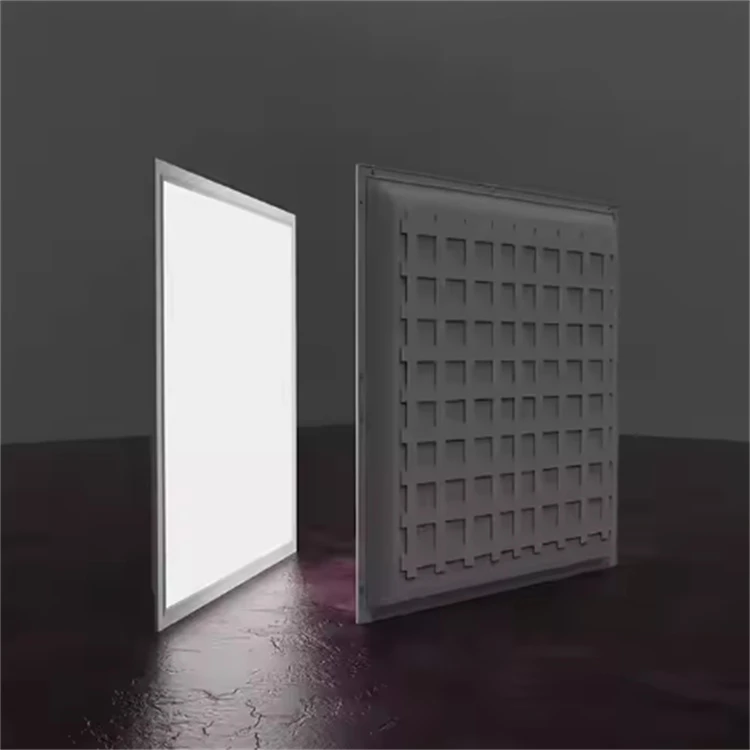
Core Optical Performance Parameters: Determine Lighting Comfort and Effect
Optical performance is the most intuitive core indicator of commercial LED panel lights, directly affecting indoor lighting quality, user visual experience, and space application effect. Premium commercial products take luminous efficacy, color rendering index, unified glare rating, light uniformity, and flicker-free performance as the five core optical evaluation standards, fully meeting the high-standard lighting demands of diverse commercial scenarios.
Luminous Efficacy: Core Standard for Energy-Saving Performance
Luminous efficacy (unit: lm/W) refers to the luminous flux output per unit power of the lamp, which is the most critical parameter to measure the energy conversion efficiency of LED panel lights and an important basis for distinguishing high-end commercial products from civilian low-end products. Ordinary inferior LED panel lights in the market usually have a luminous efficacy of only 80–120 lm/W, with low energy utilization rate and serious power waste. In contrast, high-quality commercial-grade LED panel lights adopt high-brightness customized LED chips, with a maximum luminous efficacy of 180 lm/W, which far exceeds the ENERGY STAR certification standard of 120 lm/W for commercial lighting.
This ultra-high luminous efficacy enables the lamp to output stronger and more stable luminous flux under lower power consumption. Taking the commonly used 600×600mm commercial panel light as an example, the high-efficiency model can achieve the same or even higher lighting brightness than ordinary low-efficiency products with 30% lower power consumption. For large-area commercial lighting projects with hundreds or thousands of lamps, this performance advantage can greatly reduce long-term electricity costs, bringing significant energy-saving and cost-reducing benefits for enterprise operation.
Color Rendering Index (CRI): Restore True Color of Commercial Scenes
Color Rendering Index (Ra/CRI) characterizes the ability of the light source to restore the true color of objects, which is particularly critical for commercial spaces with high color accuracy requirements such as retail stores, exhibition halls, medical clinics, and design offices. Ordinary low-cost LED panel lights usually have a CRI value lower than Ra80, with serious color distortion, poor color saturation, and obvious blue light deviation, which will lead to distorted display of commodity colors, inaccurate medical color judgment, and distorted design color presentation.
High-quality commercial LED panel lights support Ra80 standard configuration and optional Ra90 high color rendering specification, with R9 red color rendering index ≥50. This parameter ensures that the light source can highly restore the natural color of objects, with soft and pure light color and no color cast. In retail scenarios, high CRI lighting can enhance product texture and attract customer attention to boost sales conversion; in medical and office scenarios, it can ensure accurate visual judgment and create a professional and high-grade space lighting atmosphere.
Unified Glare Rating (UGR): Eliminate Visual Fatigue for Long-Term Use
Glare is the main cause of visual fatigue, dry eyes, and decreased attention for long-term indoor workers, and Unified Glare Rating (UGR) is the international unified evaluation standard for lamp glare. Most ordinary LED panel lights have no professional anti-glare design, with a UGR value higher than 25, which is easy to produce strong reflected glare and direct glare, seriously affecting visual comfort.
Premium commercial LED panel lights adopt professional micro-prismatic optical design and Mitsubishi PMMA frosted lens light distribution technology, with UGR<19 ultra-low glare standard configuration, reaching the highest level of commercial office lighting anti-glare standards. The optimized optical structure effectively disperses strong light, eliminates dazzling light spots and reflected glare, and avoids eye irritation caused by long-term light exposure. This parameter is particularly suitable for office buildings, school classrooms, and hospital outpatient halls where people work and study for a long time, effectively protecting user visual health and improving work and learning efficiency.
Light Uniformity and Flicker-Free Performance: Ensure Stable and Comfortable Lighting
Light uniformity determines whether the indoor lighting is balanced and consistent. Inferior LED panel lights have uneven light guide plate technology, resulting in obvious bright edges, dark centers, and local light spots, with a uniformity lower than 70%, making the space lighting messy and hierarchical. High-quality commercial products are equipped with high-precision light guide plates and high-light-transmittance diffuser plates, with light uniformity ≥90%, realizing full-area uniform light emission without dark areas, hot spots, or shadow gaps, making the whole commercial space bright and tidy.
In terms of stroboscopic performance, ordinary lamps adopt low-cost non-isolated drivers with serious low-frequency stroboscopic flicker, which cannot be identified by the naked eye but will cause continuous damage to the visual nervous system. High-grade commercial LED panel lights adopt isolated constant-current driver solutions, realizing zero stroboscopic and zero flicker lighting output, completely eliminating hidden visual health hazards and meeting the long-term safe lighting needs of commercial spaces.
Electrical Performance Parameters: Guarantee Long-Term Operational Stability
Electrical performance is the core guarantee for the continuous and stable operation of commercial LED panel lights. Commercial lighting scenarios have the characteristics of long continuous working time, complex power environment, and high operational stability requirements. Excellent electrical parameters can effectively avoid lamp failure, burnout, and circuit safety hazards, and extend the overall service life of lamps.
Power Factor (PF): Improve Energy Utilization Efficiency
Power factor (PF) is an important parameter to measure the effective utilization rate of lamp power. The power factor of inferior LED panel lights is usually lower than 0.7, with serious reactive power loss, low energy utilization rate, and easy to cause grid load waste. High-quality commercial LED panel lights have a PF value ≥0.95, which is far higher than the national and international commercial lighting industry standards. A high power factor can maximize the conversion of electric energy into light energy, reduce electric energy loss and grid burden, further optimize energy-saving effects, and avoid additional power consumption costs for commercial buildings.
Constant Current Driver Performance: Avoid Brightness Fluctuation and Lamp Damage
The driver is the "heart" of the LED panel light, and its performance directly determines the long-term operating stability of the lamp. Ordinary low-cost drivers have unstable current output, poor voltage resistance, and weak anti-interference ability. In the case of commercial grid voltage fluctuation, it is easy to cause lamp brightness flickering, uneven current of lamp beads, and local overheating burnout.
Premium commercial-grade lamps adopt high-quality isolated constant-current drivers with over-voltage protection, over-current protection, short-circuit protection, and surge protection functions. The driver can maintain constant current and constant voltage output in a wide voltage range, ensure that each LED bead works in a stable power state, avoid brightness attenuation and lamp bead damage caused by current fluctuation, and greatly improve the fault resistance of lamps in complex commercial power environments.
Lifespan and Luminous Attenuation Parameters: Reduce Long-Term Maintenance Costs
Service life and luminous attenuation rate are the key parameters that determine the long-term cost performance of commercial LED panel lights, and are also the core indicators that distinguish commercial-grade products from ordinary civilian products. Commercial lighting projects pursue long-term zero-maintenance operation, so low light attenuation and long service life are essential core advantages.
L70 Lifespan Standard: Scientific Definition of Effective Service Life
The industry uniformly adopts the L70 lifespan standard to define the effective service life of LED lamps, that is, the cumulative working time when the lamp luminous flux decays to 70% of the initial brightness. The L70 lifespan of ordinary inferior LED panel lights is only 20,000–30,000 hours, which means that the brightness will be significantly dimmed after 2–3 years of commercial use, requiring overall replacement.
High-quality commercial LED panel lights have passed strict factory aging tests and structural optimization design, with an L70 lifespan of up to 50,000 hours. Calculated based on 12 hours of daily operation in commercial scenarios, the lamp can maintain stable lighting brightness for more than 11 years without overall dimming failure. In addition, the product adopts a 20-year structural design life standard, which can adapt to long-term continuous lighting operation in 24-hour uninterrupted scenarios such as laboratories and public corridors.
Ultra-Low Luminous Attenuation Rate: Maintain Long-Term Stable Brightness
Luminous attenuation is an inevitable physical phenomenon in the use of LED lamps, but inferior products have rapid light decay due to poor heat dissipation and inferior chip quality, with a brightness attenuation rate of more than 30% within one year of use. High-quality commercial LED panel lights optimize the heat dissipation system and chip performance in an all-round way, with an ultra-low annual luminous attenuation rate of less than 3%. After 50,000 hours of continuous use, the lamp still maintains more than 70% of the initial luminous flux, without obvious dimming, yellowing, and darkening phenomena. This stable luminous maintenance performance completely avoids the frequent replacement and maintenance troubles caused by rapid light decay, greatly reducing the post-operation cost of commercial lighting projects.
Protection Grade and Structural Performance Parameters: Adapt to Complex Commercial Scenarios
Commercial lighting scenarios are diverse, including dry office spaces, humid hospital corridors, damp pantry areas, and dusty public passages. Excellent structural performance and protection grade parameters enable LED panel lights to adapt to complex and changeable commercial environments, ensuring long-term stable operation of lamps in different scenarios.
IP Protection Grade: Dust-Proof and Splash-Proof Safety Performance
Most ordinary LED panel lights have no sealed design, with an IP protection grade of only IP20, which cannot block dust, insects, and moist air. After a period of use, the interior of the lamp will accumulate dust and sundries, breed insects, and cause moisture oxidation, resulting in decreased light efficiency, circuit short circuit, and lamp body damage. High-quality commercial LED panel lights adopt fully sealed integrated welding technology, with an optional IP44 professional protection grade.
The IP44 protection standard can effectively block the invasion of solid dust and tiny particles, and resist splashing water from all directions. It can operate stably in humid, dusty, and multi-splash commercial environments such as hospital aisles, office pantries, shopping mall corridors, and school public areas, with strong environmental adaptability and greatly extended service life.
Heat Dissipation and Structural Material Parameters: Fundamental Support for Stable Performance
Heat dissipation performance is the fundamental factor affecting lamp lifespan and light decay speed. Inferior lamps use thin iron frames and inferior plastic materials, with slow heat conduction speed and serious heat accumulation, resulting in accelerated aging of LED chips and drivers. High-quality commercial LED panel lights adopt 6063 thickened aluminum alloy frames, which are formed by anodic anti-corrosion treatment and seamless integral welding. The aluminum alloy material has ultra-high thermal conductivity, which can quickly export the heat generated by the lamp beads and drivers to the outside of the lamp body.
Equipped with 0.3mm thick sprayed iron backboard, it further optimizes the heat dissipation structure, realizes three-dimensional omnidirectional heat dissipation, effectively controls the working temperature of the lamp body within a safe range, avoids performance aging caused by overheating, and provides a lasting and stable structural guarantee for long-term operation of the lamp. In addition, the ultra-thin 32mm slim body design not only ensures structural rigidity and impact resistance but also realizes a minimalist and integrated decorative effect, which is perfectly compatible with various modern modular suspended ceiling systems.
Parameter Comparison: High-Quality vs Ordinary Commercial LED Panel Lights
To intuitively reflect the core advantages of high-quality commercial LED panel lights, the following compares the key performance parameters of high-grade products and ordinary inferior products, which fully verifies the ultra-high cost performance of standardized commercial lamps in long-term commercial application:
In terms of luminous efficacy, ordinary products are 80–120 lm/W, while high-quality products reach 180 lm/W; in terms of CRI, ordinary products are below Ra80, while high-quality products support Ra80/Ra90 optional; in terms of UGR anti-glare, ordinary products are UGR>25, while high-quality products are UGR<19; in terms of L70 lifespan, ordinary products are 20,000–30,000 hours, while high-quality products are 50,000 hours; in terms of protection grade, ordinary products are IP20 open type, while high-quality products are IP44 fully sealed type; in terms of power factor, ordinary products are below 0.7, while high-quality products are ≥0.95; in terms of light uniformity, ordinary products are below 70%, while high-quality products are ≥90%.
Through the parameter comparison, it is obvious that although high-quality commercial LED panel lights have a slight advantage in initial purchase cost, they have comprehensive advantages in energy saving, stability, service life, maintenance cost, and scenario adaptability, and are the most cost-effective choice for long-term operation of commercial lighting projects.
Conclusion: Professional Parameter Selection Creates High-Value Commercial Lighting
The quality of commercial LED panel lights is never determined by appearance and price, but by a series of rigorous and professional core performance parameters. Luminous efficacy, color rendering index, glare rating, electrical stability, lifespan and light decay, protection grade, and structural materials together constitute the evaluation system of high-quality commercial LED panel lights. For commercial lighting procurement and project design, only by taking standardized professional parameters as the selection standard can we avoid the hidden dangers of inferior products, eliminate long-term operational costs, and create comfortable, safe, energy-saving, and durable high-grade commercial lighting space.
The high-performance commercial LED panel light introduced in this article fully meets all international commercial lighting parameter standards, with industry-leading optical performance, electrical stability, environmental adaptability, and long-term reliability. It can perfectly adapt to office, medical, educational, retail, and laboratory commercial scenarios, bringing dual value of space lighting upgrade and long-term cost reduction for commercial projects, and is the preferred high-quality solution for modern commercial ceiling lighting renovation and new construction projects.

How To Cooperate With Us?
Since we have our own facilities, we are pleased to have complete control over the production process and the quality of our goods. We are committed to giving our clients the finest prices since we are manufacturers rather than just brokers. We encourage buyers to see our samples first since we are certain that the cost and calibre of our items are transparent. Our dedication to excellence and client happiness motivates us to consistently provide superior products.
Our address
3rd Floor, 5th Building, Hebei Industrial Park, Hualian Community, Longhua District, Shenzhen, China





