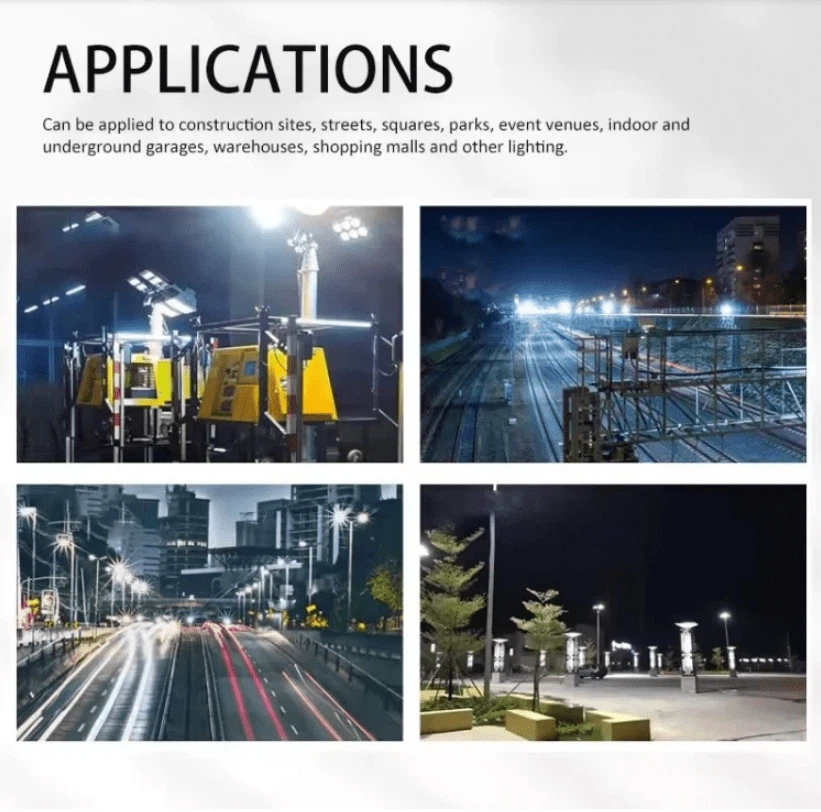
Floodlights are a critical instrument for the illumination of outdoor spaces for a variety of purposes, including security, adornment, and sporting events. It is imperative to take into account a variety of factors when installing floodlights, such as the purpose of the location, the orientation of the light, and the height of the fixture. This article will address the optimal locations for floodlights and the factors to take into account when installing them.
Outdoor areas that necessitate floodlights are typically classified into two categories: security and sports. Floodlights should be positioned at the extremities of the field or court and angled toward the center for sporting events. This design guarantees that the playing surface is illuminated uniformly, thereby preventing any shadows that could potentially influence the game's outcome.
Floodlights should be installed in strategic locations, including entrances and exits, shadowy alleyways, and near blind areas, to ensure security. The objective is to establish a visible and well-lit environment that impedes potential criminals and facilitates the monitoring of the area by security personnel or CCTV cameras. It is crucial to ensure that the lights are positioned at a sufficient height to prevent manipulation and to prevent the creation of blind areas.
The direction of the light is also a critical factor in the placement of floodlights. In some instances, glare and shadows can be hazardous when the light is directed at an unusually high or low angle. In order to optimize coverage and reduce pollution, floodlights should be positioned at a 45-degree angle and directed downward.
Another critical element to evaluate is the illumination fixture's height. The fixture should be positioned at an appropriate height in accordance with the light's purpose and location. For instance, in order to prevent any obstructions, sports field floodlights should be installed at a minimum of six meters in height. In contrast, security lights can be positioned at a lower altitude, between 3 and 4 meters, to ensure that they provide adequate coverage in confined areas.
In summary, the efficacy of floodlights is contingent upon their placement, direction, and height. By taking into account the purpose of the area and the requirements of its users, it is possible to establish a secure and well-lit environment that fulfills both aesthetic and functional requirements. A well-placed floodlight can make all the difference, whether you are illuminating a sports field, securing a property, or simply enhancing a garden.
|
Optional Wattages |
10w, 30w, 50w, 100w, 150w, 200w, 300w |
||
|
Work Voltage |
AC85-265V 50/60Hz |
||
|
Color Temperature |
3000K, 4000K, 5000K, 6000K |
||
| Luminous Eficiency | 150lm/w | ||
|
Waterproof Protection |
IP65 / IP66 |
||
|
Beam Angle |
180° |
||
|
CRI |
80-83Ra |
||
|
PF |
>0.9 |
||
|
Work Temperature |
-30~ +50°C |
||
|
Storage Tempeature |
-40 ~ +60°C |
||
|
Material |
ADC12 die-casting aluminum | ||
|
Grade Of Safety |
Class I |
||
|
Certification |
CE ROHS |
||
|
Working Time |
50,000H |
||
|
Warranty |
5 Years |
||