

In your quest for a white LED strip, you may have encountered colour temperature ratings. Uncertain about its meaning or what to choose? Continue reading to discover!
Definition of LED strip colour temperature
Colour temperature refers to the hue of light produced by a light source. Colour temperature is quantified in degrees Kelvin, where lower values exhibit a warm, yellowish-red hue, while higher values provide a bluish tint.
The following are standard colour temperatures accompanied with reference points that should be recognisable to you:
1900K: candlelight
2700K: incandescent light bulb (warm white hue)
3000K: halogen light bulb
4000K: "neutral white" fluorescent lamp
6500K: "daylight white" fluorescent light bulb; simulates natural daylight (cool white)
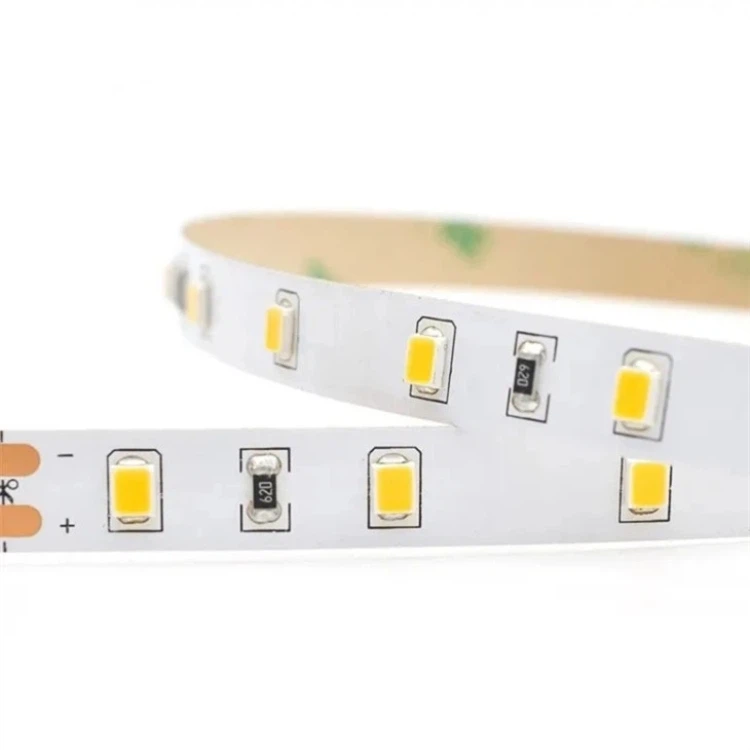
Which colour temperature is optimal for my LED strip lights?
What is the inquiry?
The colour temperature scale appears paradoxical initially; how can warm white possess a lower temperature than cold white? An grasp of the development of the colour temperature scale may be beneficial.
Colour temperature is predicated on the principle of black body radiation. Black bodies are theoretical constructs that radiate various wavelengths of light contingent upon their temperature.
A heated block of coal functions analogously to a black body radiator, albeit imperfectly. At reduced temperatures, it will generate a subdued, red luminescence. As its temperature rises, it will begin to exhibit a more radiant white hue. If we persist in heating it, it will attain a condition characterised by a blue hue.
Colour temperature refers to the hue that a black body radiator would exhibit at a specific temperature, quantified in Kelvin. 2700K is roughly the temperature at which the filament in an incandescent light bulb operates.
Confusion stems from the cultural descriptions of emotions elicited by specific illumination conditions. Incandescent lamps have conventionally been linked to "welcoming" and "soft," terms that connote "warmth." Likewise, daylight white possesses a "crisp" and "invigorating" quality, with the term "cool" being synonymous with it.
Recognise discrepancies in colour temperature
Despite two items asserting identical colour temperatures, their appearances may differ. Numerous factors contribute to this probability, and it is prudent to verify them prior to making a significant purchase or when colour coordination is essential.
Measurement standards and discrepancies may arise among manufacturers. Colour measurement depends on intricate sensors that require regular calibration via a standardised procedure and a measuring standard. Occasionally, these protocols are disregarded by both the makers of colour measuring devices and the maintenance personnel. Consequently, you may observe a slight variation in colour between two distinct manufacturers of LED strips, although both asserting to be the same hue. In uncertain situations, if colour consistency is required, maintain the same source for the LED strip wherever possible.
Manufacturers uphold a tolerance. When a manufacturer designates an LED strip as 3000K, it signifies a strong assurance that the LED strips will typically emit light closely like 3000K. What is the proximity? The outcome is contingent upon the manufacturer and their proficiency in quality control. An exemplary manufacturer need to ensure a tolerance level of +/- 100K for warm white colour temperatures and +/- 300K for cold white colour temperatures. If colour matching is essential, enquire with your supplier regarding binning.

Shenzhen Benwei Lighting Technology Co., Ltd was established in 2010. It is a national high-tech enterprise integrating design, R&D, production and sales of indoor and outdoor lighting products and also can do OEM ,ODM .For more details about our offerings, please contact us at bwzm18@ledbenweilighting.com





