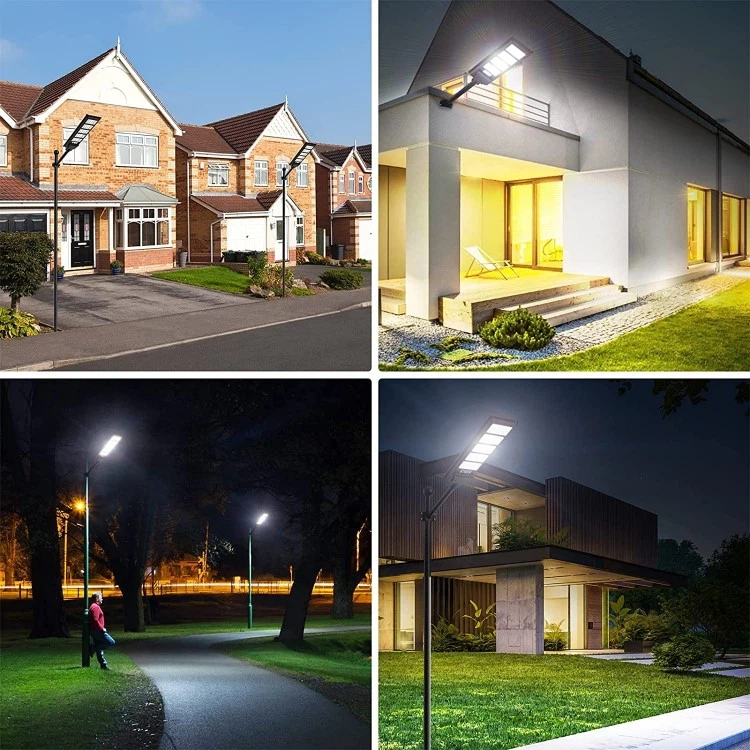
A solar street light's sensor, which determines when it becomes dark outside and turns on the light, is one of its essential parts. Solar street lights may be equipped with a variety of sensors, including as infrared, motion, and photocell sensors.
The most popular kind of sensor used in solar street lighting is the photocell. They function by determining the ambient light level and activating or deactivating the light in accordance with that level. The photocell triggers the light to switch on when the sun sets and the light level falls below a certain threshold. The photocell deactivates and the light shuts off as the sun rises and the amount of light increases.
An additional kind of sensor that may be used in solar street lighting is motion sensor. They function by seeing movement in the vicinity and activating the light when an individual gets close. They may thus be effectively used to increase security in poorly light places.
A more sophisticated kind of sensor that may be used in solar street lighting is the infrared sensor. They function by identifying the heat signature of nearby items and activating the light when a person gets close. They are thus perfect for use in locations with low ambient light levels where conventional sensors would not function.
All things considered, the incorporation of sensors into solar street lights is a significant and practical technological advancement that promotes energy conservation and improves community safety globally. It is feasible to maximise the performance of solar street lights and make sure they continue to offer dependable and efficient illumination for many years to come by selecting the appropriate kind of sensor for a certain application.
https://www.benweilighting.com/solar-energy-lighting/solar-street-light/120w-solar-street-light.html